Select Language:
The Battle of the Thermometers: Celsius vs. Fahrenheit in 2025
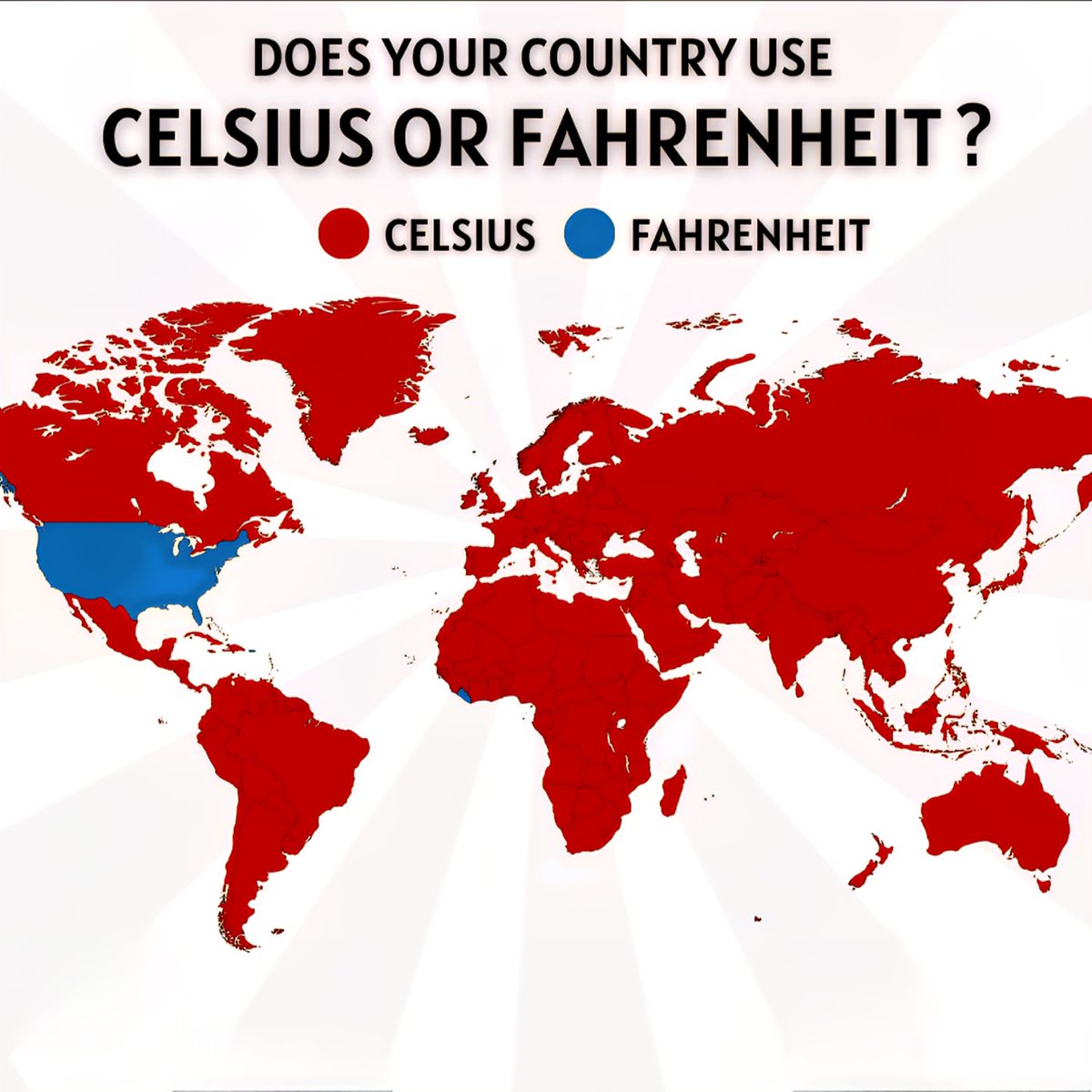
In an increasingly interconnected world, the debate over temperature measurement systems—Celsius versus Fahrenheit—continues to spark discussions across households, governments, and tech industries in 2025. While many countries have standardized their systems, others still grapple with choosing which scale to adopt. Here’s a detailed look into the ongoing divide, highlighting why this choice matters today.
1. The Global Dominance of Celsius
While Fahrenheit remains familiar to many in the United States, Celsius continues to broaden its reach worldwide. As part of the metric system, Celsius is utilized by over 160 countries, making it the international standard for scientific research, weather forecasts, and education. Its simplicity—where 0°C is freezing and 100°C boiling under standard atmospheric pressure—makes it intuitive for scientific concepts and daily use for most of the globe.
In 2025, most countries are pushing for metric standardization, emphasizing the advantages of Celsius in international communication and globalization. Educational institutions emphasize its ease for students, and tech companies developing global apps prioritize Celsius in their interfaces.
2. Fahrenheit’s Cultural Resilience in the U.S.
Despite its international decline, Fahrenheit persists strongly in the United States. Many Americans find Fahrenheit readings more precise for daily weather reporting—consider that a 60°F day feels distinctly different from 70°F, which is less intuitively grasped on the Celsius scale. The scale’s history—crafted in the 18th century—and cultural entrenchment have cemented its place in American life, from weather apps to household thermostats.
In 2025, debates surge once again about whether the U.S. should transition entirely to Celsius. Advocates argue that adopting Celsius would streamline scientific cooperation, while opponents emphasize tradition and familiarity.
3. The Impact of Temperature Scales on Climate Communication
Effective weather communication is crucial during climate-related events. As climate change intensifies, accurate and universally comprehensible temperature reporting has become vital. Celsius, being adopted globally, offers a standardized language for scientists and policymakers to address climate issues more cohesively.
However, in the U.S., Fahrenheit’s detailed gradations are seen by some as more useful for day-to-day planning. For instance, a 10-degree difference in Fahrenheit feels more significant—an important factor for farmers and outdoor workers.
4. Technological Influence and Future Trends
Smart thermometers, weather apps, and climate monitoring tools are increasingly designed to support both temperature scales to cater to diverse users. Artificial intelligence and machine learning algorithms now adapt reporting based on user preferences, making the choice of scale less relevant.
In 2025, tech giants like Google and Apple are working toward flexible interfaces allowing users to select their preferred temperature system seamlessly. This trend indicates that, despite the ongoing cultural divide, technology may eventually bridge the gap.
5. Policy and Education: The Road Ahead
Governments are increasingly considering policies to harmonize temperature reporting. Some European nations are lobbying for the U.S. and other Fahrenheit-using regions to switch to Celsius. Education curriculums worldwide are emphasizing the metric system, aiming to phase out Fahrenheit from school syllabi in favor of Celsius.
In the U.S., ongoing political debates revolve around whether to mandate a transition to Celsius or maintain the current traditional scale. Many suggest that public understanding and ease of use should guide policy, rather than historical inertia.
6. Cultural Perception and User Preference
User preference remains a significant factor in the battle between temperature systems. Surveys conducted in 2025 show that younger generations, especially those educated in metric-based systems, favor Celsius. Conversely, older demographics tend to stick with Fahrenheit due to familiarity and comfort.
Manufacturers of household thermostats, weather stations, and vehicle climate controls are increasingly offering options to cater to individual preferences, reflecting the ongoing personalization in tech and appliances.
7. The Future of Temperature Measurement
As 2025 progresses, the debate continues: will the world shift entirely to Celsius, or will Fahrenheit survive as a cultural relic? Experts predict that technological advancements and the push for global standardization may gradually influence a broader adoption of Celsius.
However, in the United States, tradition, cultural identity, and user preference ensure Fahrenheit remains relevant for the foreseeable future. The ongoing conversation reflects deeper questions about national identity, scientific universality, and practical usability.
Whether Celsius or Fahrenheit, understanding their impacts helps us navigate an increasingly interconnected and climate-conscious world. As technology advances and global standards evolve, the choice of temperature scale remains a fascinating window into cultural differences and our collective future.
Image Source: Twitter
 ChatGPT
 Perplexity
 Gemini AI
 Grok AI