Select Language:
BRICS Countries and Their 2025 Economic Rankings
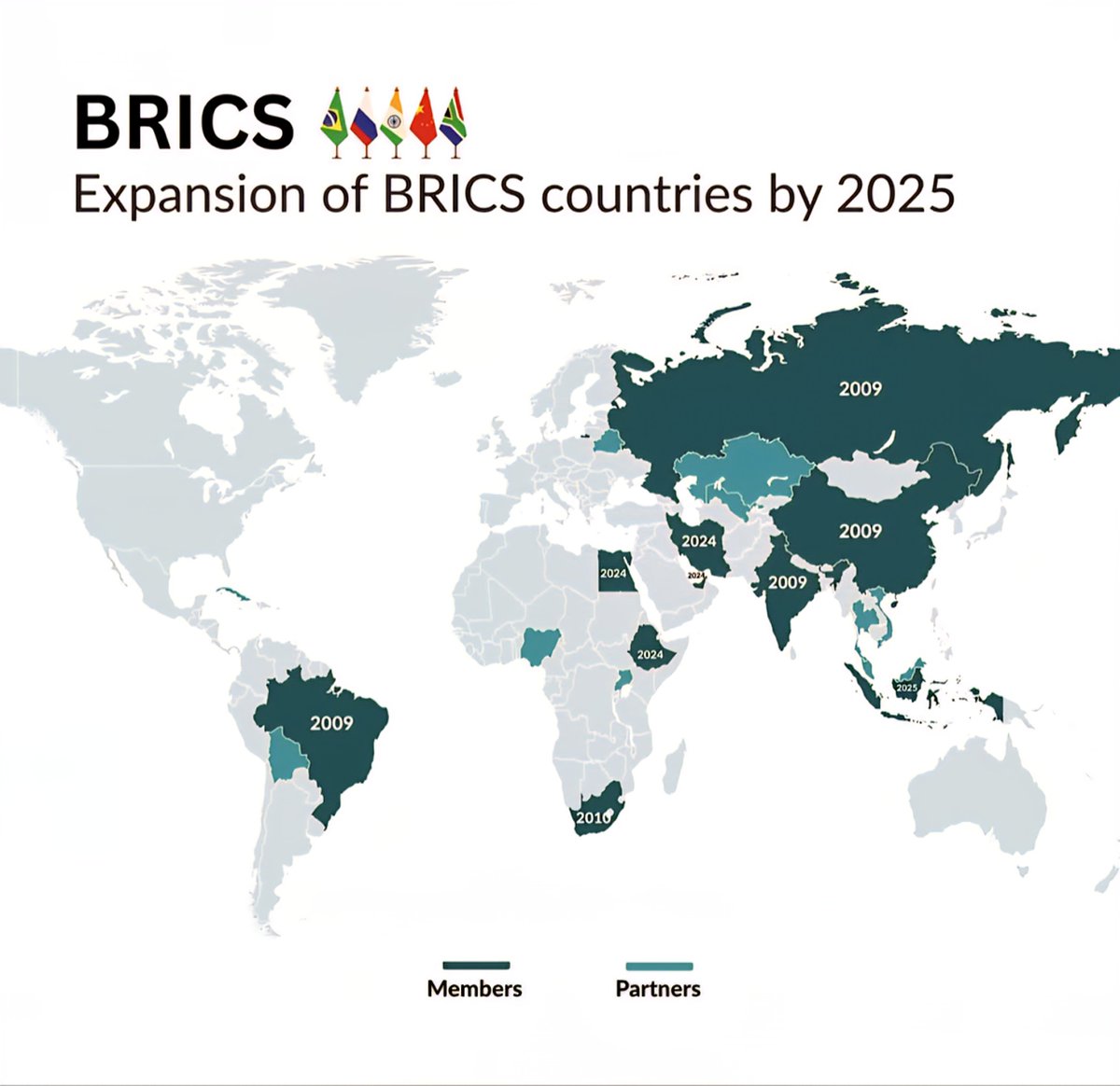
BRICS Full Member Countries and Their GDPs
In 2025, the BRICS coalition continues to play a significant role in the global economy, with member countries showing varied levels of economic growth and influence.
Brazil – $2.13 Trillion
Brazil remains a major South American economy, with a GDP that hits over $2 trillion. The country is heavily reliant on commodities and agricultural exports, but recent innovations in technology and sustainable energy are driving growth.
Russia – $2.08 Trillion
Despite geopolitical tensions, Russia maintains its position with a GDP just over $2 trillion. The nation continues to be a key energy supplier and is exploring diversification into emerging sectors like technology and green energy.
India – $4.19 Trillion
India’s economy continues to grow rapidly, solidifying its place as a global economic leader. With a GDP exceeding $4 trillion, India is focusing heavily on technology, manufacturing, and infrastructure development to propel further growth.
China – $19.23 Trillion
China, as the largest BRICS economy, remains a dominant global force with a GDP topping $19 trillion. The country is transitioning from manufacturing-heavy growth to a more consumption-driven economy, emphasizing innovation and services.
South Africa – $410.34 Billion
South Africa’s economy remains vital within Africa, with a focus on mining, agriculture, and tourism. The country’s GDP is approximately $410 billion, with investments flowing into renewable energy projects.
Egypt – $347.34 Billion
Egypt continues to regrow as a regional hub for finance and tourism, with a GDP close to $350 billion. Major infrastructure projects and a strategic location have bolstered its economic resilience.
Ethiopia – $117.46 Billion
Ethiopia’s economy is experiencing significant expansion, characterized by a burgeoning manufacturing sector and infrastructural development, with a GDP of just over $117 billion.
Iran – $341.01 Billion
Iran’s economy is slowly rebounding, despite international sanctions. It leverages its strategic position and energy reserves to stabilize its GDP, which now stands near $341 billion.
United Arab Emirates – $548.60 Billion
The UAE remains a financial and trade hub, with a GDP approaching $549 billion. The country has diversified into tourism, aviation, and technology sectors.
Indonesia – $1.43 Trillion
As Southeast Asia’s largest economy, Indonesia continues its robust growth, with a GDP over $1.4 trillion, driven by natural resources, manufacturing, and digital industries.
Countries Officially Invited to BRICS (Awaiting Full Membership)
Saudi Arabia – $1.08 Trillion
Saudi Arabia’s recent invitation to join BRICS highlights its shift toward economic diversification. With a GDP exceeding $1 trillion, the kingdom aims to expand beyond oil and invest heavily in renewable energy and technology.
BRICS+ Strategic Partnerships
Several nations partner strategically with BRICS, playing a vital supplementary role in global economic discussions.
- Nigeria – $188.27 Billion
- Bolivia – $56.34 Billion
- Kazakhstan – $300.54 Billion
- Malaysia – $444.98 Billion
- Thailand – $546.22 Billion
- Vietnam – $490.97 Billion
Image of BRICS nations participating in a summit illustrates growing global collaboration:
Countries That Have Officially Applied for BRICS Membership
Several nations see strategic benefits in joining the coalition, ranging from economic cooperation to geopolitical alignment.
- Pakistan – $411 Billion
- Bangladesh – $467.22 Billion
- Kuwait – $153.10 Billion
- Colombia – $427.77 Billion
- Peru – $303.29 Billion
- Afghanistan – Estimated at $18.4 Billion
- Iraq – $258.02 Billion
Nations Interested in Joining BRICS
Other nations are in the process of exploring membership or have expressed explicit interest, signaling potential future expansions of the bloc.
- Angola – $113.34 Billion
- Ghana – $88.33 Billion
- South Sudan – $4 Billion
- Tunisia – $56.29 Billion
- Mongolia – $64.94 Billion
The Future of BRICS: Shaping the Global Economy in 2025
With the ongoing expansion and increasing influence of BRICS nations, the global economic landscape is evolving rapidly. From China’s vast GDP to the strategic inclusivity of emerging economies, the coalition reflects a shift towards multipolarity and diversified growth. As member countries continue to develop and new nations seek entry, the coming years will be pivotal in shaping a more balanced, multipolar world economy.
 ChatGPT
 Perplexity
 Gemini AI
 Grok AI