Select Language:
Countries Straddling Two Continents
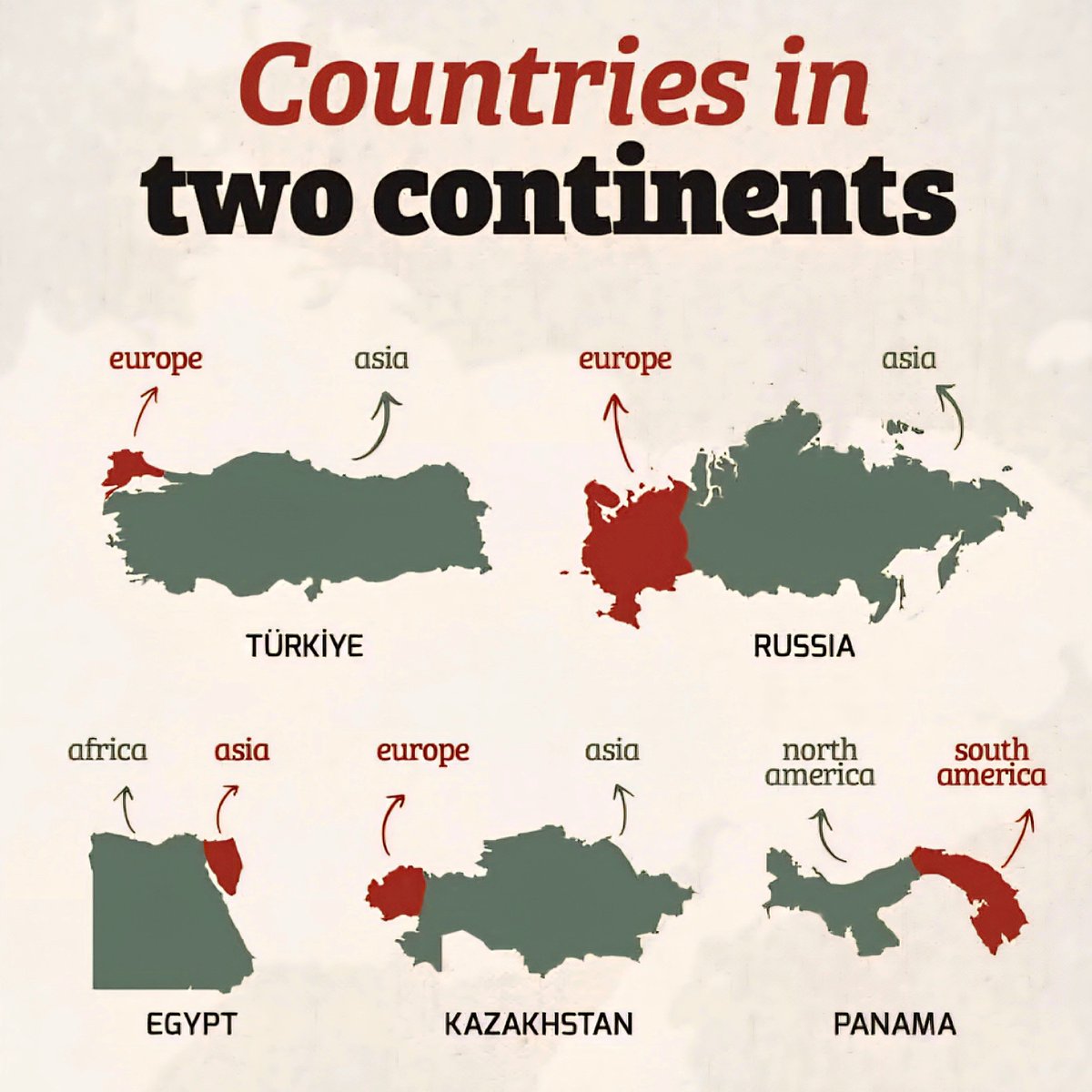
1. Turkey: The Gateway Between Europe and Asia
Turkey remains one of the most prominent countries bridging Europe and Asia. It is uniquely positioned with a small part of its landmass in southeastern Europe (Thrace) and the majority in western Asia (Anatolia). Istanbul, Turkey’s largest city, serves as a symbolic and strategic hub connecting the east and west. Historically, the city was the capital of the Byzantine and Ottoman Empires, reinforcing Turkey’s geopolitical significance. Travelers and traders frequently traverse its bustling streets, crossing from European streets into the bustling markets of Asia, exemplifying the country’s transcontinental identity. The country’s diverse culture, rich history, and strategic importance make it a critical player in regional diplomacy, trade, and cultural exchange.
2. Russia: The Largest Transcontinental Nation
Stretching across both Eastern Europe and northern Asia, Russia is the world’s largest country, spanning 11 time zones. Its European part, which includes major cities like Moscow and Saint Petersburg, acts as the political and economic heartland. Meanwhile, its Asian territories extend deep into Siberia and beyond, influencing global energy markets and natural resource supply chains. Russia’s dual continental nature brings about a blend of European and Asian heritage, impacting its politics, culture, and military strategy. Its role on the global stage as a bridge between two continents continues to influence worldwide geopolitics, especially amid ongoing efforts to strengthen connections with Asian markets and political alliances.
3. Azerbaijan: The Land of Contrasts
Nestled at the crossroads of Eastern Europe and Western Asia, Azerbaijan stands as a prime example of a transcontinental country. The nation’s capital, Baku, is a thriving city with a skyline punctuated by modern skyscrapers and ancient architecture. The Caspian Sea borders Azerbaijan to the east, providing vital access to energy resources and serving as a strategic maritime route. Its borders with Russia, Georgia, Armenia, Iran, and Turkey position it uniquely in regional politics. Azerbaijan’s rich culture, influenced by Persian, Turkish, and Russian traditions, reflects its identity as a bridge between continents. The country’s natural resources, particularly oil and gas, have made it a critical player in regional energy markets.
4. Kazakhstan: From the Heart of Asia to Europe
Kazakhstan, the ninth-largest country in the world, spans the vast steppes of Central Asia and extends into Europe through its western territories. The country’s capital, Nur-Sultan (formerly Astana), exemplifies modern ambitions with futuristic architecture. Historically a key part of the Silk Road, Kazakhstan continues to play a vital role in regional trade and economic development. Its diverse landscape includes deserts, mountains, and plains, supporting a wide array of flora and fauna. Politically, Kazakhstan maintains a balanced approach, cultivating partnerships across Europe and Asia, and emphasizing regional stability and economic growth. This strategic position gives Kazakhstan a significant voice in Eurasian geopolitics.
5. Georgia: A Bridge from the Caucasus to the West
Although smaller in size compared to its neighboring countries, Georgia’s strategic location at the crossroads of Europe and Asia makes it important geopolitically. The country boasts ancient history and a rich cultural legacy, with its capital, Tbilisi, blending traditional architecture with modern influences. Georgia’s approximate position on the southern gateway of the Caucasus makes it vital for transportation corridors linking the Black Sea to the Caspian Sea, thus connecting Europe and Asia through trade routes. Its aspirations to integrate with Western institutions like NATO and the European Union reflect its desire to forge closer ties to Western democracies. Georgia’s history as part of the Silk Road underscores its importance in regional commerce.
6. Armenia: Between Europe and Asia
Armenia’s geographical positioning places it between the Caucasus Mountains, connecting Eastern Europe and Western Asia. Its rich history is deeply tied to ancient civilizations, Christian heritage, and regional conflicts. Although landlocked, Armenia maintains strong cultural and economic ties with Russia and neighboring countries. Its strategic location makes it a crucial link for transportation and trade routes, and its cultural influence extends into both European and Asian spheres. Armenia’s ongoing efforts to strengthen diplomatic and economic links with Western nations reflect its desire to diversify its alliances and embrace broader regional integration.
As geopolitical dynamics evolve, countries that straddle two continents continue to shape regional and global affairs. Their unique geographic positions foster rich cultural exchanges, strategic partnerships, and economic collaborations that influence international stability and prosperity—a compelling testament to the interconnected nature of our world in 2025.
 ChatGPT
 Perplexity
 Gemini AI
 Grok AI