Select Language:
Asia: The Birthplace of Major Religions
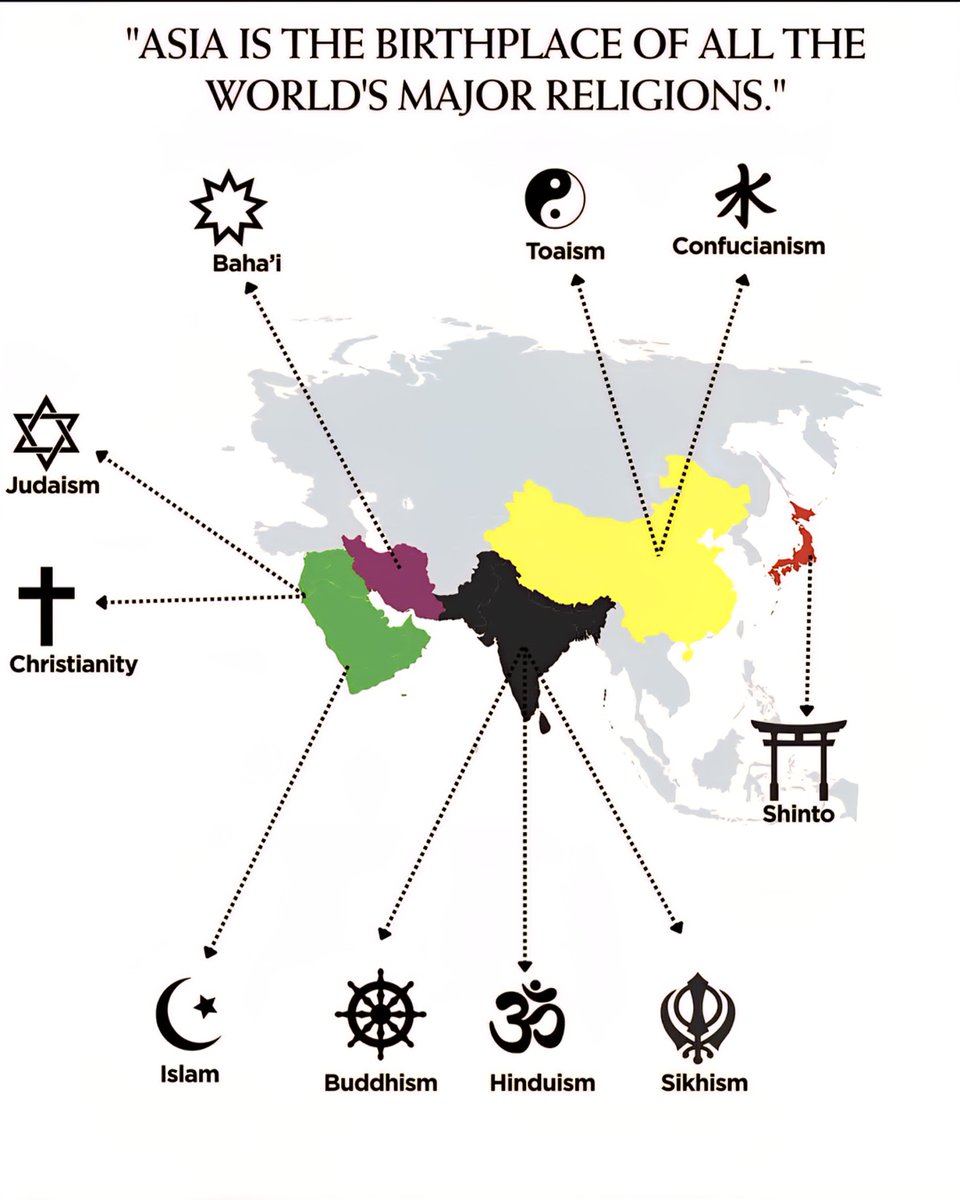
The Origins of Hinduism in the Indian Subcontinent
Hinduism, often regarded as the world’s oldest major religion, traces its roots back over 4,000 years in the Indian subcontinent. It is a complex faith woven through ancient texts like the Vedas and Upanishads, which form the spiritual foundation for approximately a billion followers today. Its core beliefs include karma, dharma, and moksha, emphasizing the cycle of rebirth and spiritual liberation. Hindu temples, rituals, and festivals continue to shape cultural practices across India and beyond, making it a vibrant testament to Asia’s spiritual heritage.
Buddhism’s Journey from India to the World
Founded roughly 2,500 years ago in what is now Nepal and India, Buddhism originated as a reaction to existing religious practices, seeking to address suffering and spiritual awakening. Siddhartha Gautama, known as the Buddha, preached the Four Noble Truths and the Eightfold Path as a way toward enlightenment. Over centuries, Buddhism spread through Asia, flourishing in countries such as China, Japan, Korea, and Thailand. Today, it’s estimated that over 500 million people worldwide follow various forms of Buddhism, with Asia still serving as the spiritual epicenter, hosting sacred sites like Lumbini—the Buddha’s birthplace in Nepal—and the ancient monasteries across Tibet and Myanmar.
The Rise of Confucianism and Taoism in China
Confucianism and Taoism, two influential philosophies emerging from China around the 6th century BCE, continue to shape East Asian cultures. Confucianism emphasizes social harmony, respect for elders, and moral integrity, forming the backbone of Chinese social and political life for centuries. Taoism, attributed to Laozi, promotes living in harmony with the natural world and pursuing spiritual balance. Both philosophies have deeply influenced Chinese art, politics, and daily life, evident in practices like ancestor worship, traditional medicine, and martial arts. Their doctrines actively inform contemporary Chinese society while preserving their ancient roots.
Shinto and Indigenous Religions of Japan
Unique to Japan, Shinto is an indigenous faith centered around kami—spirits residing in natural elements, objects, and ancestors. It predates Buddhism’s arrival in Japan and remains deeply ingrained in Japanese culture and rituals. Festivals, shrine visits, and purification rites mark Shinto practice, blending seamlessly with Japanese life. Besides Shinto, Japan also incorporates Buddhist traditions, making it a nation where multiple spiritual paths intertwine harmoniously.
Islam’s Historic Presence and Expansion in West Asia
Asia is also home to some of the world’s earliest and most influential Islamic civilizations. The religion, founded in the 7th century CE in the Arabian Peninsula, swiftly expanded across Persia, Central Asia, and South Asia. Today, countries like Saudi Arabia, Iran, Pakistan, and Indonesia are key centers of Islamic culture. The grandeur of mosques such as the Sultan Ahmed Mosque in Turkey and the historic city of Samarkand in Uzbekistan reflect centuries of Islamic art and architecture. The religion continues to influence social norms, politics, and culture throughout West, Central, and South Asia.
Sikhism’s Origin in the Punjab Region
Emerging in the 15th century in the northwestern Indian Punjab region, Sikhism was founded by Guru Nanak Dev Ji as a response to religious conflicts, emphasizing equality, justice, and devotion to one God. Sikh practices include community service, equality among all people, and devotion through prayer and meditation. The Golden Temple in Amritsar stands as the spiritual and cultural epicenter for millions of Sikhs worldwide, emphasizing the religion’s importance in contemporary Asian society.
The Spread of Christianity through Asia
Christianity, originating over 2,000 years ago in the Middle East, made inroads into Asia through trade routes, missionaries, and colonial expansion. Countries like the Philippines, with its predominantly Catholic population, showcase the religion’s deep roots, while Christian minorities exist in regions of India, South Korea, and China. Modern Christianity in Asia is diverse, encompassing Catholicism, Protestantism, and Eastern Orthodoxy. Several historic churches and mission hospitals still serve as symbols of the faith’s enduring presence.
Asian countries continue to serve as the cradle and preserve the historical roots of many of the world’s prominent religions. These spiritual traditions, intertwined with cultural and political histories, continue to influence millions of lives across the continent and the world. As we advance into 2025, Asia remains a vital hub where faith, history, and modernity converge.
 ChatGPT
 Perplexity
 Gemini AI
 Grok AI