
Select Language:
The Growing Crisis: Water Conflicts in Asia
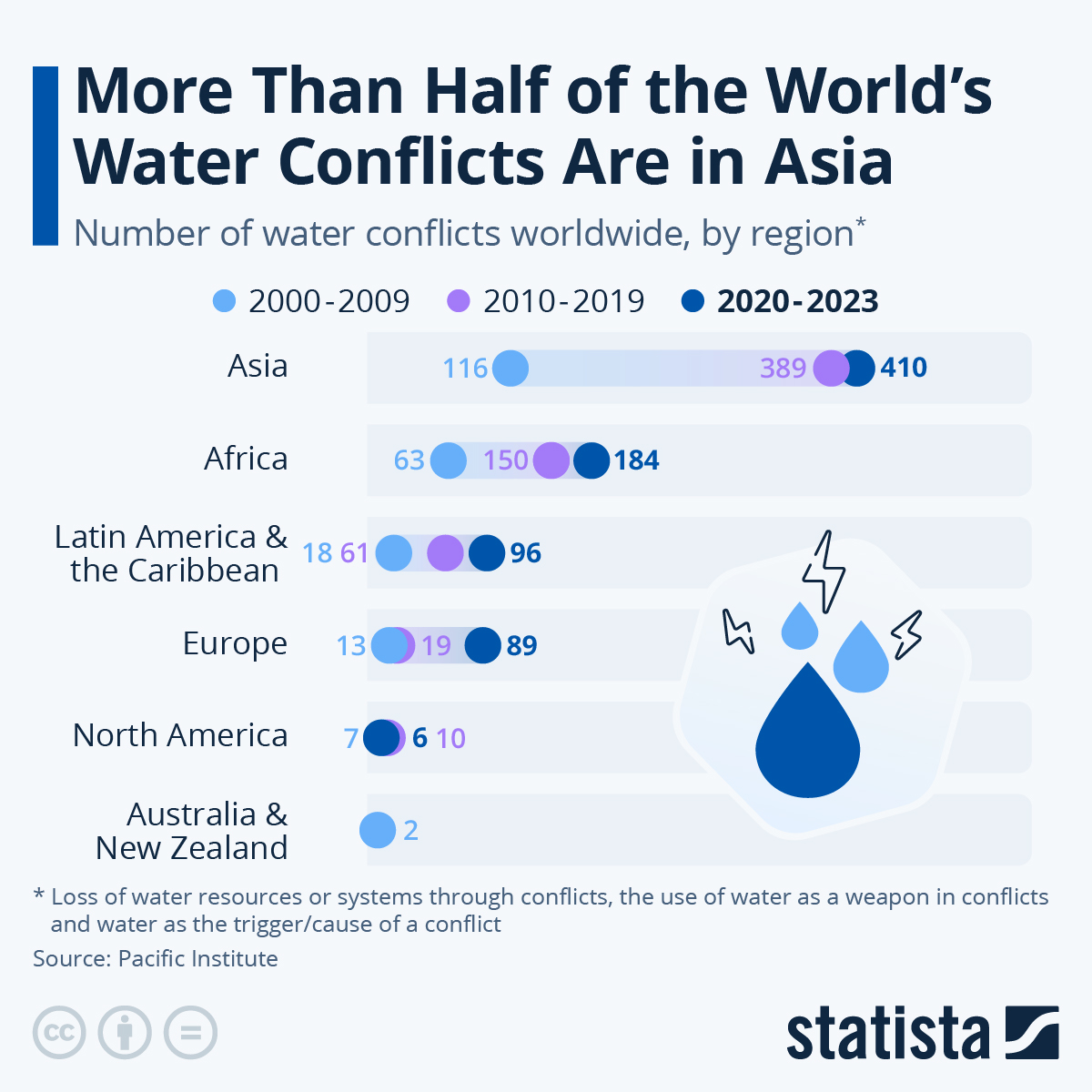
Water scarcity and conflict have become increasingly intertwined in the modern world. Recent data highlights Asia as the focal point of this issue, where more than half of the global water conflicts have occurred from 2020 to 2023. The Pacific Institute’s findings reveal not only the alarming frequency of these incidents but also the various dimensions of water-related disputes.
The Scale of Water Conflicts in Asia
According to the Pacific Institute, Asia has experienced a staggering 410 water conflicts over the past four years. This figure starkly contrasts with the total of 389 conflicts recorded in the preceding decade from 2010 to 2019. The increase in water conflicts accentuates the growing urgency of the issue.
- Comparative Data:
- Africa reported the second-highest number of conflicts during this span, totaling 184.
- Latin America and the Caribbean also reported 184 conflicts, highlighting the regional challenges surrounding water.
- Europe and North America saw significantly fewer incidents, with 89 and 6 conflicts respectively.
This distribution indicates that while water crises are a global concern, they are particularly prevalent in Asia.
Types of Water Conflicts
The nature of water conflicts can be categorized into three primary groups, as defined by the Pacific Institute:
Casualty Conflicts
Casualty conflicts arise when water resources or infrastructures become either intentional or incidental targets of violence. This category highlights the direct impact of conflict on the availability of essential water resources, leading to significant humanitarian crises and detrimental effects on communities reliant on these water systems.
Water as a Weapon
In some cases, water is transformed from a basic necessity into a weapon during violent conflicts. Water resources can be manipulated to gain leverage over opponents, leading to broader impacts on populations and exacerbating existing tensions. Using water as a weapon underscores the strategic importance of these resources in geopolitical maneuverings.
Trigger Conflicts
Trigger conflicts emerge directly from disputes over the control of water. These conflicts arise when economic interests or physical access to water become points of contention, often igniting violence over scarcity or perceived inequities in water distribution. As water becomes increasingly scarce due to environmental changes and population growth, the potential for trigger conflicts rises.
Contributing Factors to Water Conflicts
Several underlying factors contribute to the rising incidence of water conflicts in Asia:
Population Growth
With rapid population growth, particularly in urban areas, the demand for clean and accessible water resources has surged. This escalating demand strains existing water systems, aggravating tensions over access and control among different groups.
Climate Change
Climate change plays a significant role in exacerbating water scarcity. Changing weather patterns lead to more frequent droughts and erratic rainfall, further diminishing water availability and increasing competition among communities, regions, and countries.
Political Instability
Many areas experiencing water conflicts in Asia are also affected by broader political instability. Governance challenges complicate water management and allocation, leading to disputes as various stakeholders vie for limited resources.
International Implications
The ramifications of water conflicts in Asia can extend beyond regional borders. As countries grapple with these disputes, international relations may be affected as well. Shared water resources often cross national boundaries, requiring cooperation and negotiation to prevent conflicts from escalating. Consequently, addressing the root causes of water conflicts in Asia has implications for regional stability and global security.
Possible Solutions and Strategies
Addressing the escalating water conflicts in Asia will require multifaceted strategies that encompass:
Improved Water Management
Innovative approaches to water management, including efficient use, recycling, and conservation, can help alleviate pressure on existing water resources. Collaborative management involving local communities and governments can lead to more equitable distribution.
International Cooperation
Engaging in dialogue and negotiation over shared resources can help mitigate water conflicts. Establishing cooperative agreements among nations sharing water sources can facilitate sustainable practices and reduce the potential for disputes.
Investment in Infrastructure
Investing in water infrastructure will be vital to improving access, managing scarcity, and reducing the burden on existing systems. This includes upgrading facilities, expanding distribution efforts, and implementing new technologies for water purification and desalination.
As the data from the Pacific Institute indicates, the urgency to address water conflicts, especially in Asia, is more pressing than ever. The interrelationship between water resources and conflict requires concerted efforts to foster sustainable practices, equitable distribution, and international collaboration.
 ChatGPT
 Perplexity
 Gemini AI
 Grok AI