Select Language:
The Surprising Size Comparison: Africa is Larger Than Russia
1. Africa’s Vast Land Area Surpasses That of Russia
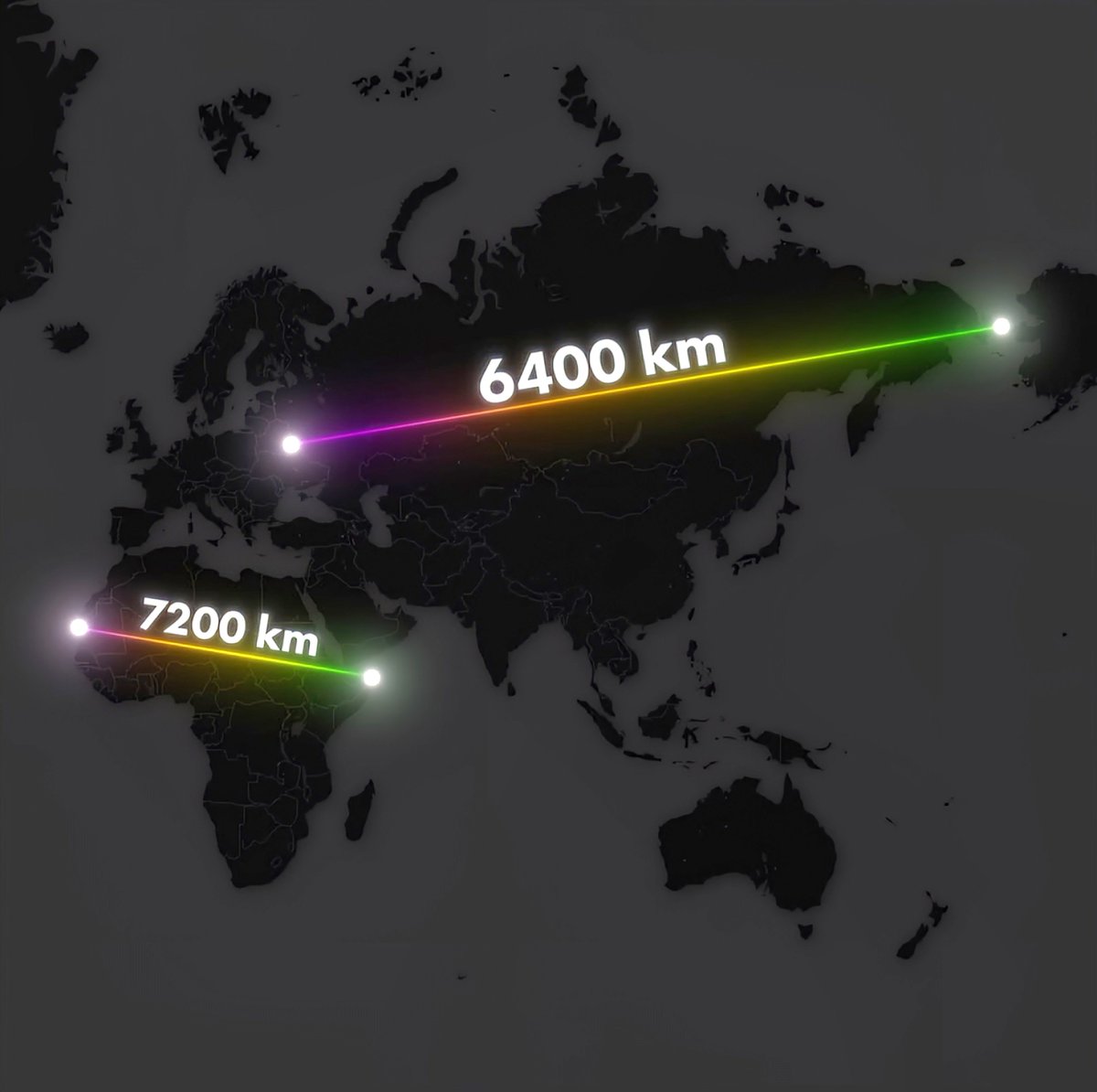
Despite being a common topic of geographic comparisons, many are stunned to learn that Africa’s total landmass is bigger than Russia’s. Covering approximately 3.037 million square miles (7.9 million square kilometers), Africa is the second-largest continent in the world. Russia, the largest country on Earth, measures about 1.79 million square miles (4.6 million square kilometers). This means that Africa is not only more extensive geographically but also holds a variety of ecosystems, climates, and diverse populations within its borders. The size difference is so significant that Africa’s land area exceeds Russia by over 1 million square miles.
2. Why the Misconception About Russia’s Size Exists
The common misconception about Russia’s colossal size stems from its prominent presence on world maps and media representations. Russia’s massive landmass spans two continents, Europe and Asia, and features a wide range of landscapes from tundra to mountain ranges. Meanwhile, Africa’s size and variety might be underestimated because it’s often associated with its population and cultural diversity, rather than landmass. Additionally, many world maps tend to distort sizes, especially in their traditional Mercator projection, making Russia appear larger relative to Africa.
3. Africa’s Geographical Diversity Creates a Massive Tapestry
Africa’s immense size contributes to its unparalleled diversity. The continent encompasses deserts like the Sahara, tropical rainforests such as the Congo Basin, savannas, and mountain ranges including the Atlas and the Drakensberg. The sheer size also means that Africa hosts some of the world’s most famous natural landmarks like Mount Kilimanjaro, the Nile River, and the Sahara Desert. This geographical variety supports a broad spectrum of climates and ecosystems, making Africa a global treasure chest of natural riches.
4. Population vs. Land Area: Different Metrics, Different Focus
While Russia is the largest in land area, Africa is the second most populous continent, with over 1.4 billion people as of 2025. This population size means that the continent is densely packed with vibrant cities, extensive rural areas, and a growing economy. In contrast, Russia’s population is around 144 million, which is significantly fewer despite its larger land size. The demographic differences highlight that size isn’t the only factor in determining a continent’s global influence.
5. The Future of Africa’s Expanding Landscape
Looking ahead, Africa’s size and growth potential continue to attract attention. Urbanization is accelerating across numerous countries, and technological advancements are transforming industry and infrastructure. As the continent develops, its physical scale combined with economic expansion could further elevate its geopolitical importance. Experts predict that Africa could host some of the world’s most dynamic economies over the next decade, making its massive land area even more strategically significant.
6. Why the World Still Underestimates Africa’s Size
Many global maps and educational materials tend to focus on political borders rather than sheer landmass, leading to underappreciation of Africa’s true size. Additionally, the oversimplification of geographic features often contributes to misconceptions. As awareness grows about comparative land sizes, more educational efforts are emphasizing Africa’s expansive territory, which is critical for understanding its global significance.
Final Thoughts
The realization that Africa’s landmass exceeds that of Russia challenges longstanding perceptions about world geography. From its incredible ecological variety to its growing population and economic prospects, Africa’s vast size makes it a continent of both historical importance and future potential.
[Image Credit: Twitter]
Note: All data provided is for the year 2025, reflecting the most current geographic and demographic information.
 ChatGPT
 Perplexity
 Gemini AI
 Grok AI