Select Language:
The Most Influential Countries in 2025: A Closer Look
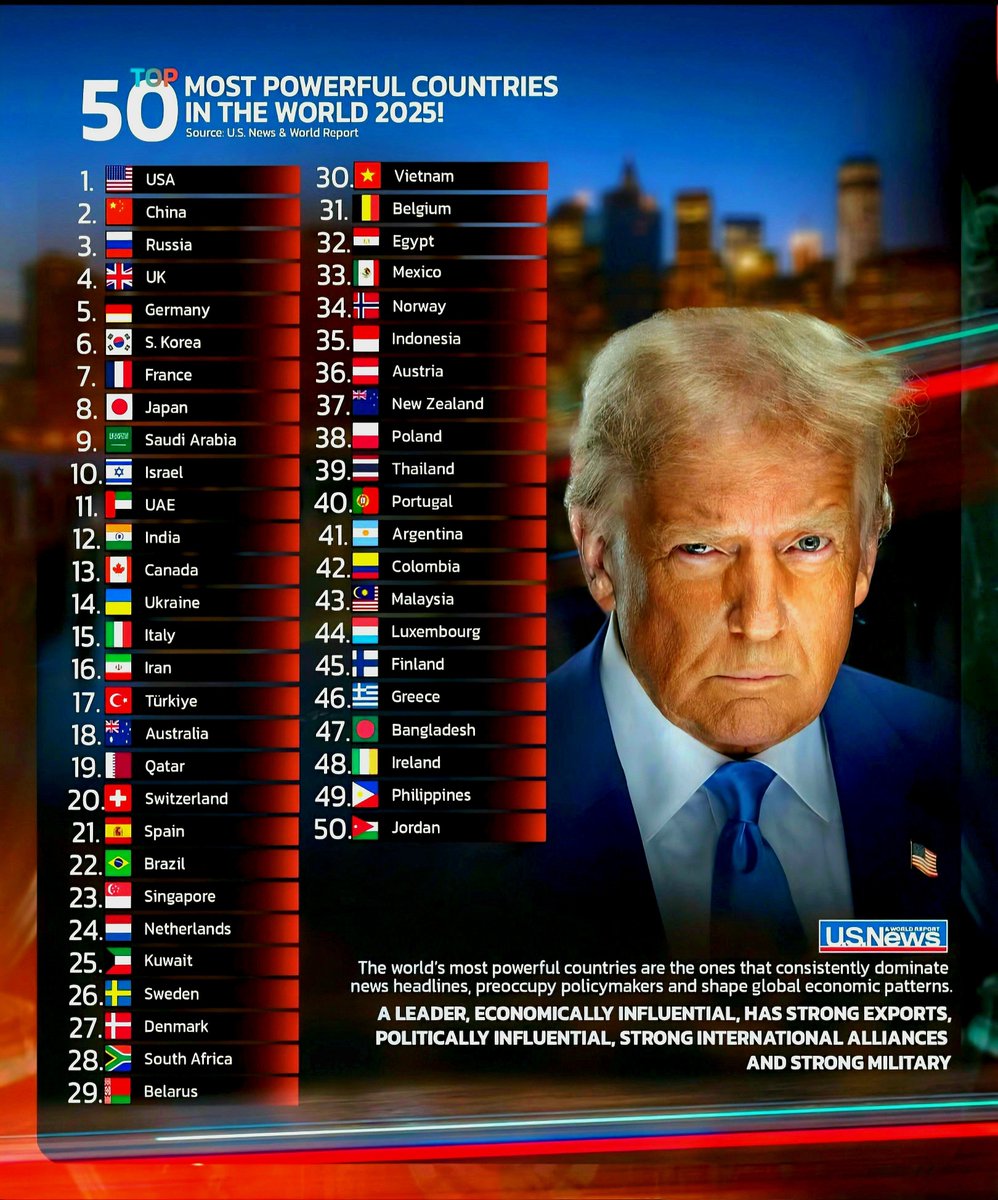
1. United States Maintains Global Dominance
The United States continues to hold onto its position as the world’s most powerful country in 2025. With unmatched military strength, technological innovation, and economic influence, America leads the way in shaping global policies. Its extensive network of alliances, including NATO, further solidifies its position as a superpower, while investments in AI and space exploration keep it at the forefront of cutting-edge technology.
2. China Strengthens Its Economic and Military Power
China has solidified its role as a formidable global force in 2025. Its rapid economic growth over the past decade has propelled it into second place. The nation’s strategic Belt and Road Initiative fosters international influence through infrastructure projects and trade partnerships across Asia, Africa, and Europe. Additionally, investments in military modernization and technological innovation enhance China’s standing on the world stage.
3. Russia Asserts Its Geopolitical Presence
Russia remains a key player in 2025, leveraging its vast natural resources and military capabilities to maintain influence. The country’s focus on modernizing its armed forces and expanding its digital and cyber warfare capacities have augmented its geopolitical clout. Russia’s alliances with neighboring countries and strategic positioning in Eurasia help sustain its powerful status.
4. India’s Rapid Rise Continues
India’s economy continues to grow exponentially, making it one of the top global powers. With a population surpassing 1.5 billion, India’s demographic dividend fuels technological advancements, military expansion, and economic development. The nation’s increasing role in regional and international affairs is reflected in its leadership in the BRICS alliance and its strategic partnerships across Asia and Africa.
5. Japan’s Technological and Economic Strength
Japan holds its place as a technological powerhouse, specializing in robotics, electronics, and advanced manufacturing. Its sophisticated economy and strategic diplomatic relations in the Asia-Pacific region bolster its influence. Despite demographic challenges, Japan remains resilient by investing heavily in innovation and sustainable energy initiatives.
6. Germany’s Economic Prosperity in Europe
As Europe’s largest economy, Germany remains a vital player in global economic and political affairs. Its leadership within the European Union, strong manufacturing sector, and focus on renewable energy make it an essential contributor to global stability. Germany’s diplomatic efforts and technological advancements sustain its status among the top powers.
7. United Kingdom’s Post-Brexit Influence
Though no longer part of the European Union, the UK continues to wield significant influence through its financial sector, diplomacy, and technological innovation. The country’s global connections, especially within the Commonwealth, bolster its strategic position, and its military presence remains substantial.
8. France’s Cultural and Military Presence
France maintains a strong cultural influence worldwide, alongside a capable military. Its active involvement in peacekeeping and diplomatic missions, combined with its technological industries, help sustain its power. France’s leadership in renewable energy and nuclear technology further enhances its standing.
9. Brazil’s Role as Latin America’s Powerhouse
Brazil stands out as Latin America’s most influential country in 2025. Its vast natural resources, expanding economy, and political stability make it a key leader in regional affairs. Brazil’s efforts in sustainable development, agriculture, and renewable energy have increased its international influence.
10. South Korea’s Innovation and Defense Capabilities
South Korea continues to be a technological innovator, especially in consumer electronics, semiconductor manufacturing, and renewable energy. Its robust military modernizations and strategic alliances, particularly with the United States, emphasize its regional strength and influence.
11. Canada’s Political Stability and Eco-Friendly Policies
Canada’s stable political environment and dedication to green energy initiatives elevate its global standing. Its leadership in climate change policy, extensive natural resources, and diplomatic efforts in international peacekeeping positions Canada as a forward-thinking nation.
12. Australia’s Strategic Regional Power
Australia’s strategic geographic location in the Indo-Pacific region, combined with its resilient economy, makes it a key regional power. Its investments in defense, sustainable development, and relationships with Asian nations bolster its influence.
13. Italy’s Cultural Diplomacy and Economic Resilience
Italy leverages its cultural heritage and tourism to bolster its global influence. Its economy demonstrates resilience through manufacturing, fashion, and automotive industries. Italy remains a vital member within the European Union, advocating for unity and stability.
14. Saudi Arabia’s Economic Diversification
Saudi Arabia’s commitment to diversifying its oil-dependent economy through Vision 2030 has increased its global influence. Its focus on renewable energy, technology, and regional diplomacy expands its reach in Middle Eastern geopolitics.
15. United Arab Emirates’ Technological and Financial Hub
The UAE, especially Dubai and Abu Dhabi, has cemented its reputation as a global financial and technological hub. Its investments in AI, finance, and tourism, combined with strategic regional diplomacy, make it a significant influencer in the Middle East.
16. South Africa’s African Leadership
South Africa continues to lead the continent in economic, political, and cultural terms. Its emerging tech sector, strategic alliances within Africa, and efforts towards sustainability position it as a vital regional leader.
17. Mexico’s Rising Influence
Mexico’s expanding economy, strategic geography, and growing manufacturing sector enhance its regional and international importance. Its partnerships within North America and investments in sustainable infrastructure boost its profile.
18. Indonesia’s Archipelagic Power
Indonesia’s large population and rich natural resources make it a rising star in Southeast Asia. Its focus on renewable energy, digital infrastructure, and regional diplomacy amplifies its influence.
19. Netherlands and its Global Trade Role
The Netherlands’ strategic position in Europe and expertise in logistics, agriculture, and technology sustain its influential status. Its proactive stance on sustainable development and innovation continue to solidify its impact.
20. Singapore’s Financial Hub Status
Singapore remains a prime financial center, with a focus on technology, cybersecurity, and trade. Its political stability and strategic location enable it to maintain global economic influence.
Note: This list reflects the 2025 geopolitical landscape, where diplomatic, military, and economic factors interplay to shape the world’s most powerful nations.
 ChatGPT
 Perplexity
 Gemini AI
 Grok AI