

Select Language:
Just about a week ago, I reached a definitive conclusion: I would never purchase another Ethernet cable.
If you’re anything like me, you probably have a drawer or box overflowing with various cables. While some are neatly categorized, like USB-C, my Ethernet collection resembles a jumbled mess of colorful cords, each with tiny labels indicating their capabilities. How much data can they actually handle? I had no idea—and that’s concerning.
I hadn’t given much thought to the Ethernet cables connecting my cable modem, router, Xbox, and desktop PC. Even after running speed tests multiple times and feeling that my network was lagging, I understood the issue: the speed of my entire network is limited by its slowest component.
If my Ethernet cables were outdated and unable to match the performance of my router or gateway, I was likely wasting money. There was no need for me to delve into the latest mesh router or gateway options. If my cables were from an earlier era, like those archaic ones from the days of Cat5, my entire network could be dragged down. Even if my Internet service provider had silently upped my broadband speed, I might not notice a difference due to these slow cables. Just the other day, I pulled out an old Cat5 cable from my Xbox—an artifact that’s been out of style for about two decades. Gross!
Mark Hachman / Foundry
A week prior to my realization, my colleague Dominic Bayley published an insightful article discussing the various types of Ethernet cables. I set out on my own investigation and learned that Ethernet comes in many categories, ranging from the antiquated Category 3 to the latest Category 8.
So, is Category 8 the crème de la crème? Yes, indeed! And surprisingly, acquiring a Category 8 cable isn’t going to break the bank. I found a bargain on Amazon—a five-pack of color-coded, nylon-braided Category 8 cables for just $35.99.
As internet speeds continue to surge, cable modems are evolving too. Yet, even the fastest modems and broadband services may only offer a few gigabits per second, whereas Cat8 cables can handle an astonishing 40 Gbps!
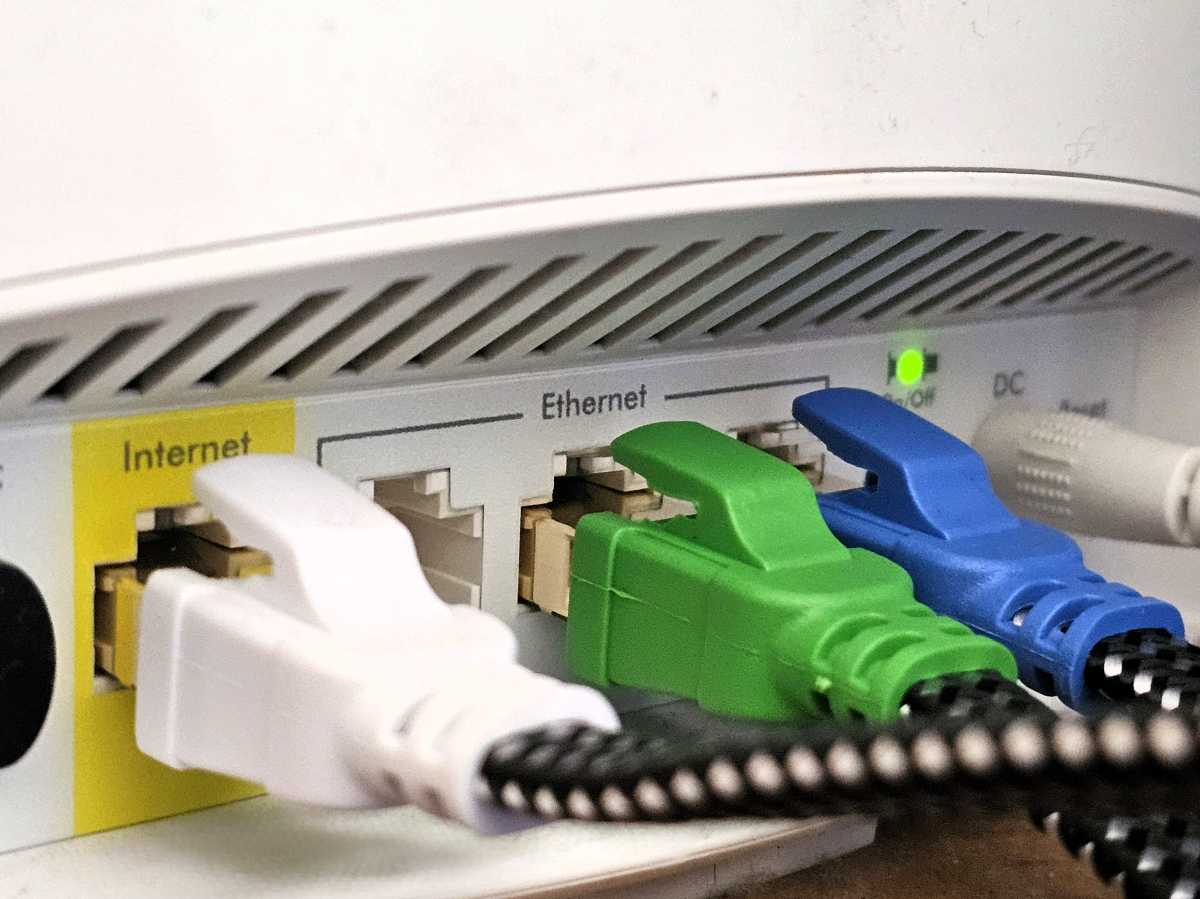
Mark Hachman / Foundry
It was a no-brainer for me. I ordered the cables from Amazon, swiftly replaced my outdated ones with the new nylon-braided options, and promised myself I wouldn’t have to worry about Ethernet cables ever again.
Grab a five-pack of color-coded, nylon-braided Cat8 Ethernet cables for just $35.99
 ChatGPT
 Perplexity
 Gemini AI
 Grok AI