

Select Language:
Neanderthals, our ancient human relatives, might have been more advanced in health practices than previously believed. A recent study indicates they could have used a sticky substance called birch tar not only for crafting tools but also for wound care and infection prevention.
Birch tar is a dark, glue-like substance produced by heating birch bark. Archaeologists often find it at Neanderthal sites, traditionally thought to be used mainly as an adhesive for tools. However, scientists now consider that it might have served additional purposes, particularly in medicine.
The new research, published in the journal PLOS One, was led by Tjaark Siemssen along with teams from the University of Cologne in Germany and the University of Oxford in the UK. Their goal was to determine whether birch tar could have had antibacterial properties that helped curb infections.
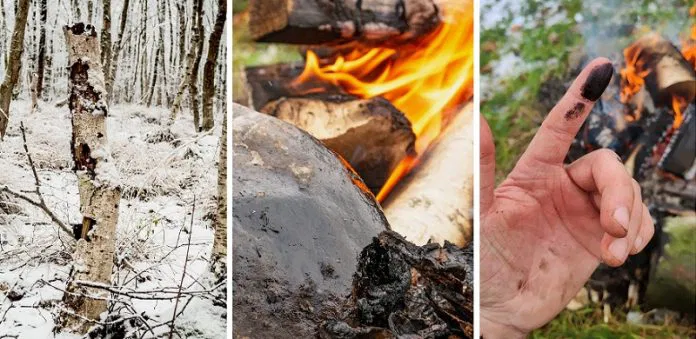
To explore this, researchers replicated how Neanderthals might have produced birch tar thousands of years ago. They used similar birch bark and experimented with simple methods such as heating the bark in clay pits or allowing tar to gather on stone surfaces—techniques accessible without advanced tools. These methods suggest that Neanderthals could have easily made birch tar using readily available resources.
Once they produced the tar, the team tested it against bacteria, including a common pathogen called Staphylococcus, which causes wound infections. The results showed that all the birch tar samples significantly slowed bacterial growth, indicating that the substance functioned as a natural antibacterial agent.
This discovery resonates with traditional practices observed among Indigenous communities in northern Europe and Canada, where birch tar has been used for centuries to treat wounds. The study supports the idea that Neanderthals might have independently discovered these medicinal benefits.
The researchers propose that birch tar could have served multiple purposes for Neanderthals—from repairing tools to treating injuries and preventing infections. Its potential role as an insect repellent adds even more to its versatility, providing additional protection in tough environments.
These findings contribute to the growing view that Neanderthals were capable of complex thought and innovation. They likely understood how to utilize natural materials around them to enhance their health and increase their chances of survival.
Furthermore, the study connects to modern scientific pursuits. With antibiotic resistance becoming an urgent global issue, researchers are revisiting natural substances for new treatments. Investigating ancient practices, a field sometimes called “paleopharmacology,” may reveal useful remedies that have been overlooked for centuries.
Producing birch tar was a labor-intensive, messy process involving fire and sticky materials. The researchers experienced firsthand how difficult it was to handle the substance—especially when cleaning tar off their hands—highlighting the skill and knowledge Neanderthals may have possessed.
Overall, this research paints a richer picture of Neanderthal life. Far from being merely tool users, they might have been early healers who harnessed natural resources to safeguard their health long before modern medicine existed.
 ChatGPT
 Perplexity
 Gemini AI
 Grok AI
