Select Language:
The phrase “survival of the fittest” is often used to describe wild animals. It means that the strongest or most adaptable animals will survive in their environment. In Monster Hunter, the monsters are tough enough to survive in even the harshest environments.
In Monster Hunter Stories 3: Twisted Reflection, you can help monsters by editing their genes. This is done ethically, like a conservation effort. Mixing and matching genes is the main way to create the most powerful and finely tuned Monstie you can have.
What Are Genes?
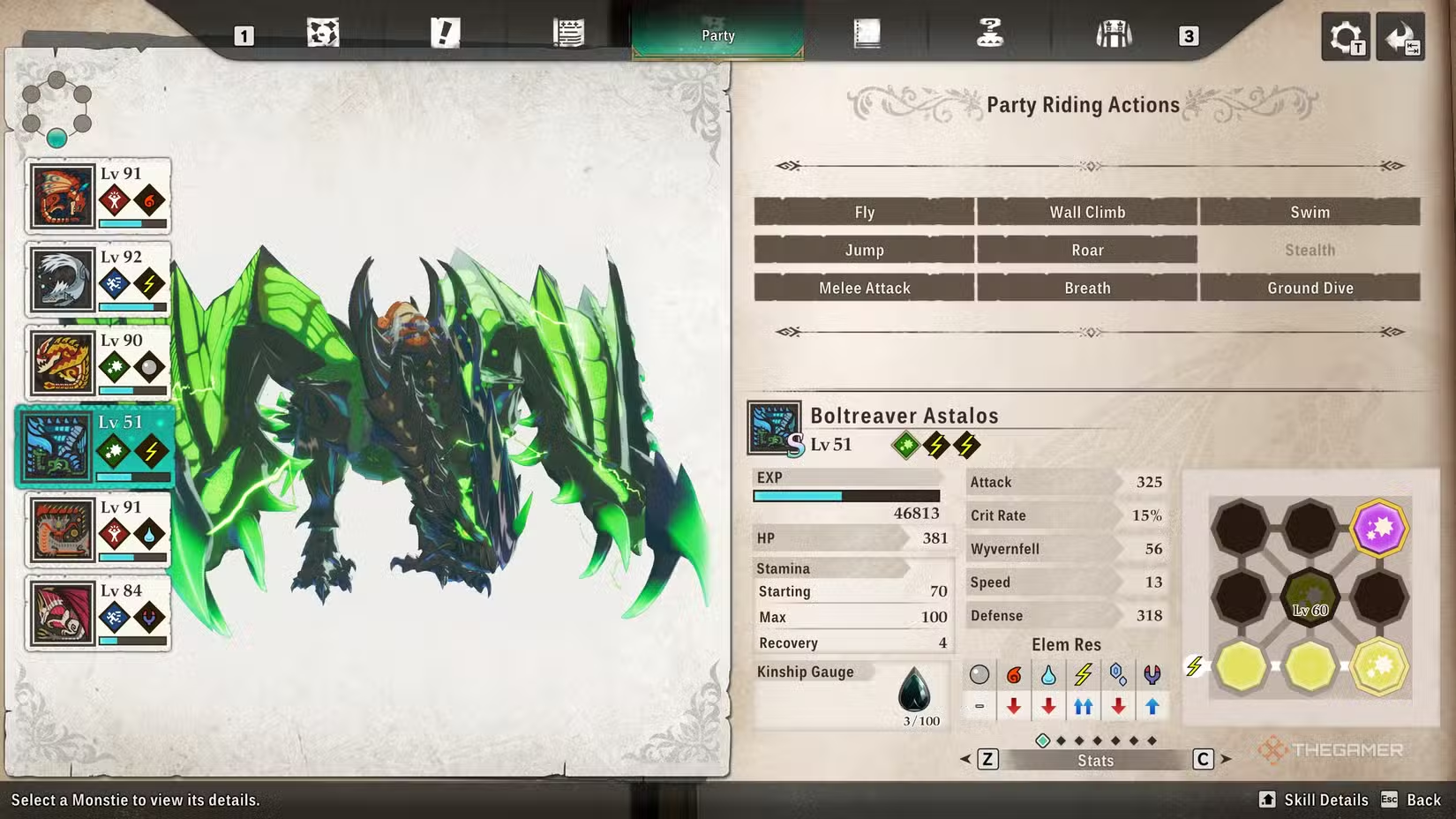
Genes determine your Monstie’s skills, both passive and active. When a Monstie is hatched, it draws genes from a common pool, which also decide how many genes it gets. You can view a Monstie’s genes in a 3×3 grid in their details. When they’re born, many slots are empty, but you can add genes from other Monsties to fill these slots.
Genes are shared between Monsties and are never used up or consumed. Swapping genes is free and can be done as often as you like. Also, a Monstie’s genes aren’t limited by its type. For example, a Fire-element Monstie can equip genes that grant Water or Dragon elements, or even skills that don’t necessarily match its element. If the gene exists, the Monstie can use it.
The Rite of Channeling and Bingo
The primary way to fine-tune a Monstie’s genes is through the Rite of Channeling. This process allows you to swap genes directly between Monsties or swap specific genes within a Monstie. You choose which Monsties andgenes to swap, and the process exchanges them by slot, including empty slots. You can also discover new genes through this method, which shows the monster usually associated with that gene and where to find their eggs.
Bingo is a system that rewards you for positioning genes strategically. When genes match up in specific patterns—like three Power genes in a row—you get a bonus, such as a damage increase. Matching both element and attack type can create multiple Bingos at once, which can connect across lines. Proper placement of genes can lead to significant bonuses, and some players spend hours optimizing their genes for Bingo effects.
Excursions and Environment Skills
Excursions are limited but interesting features. You need a Training Talisman to send one Monstie on an excursion, which can be obtained from the Melynx Emporium. Only one Monstie can go on an excursion at a time. The goal is to gain stat bonuses and Environment Skills from specific regions, depending on where the Monstie is present and its Ecosystem Rank there.
For instance, if you hatched an S-rank Seregios in Tarkuan and then placed it in Azuria’s habitat, you could send it on an excursion if it exists in that region’s ecosystem. Its rank in Azuria would affect the level of Environment Skills it can learn, up to three skills at once. Even if the Monstie isn’t in its native habitat, it still gains the region’s stat bonuses, which can be increased by defeating regional Elder Dragons to raise the default level.
Sending a Monstie to a region where its Ecosystem Rank is higher will promote its rank to match that environment. This helps develop Monsties with highly customized stats and skills.
Environment Skills
Environment Skills are special abilities tied to regions that Monsties can learn. Each region has a set of Skills at ‘B,’ ‘A,’ and ‘S’ ranks. A Monstie must have an Ecosystem Rank matching the region to access these Skills. Moreover, Skills can be awakened, changing their effects based on the genes the Monstie has. For example, a Skill that normally reduces damage might become completely negating damage.
Egg Skills
Egg Skills are a part of gene editing you have the least control over. When a Monstie hatches in an environment that grants it a second element, it automatically gets an Egg Skill of that element. These skills are random but can be transferred to other Monsties via the Rite of Channeling. The process involves hatching many Monsties until you get all the desired Egg Skills, then applying them where needed.
Here are some examples of Egg Skills and their effects:
| Egg Skill | Description | Element |
|---|---|---|
| Circle Stance | Grants Defense Up to all allies, increasing with each use | Normal |
| Spirit Charge | Restores stamina for all allies | Normal |
| Nature Heal | Recovers HP for all allies | Normal |
| Ardor Heart | Restores a Heart to one ally | Normal |
| Solar Cry | Fills the Kinship Gauge | Normal |
| Heat Shimmer | Grants Dodge Up to all allies, increasing with use | Fire |
| Red Mastery | Increases critical hit chance for all allies | Fire |
| Fireform | Boosts Attack Up for all allies | Fire |
| Flame Star | Increases damage for allies this turn, excluding user | Fire |
| Composure | Grants Wyvernfell (damage mitigation) to all allies | Water |
| Lunar Cry | Removes enemy buffs | Water |
| Charge Up | Grants Regenerate and Stamina Regen to all allies | Thunder |
| Volt Arms | Increases ailment inflict rate for allies | Thunder |
| Adamant Rage | Greatly boosts damage next turn | Thunder |
| Icebreaker | Grants Wyvernfell to user | Ice |
| Rime Wind | Increases allies’ Speed | Ice |
| Snow Mantle | Boosts Critical, Dodge, and Speed for user | Ice |
| Dragon Gate | Allows immunity to ailments for all | Dragon |
| Dragon Feller | Deals random Dragon damage | Dragon |
| E. Dominance | Inflicts Attack and Defense Down on enemies, stronger with each use | Dragon |
Getting the right genes for your Monsties is mostly about knowing what you want and hunting for the right combinations. Hatching the right genes, transferring Egg Skills, and optimizing gene placement through channeling and Bingo are all key parts of making your Monsties powerful and versatile.
 ChatGPT
 Perplexity
 Gemini AI
 Grok AI