Select Language:
Even though it’s still in early access and in the alpha phase, Ashes of Creation has a strong vision for its MMORPG. A big part of this vast and exciting world is the player’s role as a citizen of the realm. The land isn’t just for fighters and magic users; there’s room for any profession.
Artisans are the ones who gather, process, and craft items. If you learn these skills yourself, you’ll become very valuable to others. Here’s everything you need to know about artisan professions in Ashes of Creation.
All Artisan Professions in Ashes of Creation
There are three main types of artisan classes, each with multiple professions. These involve resources that you can find and purchase all over the land: Gathering, Processing, and Crafting.
Ashes of Creation relies heavily on player cooperation, with different people specializing in specific professions, especially within teams or guilds.
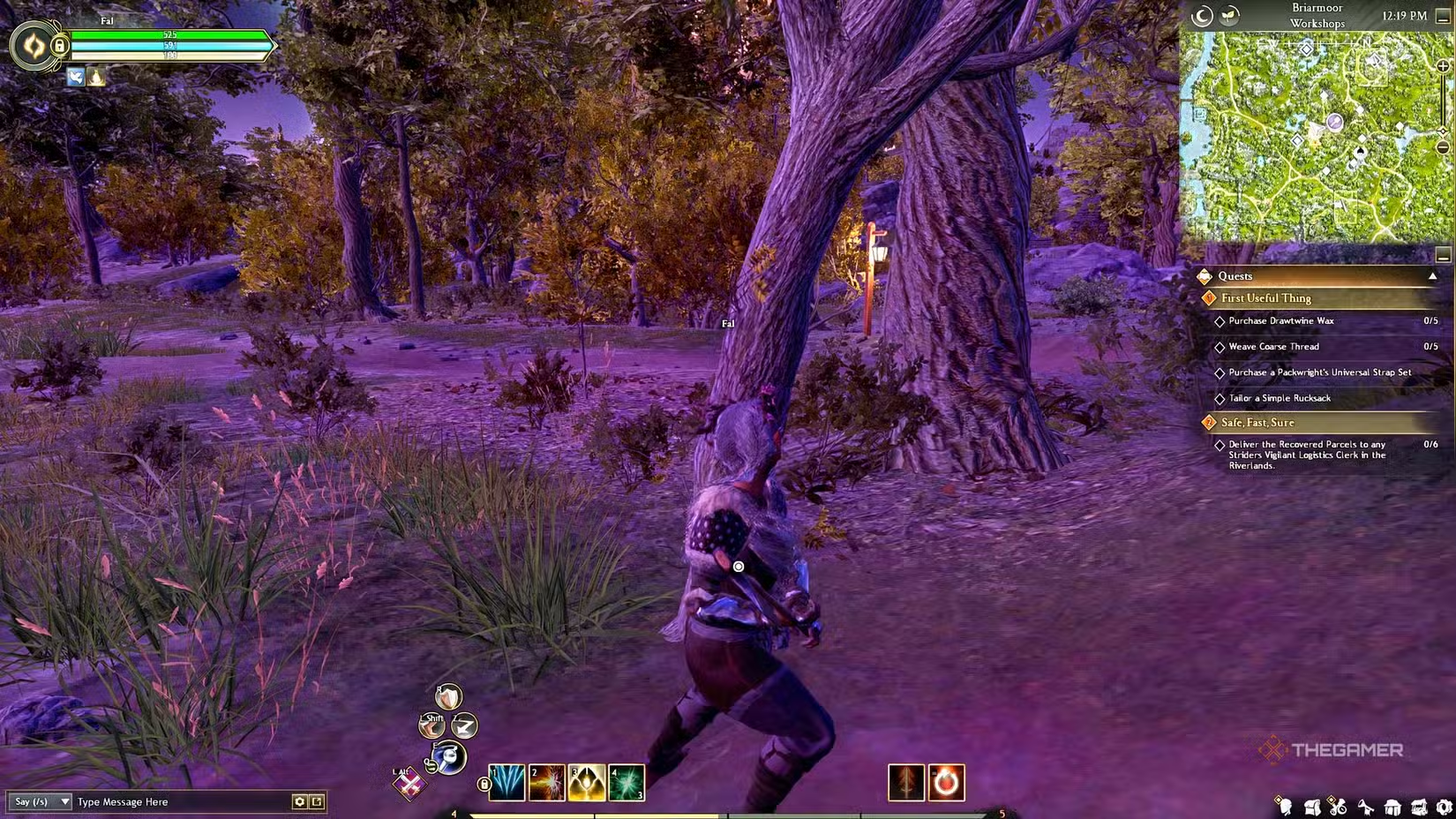
When you start playing, you will have basic tools like an axe or a pickaxe for gathering resources like wood and stone. As you advance, you can upgrade these tools or earn better ones through quests, such as completing the Short Term Service quest in Briarmoor.
Your character’s race, class, or religion won’t limit what professions you can choose.
| Artisan Class | Profession |
|---|---|
| Gathering | Fishing, Herbalism, Hunting, Lumberjacking, Mining |
| Processing | Alchemy, Animal Husbandry, Cooking, Farming, Lumber Milling, Metalworking, Stonemasonry, Tanning, Weaving |
| Crafting | Arcane Engineering, Armor Smithing, Carpentry, Jeweler, Leatherworker, Scribe, Tailoring, Weapon Smithing |
Progression in each profession comes from earning experience points by performing the tasks. Your character learns and improves by doing the work. When you gain enough experience, you earn a Skill Point, which you can spend in the Artisan Skill Tree.
Once you level up, you can ask a specialist in any town to promote your certification. Only the relevant artisan can promote or demote your certificates. For example, a Fashion Specialist can promote your weaving certificate or change it.
You might want to demote a certificate since there’s a limit on how many you can hold. If you aim to become a Grandmaster Weaver but already have certifications in Tailoring and Tanning, you’ll need to swap one to focus on your main profession.
| Level Range | Certificate Type | Limit per Character |
|---|---|---|
| 1-10 | Novice | 22 (all artisan types) |
| 11-20 | Apprentice | 5 |
| 21-30 | Journeyman | 4 |
| 31-40 | Master | 3 |
| 41-50 | Grandmaster | 2 |
All professions require specific tools that you can equip in your inventory. You’ll start with basic tools, but these will need replacing or repairing over time. As your skill improves, your tools will last longer and perform better because you get better at using them.
Better gear boosts your efficiency and improves the quality of gathered, processed, or crafted items. For example, a higher-quality tool will give you more yield and help you gather resources faster.
Gathering Tools
Tools are specific to each gathering profession:
- Fishing: Fishing Pole
- Herbalism: Sickle
- Hunting: Bow, Trap
- Lumberjacking: Axe
- Mining: Mattock, Pickaxe
You acquire or craft these tools, and they can be upgraded or repaired as you progress.
Processing Workstations
These are located at settlements or nodes and are essential for turning raw materials into useful items. Instead of tools, these stations are structures you interact with, each represented by icons like a potion bottle for Alchemy or a brick wall for Masonry.
Common processing stations include:
- Alchemy Station
- Animal Husbandry
- Cooking Station
- Crushing Station
- Farming Station
- Lumbermill Station
- Metalworking Station
- Stonemason Station
- Tanning Station
- Weaving Station
To use them, approach the settlement, zoom into the map, and look for the relevant icon or hover over the node to see what workstation is available. Resources are brought here for processing into crafted items.
All professions need the right tools or equipment, which can be kept in your inventory. You start with basic options, but as you become more skilled, your tools will improve and last longer, making your work faster and more efficient.
 ChatGPT
 Perplexity
 Gemini AI
 Grok AI