Select Language:
In any combat game, protecting and arming yourself is crucial. The same applies in Everwind, a delightful indie sandbox survival game that is currently in early access. You’ll be flying through the skies in a world full of mysteries and dangers. To stay safe, you need to find or craft the right gear—whether it’s armor or weapons—using resources from chests, dressers, enemies, or crafting stations on your ship.
You start on your first island in a randomly generated world, where basic armor and simple weapons help you fend off moderate threats. As you explore further, you’ll need to hunt for new weapons and armor, along with recipes to craft them. These can be looted from containers or obtained by defeating enemies and bosses. The stronger the enemies you fight, the better their loot, often including rare and powerful items.
To improve your defenses, you can craft and wear better gear as you progress across islands. You’ll also have access to the Upgrade Station, which can be built for your airship and used to enhance your weapons and armor. Upgrading involves applying materials to boost stats, providing additional buffs and protection. It’s wise to keep a steady supply of upgrade materials on your ship, as they are needed for various enhancements and may be required later in special recipes.
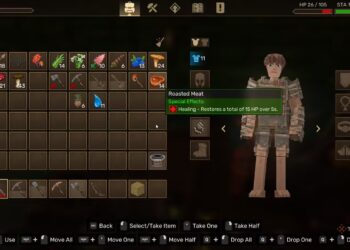
It’s important to regularly repair your gear, preventing it from breaking during quests or battles. Repair stations and kits—either crafted, bought, or found—are used for this purpose. Gear that is broken becomes almost useless, so monitoring your item durability bar (indicated by a color overlay behind icons) is essential. Redder icons mean the items are close to breaking and should be fixed promptly.
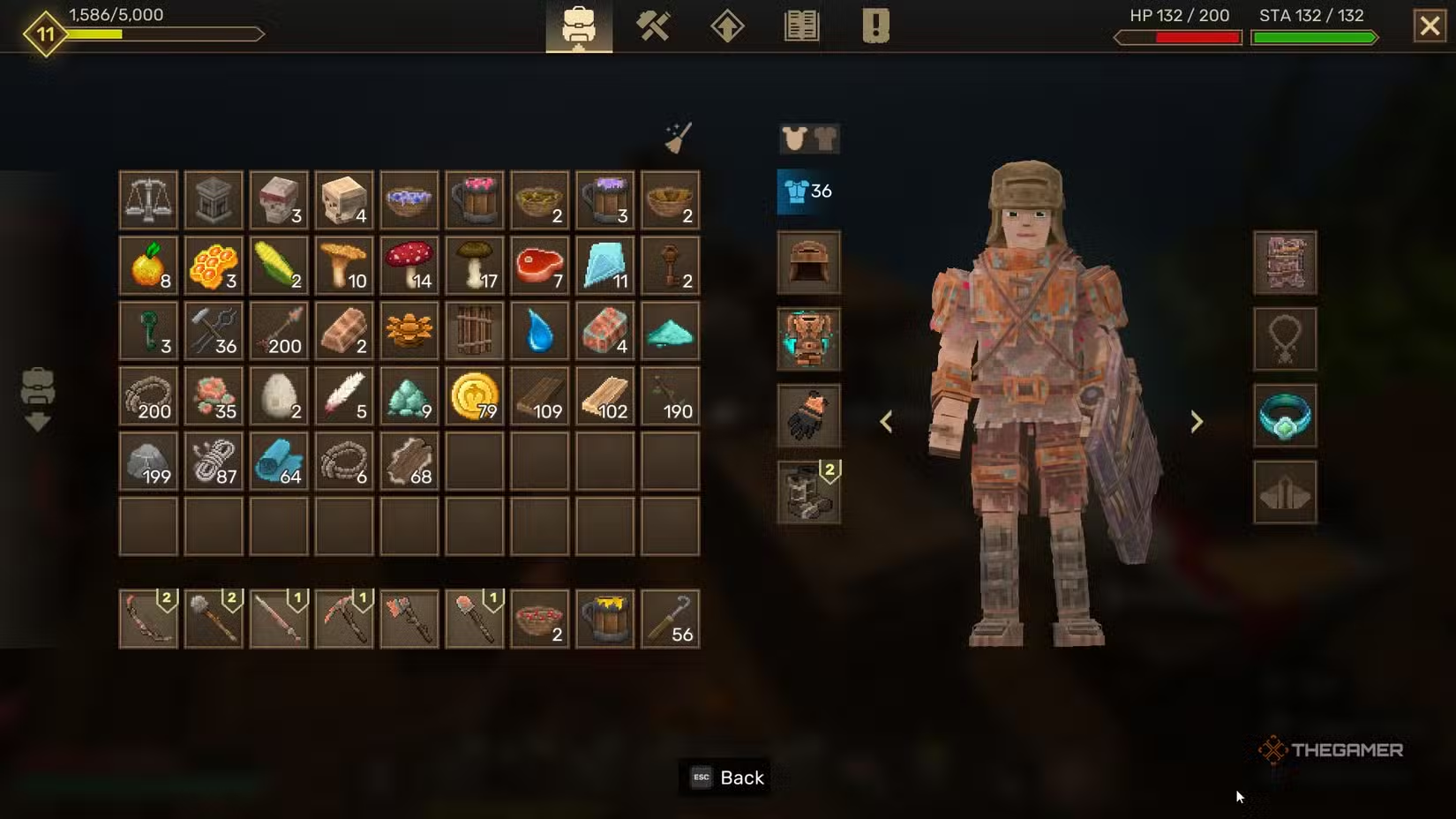
Your armor setup includes up to eight pieces worn on your character. These pieces are categorized into headgear, chest gear, hand gear, legs gear, and associated accessories like necklaces or rings. The most vital pieces are the core armor (on the left in the inventory), typically dropped by enemies or found in chests. Enemy loot can include rare or epic gear, so it’s good to loot every possible source during your travels.
Weapon options are diverse, ranging from melee to ranged. You can equip one-handed weapons—such as swords, hammers, or hatchets—for a quick and balanced attack style. Two-handed weapons, like long swords or axes, deliver more damage but take longer to charge up. Daggers are faster but less powerful, ideal for quick attacks. Ranged weapons, like bows and arrows, let you attack enemies from a safe distance. Combining ranged and melee tactics is often the best approach, starting with arrows to weaken foes before closing in for melee attacks.
Progressing further in the Warrior skill tree unlocks the ability to craft and use higher-tier gear. Initial items correspond to “Advanced” tier, requiring you to unlock these in the skill tree before accessing “Master” level equipment. Upgrades for bows, melee weapons, and armor are found at different levels within the tree, each requiring skill points and materials. Paying attention to your upgrade choices helps you focus on your preferred gear type.
To unlock higher-level gear, you need to traverse the Warrior skill tree, investing points into specific upgrade nodes, including bows, weapons, and armor. Doing so not only grants access to more powerful items but also enhances damage, buffs, and durability. You’ll want to balance these upgrades with other skill trees like Arcanist or Engineer, depending on your preferred combat style.
In Everwind, weapon choices include a variety of melee and ranged options, each with unique stats and recipes. For melee weapons, options include daggers (like Knapped Edges or Bronze Twins), bludgeons (Pebble Beater, Copper Club), swords (Stone Long Blade, Forged Blade), and axes (Stone Two-Handed Axe, Sparkshaft Axe). Ranged weapons include bows of various types—Branch Bow, Copper Bow—along with different arrow types, such as Copper Arrows.
Armor and shields also come in many forms, from light headgear like leather helmets to heavier chestplates like bronze or iron. Shields like the Plank Shield and Scrap Steamer Metal Shield provide additional defense. Accessories such as gloves, boots, and rings further customize your character’s protection and abilities, with many crafted from materials looted or gathered during exploration.
All gear needs maintenance; your tools and armor require regular repairs to prevent breakage in battle. Use Repair Stations and Repair Kits for this purpose. Keep an eye on durability bars—if they turn red or decrease significantly, it’s time to repair or replace the item to stay protected.
Ultimately, the key to survival in Everwind is managing your gear. Upgrade and repair your equipment regularly, explore thoroughly to find better items, and diversify your weapons to adapt to different foes. With an arsenal of armor and a well-trained skill tree, you’ll be ready to face the challenges that await in the skies.
 ChatGPT
 Perplexity
 Gemini AI
 Grok AI