Select Language:
The Cyberpunk Trading Card Game (TCG) has gained massive attention on Kickstarter, becoming the most funded card game in the platform’s history. But how exactly is the game played? Let’s explore the main phases of gameplay, along with details about the cards, play areas, and mechanics.
Interestingly, the game shares some similarities with Disney Lorcana, but it develops its own identity through unique features and mechanics, ensuring it stands apart from other trading card games.
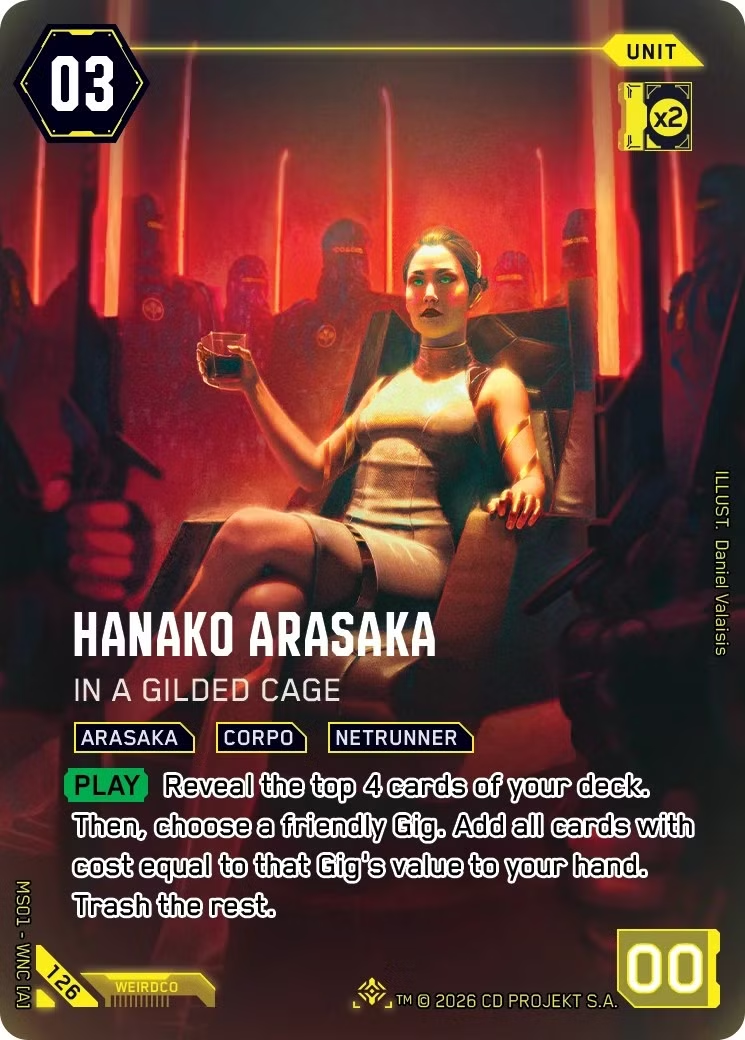
Reading a Cyberpunk TCG Card
Understanding a card is key to playing well. Here’s how to read a typical card:
- Cost (Top Left): The number of Eddies needed to play the card.
- Sell Tag (Below Cost): Cards with this can be played face down as Eddies.
- Tags (Under Card Name): Indicate which groups the card belongs to and can influence gameplay.
- Keywords/Abilities (Below Tags): Describe any trigger abilities or special effects, like “Play,” “Attack,” “Flip,” “Blocker,” or “Go Solo.”
- Type (Top Right): Indicates whether the card is a Legend, Unit, Program, or Gear.
- RAM (Below Type): Your deck can include cards with a RAM value equal or less than your Legend’s RAM, matching its color.
- Power (Bottom Right): Used for attacking and defending; the higher power wins.
Other details include rarity levels — seven in total: Common, Uncommon, Rare, Epic Rare, Secret Rare, Iconic Rare, and Nova Rare. The collection number at bottom left helps track sets, with future expansions likely to have their own unique numbering.
Terms You Need to Know
Here are some key terms:
| Term | Meaning |
|---|---|
| Spend | Turning a card 90 degrees to show it’s used this turn. |
| Ready | Turning a spent card back upright to reuse it next turn. |
| Attack | When a unit declares an attack, any trigger abilities are resolved first. |
| Blocker | Only cards with this keyword can block attacks or be declared as a blocker. |
| Play | Cards with this keyword resolve their effects when paid for during your turn. |
| Go Solo | Allows a card to attack on the turn it’s played, similar to haste in Magic: The Gathering. |
| Flip | Ability that triggers when a card is flipped face-up. |
| Gig | The dice used to win the game when the goal of six gigs per zone is achieved. |
| Legend | Special leader cards placed in a set zone. |
| Unit | Cards capable of attacking. |
| Program | Instant effect cards discarded after use, playable during your turn. |
| Gear | Equipment cards that boost units or grant abilities. |
| Street Cred | The number on your gig dice; can change during play and interact with card effects. |
Play Area Layout
The game’s play area is divided into eight zones, as shown in the diagram:
- Legends: Your three Legend cards at the start.
- Eddies: Where you keep cards used as currency.
- Fixer: Starting area for gig dice.
- Field: Play area for your active cards until they’re discarded.
- Friendly Gigs: Tracks your gigs.
- Rival Gigs: Tracks your opponent’s gigs.
- Deck: Your main draw deck.
- Trash: Discard pile for used or destroyed cards.
Having a clear picture of zones helps in understanding the flow of the game.
How to Play
The game unfolds in several phases:
Setup:
Shuffle your three Legend cards and place them face down. Position your gig dice in the fixer zone. Shuffle your main deck and draw six cards as your starting hand. You can mulligan once to redraw if needed.
Ready Phase:
- Draw one card; no hand size limit.
- Take a die from your fixer area (excluding the D20, which is taken last) and roll it to set its Street Cred, then place it in your gig zone.
- Prepare your cards: turn spent cards back upright, except on your first turn, where you start with two Legend cards spent to prevent an unfair advantage.
Play Phase:
- You may sell one card as Eddies per turn by showing it, then placing it face down in the Eddies zone; use it immediately if you want.
- You can call a Legend for two Eddies, flip it face up, and activate its abilities.
- Play other cards from your hand by paying their Eddies cost, using Legend cards as Eddies if needed. You can spend two face-down Legends to pay for one Legend card, flipping one of those Legends to ready/face-up state afterward.
Attack Phase:
- Decide if you attack your opponent’s spent units or directly.
- Spend your units or Legend cards, resolve any attack triggers.
- The opponent may use a Legend or blocker to intercept.
- Winning is determined by comparing the power levels; the higher wins, and the loser, along with any attached gear, goes to the trash.
- Attacks on your opponent directly follow similar rules, with the possibility of stealing gig dice based on the attacker’s power.
Turn sequence continues until a player begins their turn with six gigs or one player runs out of cards in their deck.
Early Access and Store Involvement
Players interested in trying the game early can download alpha decks from the official website. The print-and-play cards, along with a few dice, give a good feel for the game before the full release later this year.
Stores wanting to carry the Cyberpunk TCG and host events can register through the developer’s website, promoting local gameplay and competitions.
 ChatGPT
 Perplexity
 Gemini AI
 Grok AI