Select Language:
It’s tough to stand out in the card game world because creating fresh mechanics and play styles that haven’t been explored by games like Magic: The Gathering or Pokémon is challenging. However, Riftbound has a notable edge because of its engaging battlefield system. Its gameplay is detailed and layered, offering lots of room for future growth.
Whether you’re a League of Legends fan looking for new ways to interact with your favorite champions or a trading card game lover searching for something fresh, Riftbound has options for everyone.
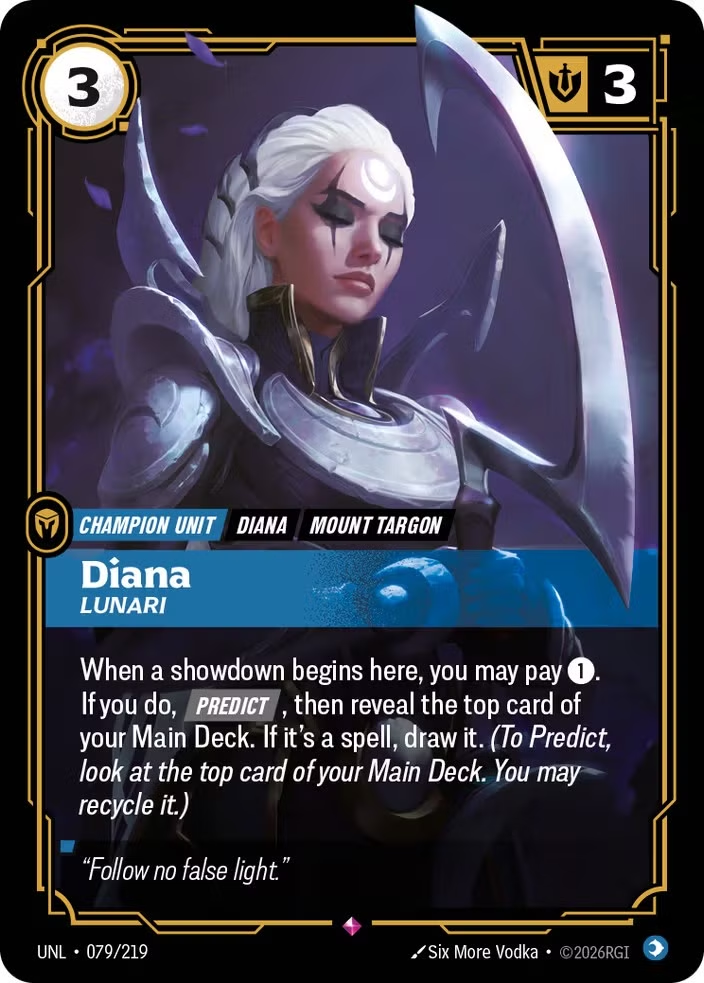
Anatomy of Riftbound Cards
The design of each card includes several key features:
- Energy Cost (Top Left): This is the amount of energy you need to play the card.
- Might (Top Right): Shows the card’s basic strength.
- Card Types & Tags (Above Name): Indicates whether it’s a Legend, Unit, Gear, etc., and the characters or areas associated with it.
- Keywords & Actions (Below Name): Describes what the card does, including special keywords, mechanics, and effects.
Cards also have a rarity level marked by a symbol at the bottom center. There are five rarities:
- Common
- Uncommon
- Rare
- Epic
- Overnumbered and Alternate Art
Glossary of Keywords in Riftbound
Understanding key terminology helps play better:
| Keyword | Meaning |
|---|---|
| Accelerate | Play a unit ready in play, avoiding the exhausted state. |
| Action | Play a card or activate abilities anytime, including during opponents’ turns. |
| Assault | Increases a unit’s attack strength when attacking. |
| Deathknell | Effect triggered when a card is sent to the trash. |
| Deflect | Adds a cost to target the card, similar to ward in other games. |
| Ganking | Ability allowing cards to move between battlefields. |
| Hidden | Play a card face down, with potential for reduced activation costs later. |
| Legion | Activated when a card is played before a Legion card that follows. |
| Mighty | A unit becomes mighty when its power reaches five or more, triggering effects. |
| Reaction | Can be played during closed states and on any turn. |
| Shield | Provides a shield value when defending. |
| Tank | Damage must be assigned to tank units first. |
| Temporary | This effect causes cards to be killed at the start of the turn. |
| Vision | Look at the top card of your deck and choose to put it in the trash. |
How to Play
Winning in Riftbound involves being the first to reach 8 points in a single-player game or 11 points in multiplayer mode. Points are gained by capturing and controlling battlefields. To win by reaching the eighth point, you either must have already scored a point from both battlefields or hold the opponent’s battlefield when scoring the final point.
Turns and Phases
Each turn has seven phases to manage, but they’re straightforward:
- Awaken: Ready all legal cards.
- Beginning: Resolve start-of-turn effects like triggers and ongoing abilities.
- Channel: Place two runes into your base from your rune deck. These help pay for cards and activate effects.
- Draw: Draw one card.
- Action: Play cards and activate abilities to conquer battlefields.
- Showdown: Engage in combat if units are present on both sides. The stronger unit stays, the weaker goes to the trash.
- End of Turn: Resolve lingering effects and empty your rune pool.
Showdowns in Detail
Showdowns can be combat or non-combat:
- Non-combat: Only one player has a unit on the battlefield; spells and effects are played back and forth until effects resolve and the battlefield is cleared or occupied.
- Combat: Both players have units on the battlefield. Gear may boost units’ strength. Conquering or holding a battlefield depends on the invested resources, and actions must be carefully resolved to catch all triggers.
Practice Tips
Once you’re familiar with the basic flow, the best way to improve is to start playing. As you go, you’ll learn how different mechanics and card combinations work together. Remember to read every card carefully to avoid mistakes and discover new strategies.
 ChatGPT
 Perplexity
 Gemini AI
 Grok AI