Select Language:
Money is a valuable resource that many of us work hard to earn, especially as prices continue to rise. If you thought playing games might be a way to escape financial worries, Where Winds Meet quickly reminds you that no one can escape the reach of the economy.
Most free-to-play games feature multiple types of currency, but Where Winds Meet goes further with a complex trading system and a small, simulated economy. It encourages you to get involved if you want to build wealth. Here’s what you need to know to act like a real trader.
What Is Trading?
In Where Winds Meet, trading doesn’t mean exchanging personal items with other players. Instead, it happens in a business sense. You buy goods when their prices are low and sell them when prices go up. Economic opportunities like these often involve buying out certain items, even if it means some loss for others, aiming to profit from the price change—similar to scalping.
You can participate in trading alone, in Solo Mode, but online mode offers more chances. Since every player experiences unique price shifts, online play makes the economy more dynamic and unpredictable.
Checking Price Fluctuations
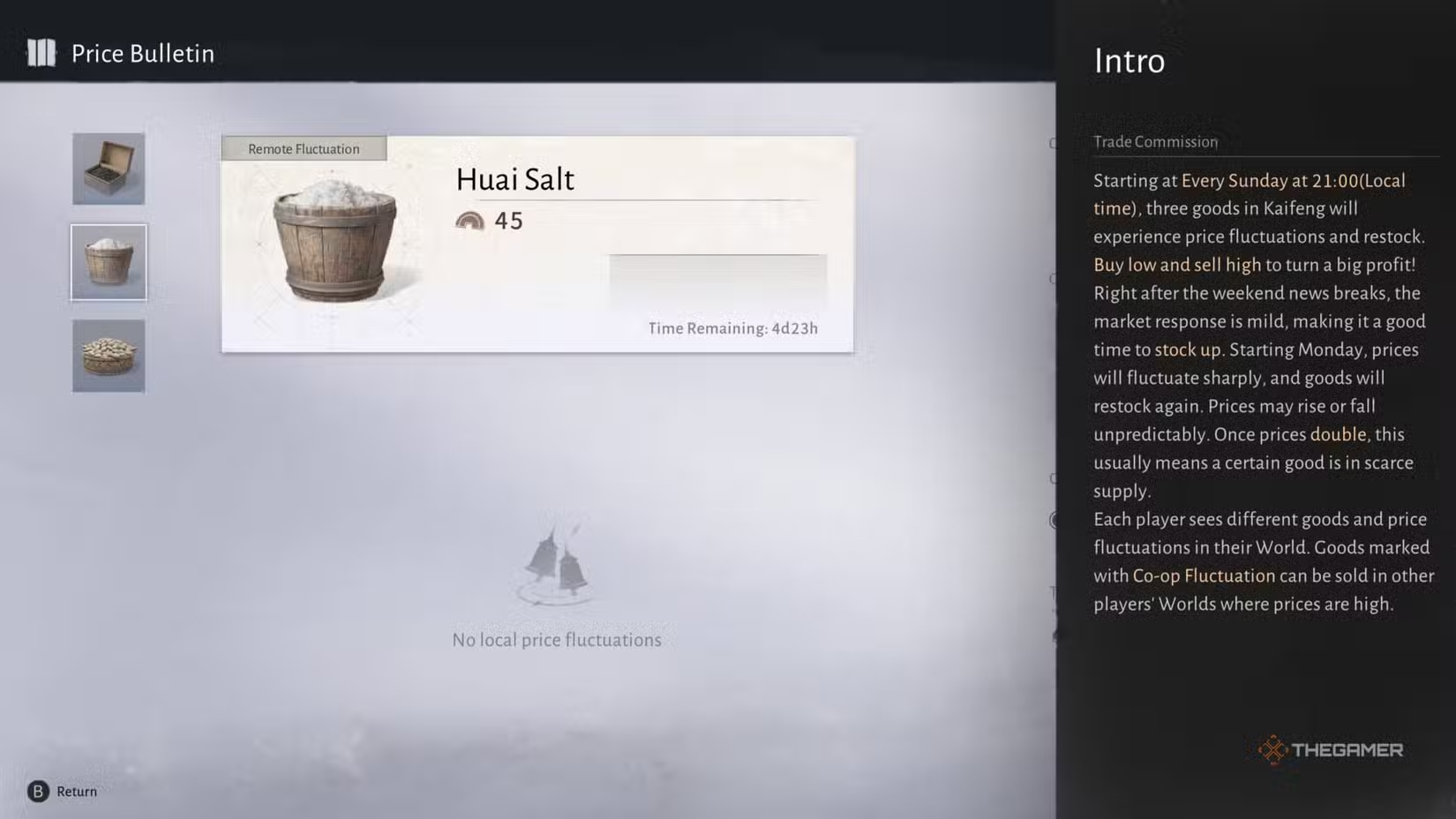
To profit from the economy, you need to watch the market closely. You can do this at the Trade Commission in Kaifeng City, just north of the southern entrance. By talking to Zhang Qiyue, you’ll get updates on current prices and goods that are changing in value.
Market changes follow a pattern:
- Sunday: Three random trade goods change in price and restock if they’re empty.
- Monday: Prices fluctuate again, with goods restocking once more.
- Rest of the week: Monday’s prices stay the same until the weekend, giving you time to sell your items.
Zhang also lets you see how prices are shifting just before weekends, helping you plan your buying and selling strategies. In addition, you can check prices of goods in other players’ worlds to see if you can make a profit there or buy items at better prices.
When a price change occurs, items will be marked as either Solo or Co-op goods. Solo goods can only be sold in your own world, while Co-op goods are available for sale in other players’ worlds.
Where To Buy Trade Goods
Trade goods can be purchased at Feng’s Tradehall, located near the Trade Commission. When prices fluctuate, it’s the main place to buy or sell. You can also buy items from other merchants across the game world.
There are many kinds of trade goods, and it’s often smart to stockpile even when prices are stable. Weekly stock limits mean building a supply in advance can give you more items to sell when prices go up. Most merchants are based in Kaifeng City, and you’ll use Commerce Coins to buy goods, so make sure you have enough on hand.
Where To Sell Trade Goods
Selling is simple — your only option is Feng’s Tradehall. When you talk to the merchant, choose to sell rather than buy. His stock updates with market trends, so you can see if you’re making a profit or incurring a loss. You can also visit his Tradehall in other players’ worlds to take advantage of their local prices.
Renting Property
Trade goods are stored in a special section of your inventory, which has limited slots. If you want to stockpile large amounts, you might hit this limit quickly. To expand storage, you need to rent a property — not buy one.
When visiting Feng’s Tradehall, you can ask about available rental spaces. You’ll have three choices, each costing more coins but offering extra storage space. You can hire multiple properties to expand your capacity further.
Renting a property is a lease based on real-world time. You can rent for several months or pay monthly, but you’ll need to visit Feng’s Tradehall each time to renew your rental. These buildings are in Kaifeng City and can be visited. Inside, you can build and set up things, and they serve as fast travel points as well as resting places.
 ChatGPT
 Perplexity
 Gemini AI
 Grok AI