Select Language:
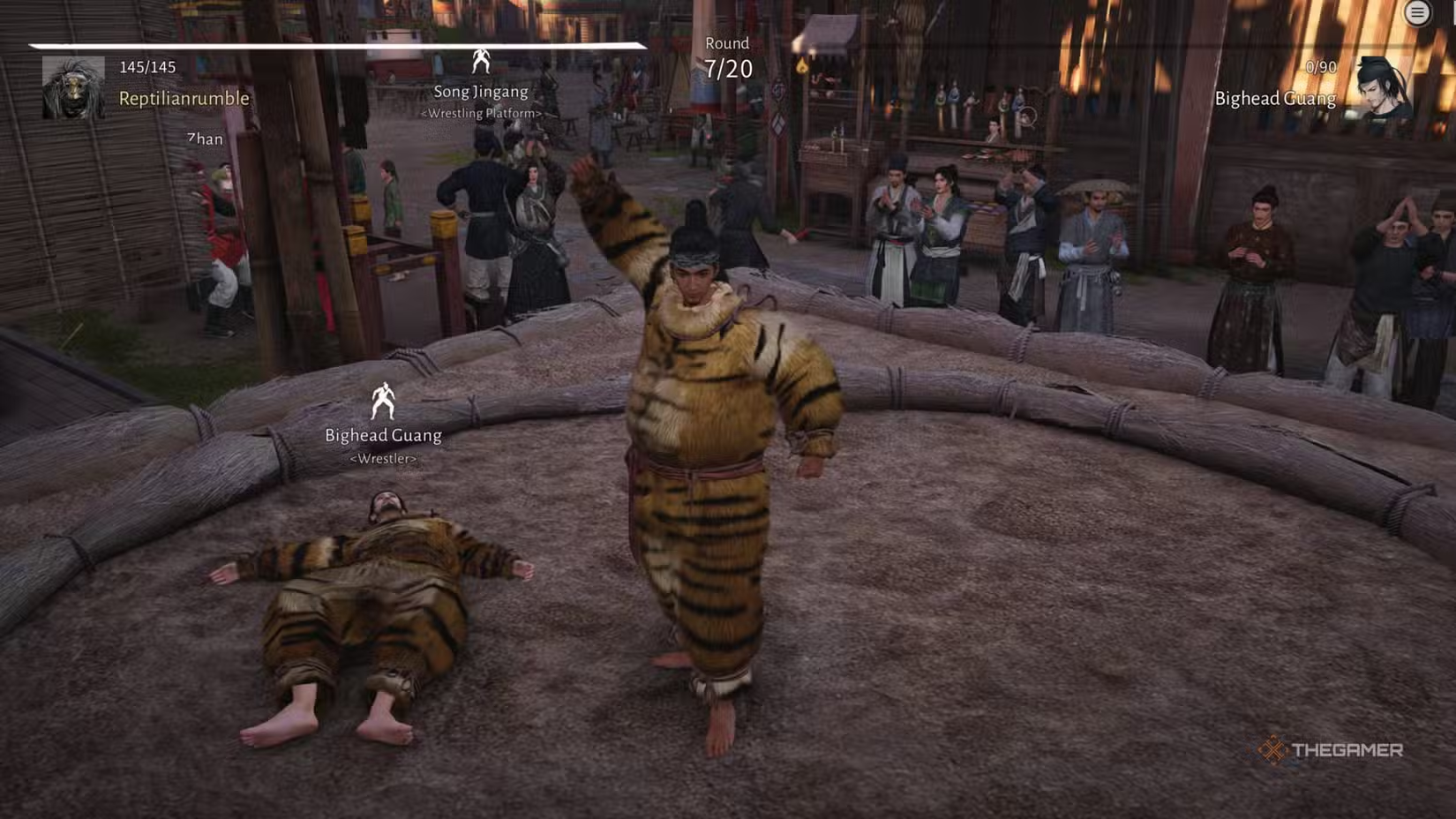
In Where Winds Meet, there’s a lot to explore. You can follow the main story, sometimes touching on emotional moments, or you can try other activities like playing veterinarian in online mode, fishing, card games, battling in the arena, stealing from random citizens, or debating with people. The options are broad, but one activity worth trying is wrestling.
Like many mini-games in the game, wrestling can boost your attributes. However, it also has more complicated mechanics, so it might take some time to understand how it works.
What Is Wrestling?
First, it’s important to note that the wrestling mini-game isn’t available in Qinghe. You’ll need to progress far enough in the main story to unlock Kaifeng, which is currently the only place where you can participate in wrestling.
Your first real wrestling match can be found in Kaifeng City. There, you can practice anytime to learn or review the mechanics.
Winning wrestling matches earns you rewards, mainly on your first win, including Jade Coins, Five Dynasty Coins (your standard spending money), Commerce Coins, Experience, Exploration Points, and points to improve your Constitution attribute.
Mechanics of Wrestling
Most mini-games in Where Winds Meet are straightforward and require practice, but wrestling is more about anticipation. It’s comparable to a more complex game of Rock-Paper-Scissors.
Your primary goal is to deplete your opponent’s Fighting Spirit by using Techniques against them. Both you and your opponent choose actions before executing them, and neither knows what the other has chosen until the moves are played out.
Here’s a closer look at the mechanics:
Building Momentum
Building Momentum is essential for using powerful moves. When you choose to Build Momentum, your turn is spent gaining one Momentum point. These points are only used for attack moves and can’t be removed by your opponent.
While building Momentum, you’re vulnerable to attack — if your opponent decides to attack, they’ll land full damage regardless of your action. Still, you will successfully gain the Momentum point even if attacked.
Blocking Attacks
When attacked, you should block if possible. Since you don’t know when an attack is coming, you’ll have to guess.
NPCs tend to attack once they’ve built at least one Momentum point, so blocking after they build is usually safe. If you block successfully, you’ll negate all damage and force your opponent to use up the Momentum they invested in the attack.
There are two types of blocks:
- Block: Defends against most attacks except Vajra Toss.
- Vajra Block: Only blocks Vajra Toss. Other attacks bypass it.
If your opponent has three Momentum points, they will likely use Vajra Toss, so using Vajra Block in those situations is smart.
Performing Techniques
To drain your opponent’s Fighting Spirit, you need to perform Techniques. An opponent only loses Fighting Spirit if they are directly hit, and matches are limited to 20 rounds, so stalling won’t work.
There are four Techniques, each requiring different amounts of Momentum:
- Thrust Attack: Light damage, requires no Momentum.
- Stake Technique: Moderate damage, costs 1 Momentum.
- Pushing Attack: High damage, requires 2 Momentum.
- Vajra Toss: Ends the fight instantly by depleting all Fighting Spirit, needs 3 Momentum.
Achieving three Momentum points to use Vajra Toss is the ultimate goal, as it ends the match immediately. Opponents will also try to prevent this move once you have enough Momentum, making the game a mind game.
Action Priority
Since both players pick actions simultaneously, planning isn’t possible in real-time. Instead, the game uses action priority to determine who wins each round.
Generally, the strongest moves take priority. For example, if you use a Pushing Attack and your opponent uses a Stake Technique, your move wins, and your attack hits while theirs is nullified.
When you choose to build Momentum, all attack moves take priority, though you still gain the point. Blocking prevents damage unless your opponent uses Vajra Toss, which overrides normal blocks if you use Vajra Block; otherwise, your block will succeed.
How to Win at Wrestling
Winning is generally consistent because NPC behaviors are predictable. NPCs tend to react to your last move; for instance, if you build Momentum, they’ll often block, anticipating an attack.
When they build Momentum, they usually attack right afterward. In response, blocking is often the best move. After blocking, you can counterattack with a Technique that requires Momentum, gaining the upper hand.
If NPCs reach three Momentum points, they will almost always try Vajra Toss. To counter that, performing a Pushing Attack when they are ready can catch them off guard.
Playing online with real players introduces unpredictability. Human opponents react differently, so you’ll need to adapt your tactics and use mind games to succeed.
 ChatGPT
 Perplexity
 Gemini AI
 Grok AI