Select Language:
When you add Pokémon to your collection in Pokémon Champions—whether by recruiting them from Roster Ranch or transferring from Pokémon Home—they won’t be fully ready for battle right away. To prepare them, you need to train them, which involves choosing their moves, adjusting their stats, and setting their ability and nature.
Even if you transferred a Pokémon from Pokémon Home and think it’s already optimized, it’s a good idea to review the training menu. Not every transfer is perfect, and some moves might have slightly different effects in Pokémon Champions. You might want to swap out certain moves for better options.
Stat Points
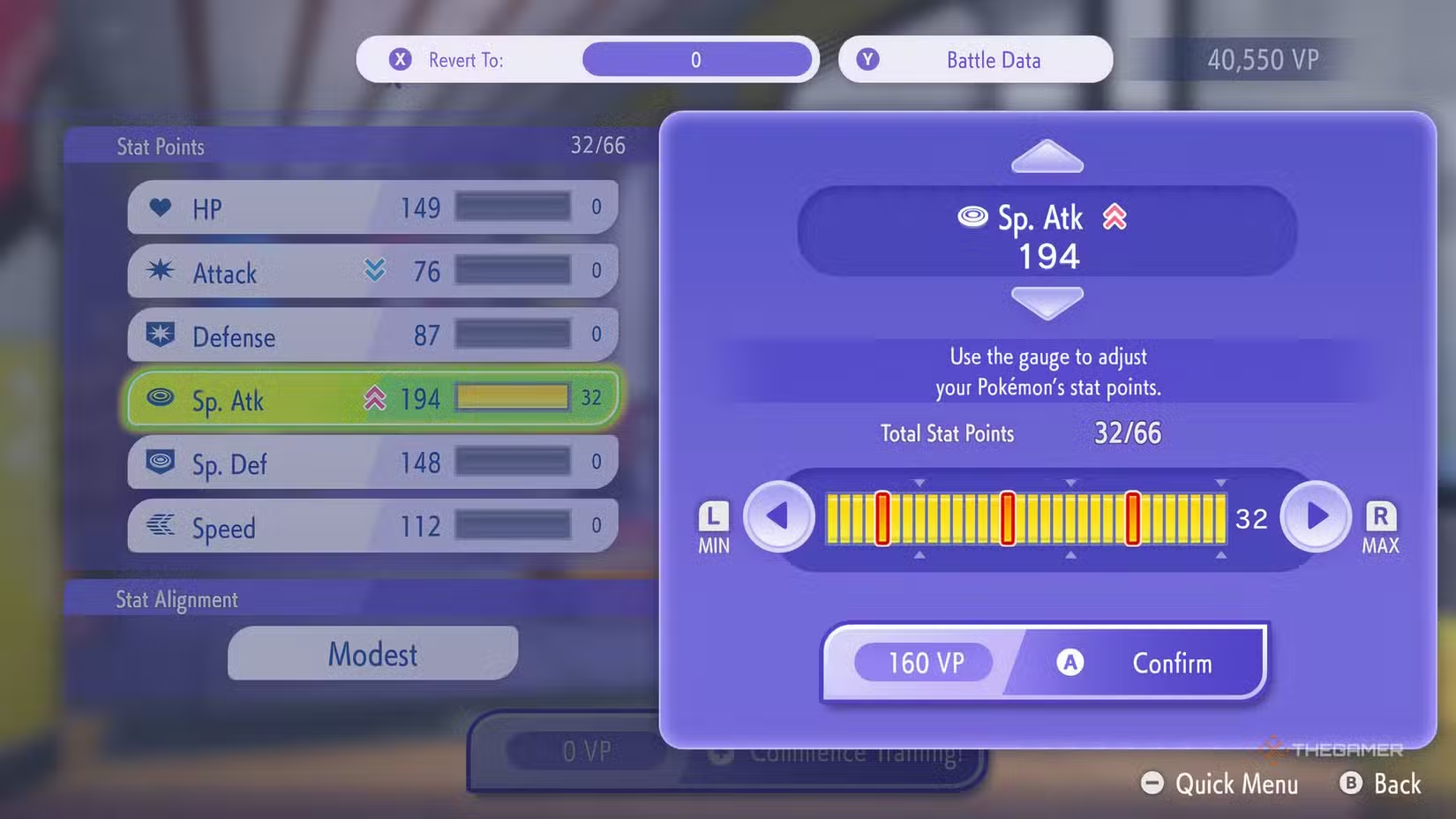
When opening the training menu, your first view is your Pokémon’s stats. These are the core stats you’ll see in all Pokémon games, including:
- HP – How much damage your Pokémon can take before fainting.
- Attack – The physical damage your Pokémon deals.
- Defense – Its protection against physical attacks.
- Special Attack – The damage dealt by special moves.
- Special Defense – Its defense against special moves.
- Speed – How quickly your Pokémon acts, determining who attacks first.
In previous Pokémon games, these stats are influenced by IVs (Individual Values) and EVs (Effort Values). IVs are genetic and randomly assigned; they range from 0 to 31 per stat and are difficult to change except with Hyper Training using Bottle Caps in some games. They serve as your Pokémon’s genetic baseline.
However, in Pokémon Champions, IVs don’t seem to be recognized or viewable. Since you’re not catching Pokémon here, all Pokémon are treated as having perfect IVs by default. This simplifies things, leaving EVs as the primary focus. EVs allow you to manually train your Pokémon’s stats, and you get a total of 66 points to allocate across different stats.
Note: To modify EVs in the training menu, you need to spend VP (Victory Points), earned through battles or completing missions and battle pass objectives.
Each stat can only receive up to 32 EV points, so you can’t concentrate all EVs into a single stat. A common approach is to max out EVs in either Attack or Special Attack, depending on your Pokémon’s role, then distribute the remaining points. Usually, players put 32 EVs into Speed and a few into HP, but this varies depending on the Pokémon. For support or defensive roles, investing in Defense or Special Defense might be better.
If you’re unsure how to split EVs, you can use Battle Data—to see what strategies other players are using for the same Pokémon. Usually, pressing Y while customizing training will show you how others have allocated EVs for similar Pokémon.
Remember, there’s no one best way. Align your EV distribution with your Pokémon’s moves and your team’s strategy. If your Pokémon is meant to support your team rather than deal damage, it might be better to focus on defensive EVs instead of boosting attack stats.
Moves
Moves are central to battle strategy. Each Pokémon can learn four moves, which may be damaging or non-damaging. Since move pools vary widely, it’s hard to give one-size-fits-all advice. What works for one Pokémon might not be suitable for another, even if they share similar moves.
A few key points to remember:
- Prioritize STAB (Same Type Attack Bonus) moves, which get a damage boost when the move matches the Pokémon’s type. For example, a Grass-type Pokémon benefits from using Grass moves.
- While STAB moves are essential, coverage moves that hit different types are also valuable.
- Consider adding non-attack moves and status moves. Effects like poisoning or paralyzing opponents can turn the tide of battle.
Accuracy is critical—high attack power is worthless if your move often misses. So, balance power with reliability. Before battles, review the move pool while considering how each move fits your strategy. You can always change moves later if needed.
Stat Alignment (Natures)
Stat Alignment, which functions like Natures in mainline Pokémon, provides a buff to one stat and a debuff to another. Only a few Neutral Natures are shown, but this is the same concept. Typically, you’ll want to boost either Attack or Special Attack and weaken the other, depending on your Pokémon’s role.
Sometimes, boosting Speed or Defense can be more beneficial, especially if your Pokémon relies on those stats. In mainline games, Natures are changed with Mints, but in Pokémon Champions, you need to pay VP to modify your Pokémon’s Nature.
When choosing your Nature, consider how you plan to use your Pokémon. Pick a Nature that maximizes its strengths and minimizes weaknesses. You can change it later if your strategy shifts—just keep enough VP available for adjustments.
Ability
Abilities are unique to each Pokémon and can greatly influence battles. Most Pokémon have one common Ability and possibly a Hidden Ability. In earlier games, Hidden Abilities were only obtainable through breeding or special events, but in Pokémon Champions, you can switch between them by paying VP.
Your choice of Ability should be based on your planned strategy. Some Abilities boost specific stats, while others provide useful effects like healing or immunities. Once you decide on an Ability, you can focus your EV and Nature choices to support it.
You can use the Replica Team feature to copy the exact setup of a Pokémon from another player if you need inspiration or want a specific build. After everything is set, don’t forget to pay the VP cost for your customizations. You can revisit and change any of these choices later, provided you have enough VP.
Your training is complete once your Pokémon is optimized for battle, but remember—you can always go back, tweak its moves, stats, or Ability to better suit your evolving strategy.
 ChatGPT
 Perplexity
 Gemini AI
 Grok AI