Select Language:
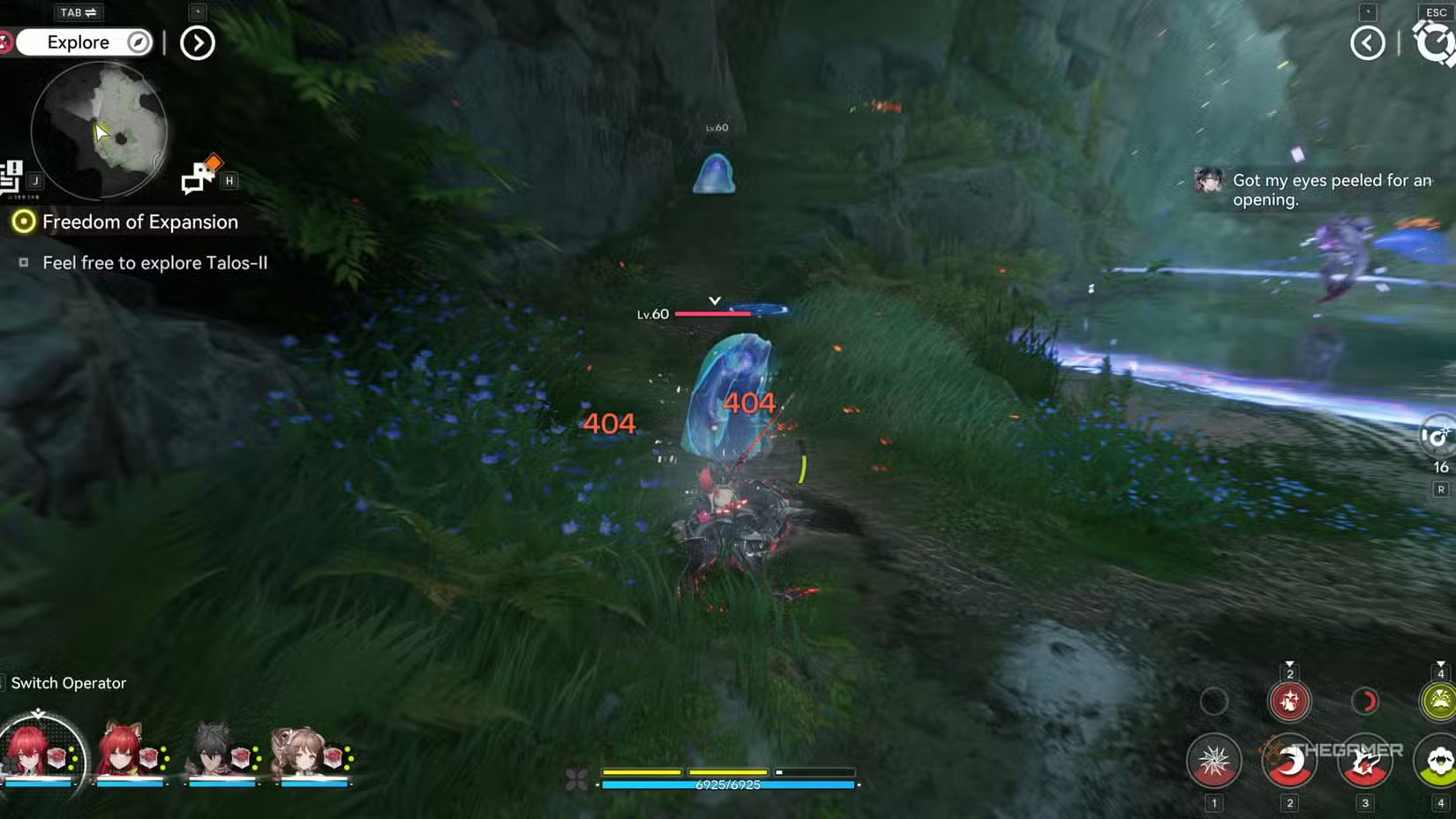
While playing Arknights: Endfield, you’ll unlock the combat system early on because you need it to move forward with the story. In the beginning, defeating enemies is straightforward—you can just attack them with your characters without worrying too much about team setups or special synergies.
However, by the time you reach the late game, things get more complex. You’ll need to understand different damage types and how reactions work to succeed with your team. Depending on a character’s damage type and skills, you’ll often create different team combinations that can trigger powerful reactions to increase damage output.
All Damage Types, Explained
Every character in Arknights: Endfield deals a specific type of damage, which falls into two main categories: Physical and Arts. Physical damage is a standalone type, while Arts damage includes four elements: Heat, Electric, Cryo, and Nature. Characters capable of Arts damage can inflict any of these four types based on their skills.
Your characters’ damage can be boosted by increasing damage bonuses related to their preferred damage type. For example, Physical damage characters benefit from Physical DMG Bonus, while Arts damage characters benefit from Arts DMG Bonus. Each Arts element also has its own specific damage bonus stat, obtainable through gear and weapons.
Some characters may deal Arts damage through certain abilities, yet also deliver Physical damage with others. You can recognize a character’s damage type by their color:
- Physical: White
- Heat: Red
- Electric: Yellow
- Cryo: Blue
- Nature: Green
All Art Bursts and Reactions, Explained
Understanding Art bursts and reactions requires knowledge of Inflictions. You can’t randomly apply Art Inflictions to enemies; instead, you need to use specific abilities that mention applying these Inflictions.
Once an Art Infliction is applied, it appears next to the enemy’s health bar. Reapplying the same Infliction stacks it, and triggers that Art’s burst. When an Art burst activates, the enemy takes an extra hit of damage from that Art after a brief delay.
Applying two different Art Inflictions on the same enemy triggers a reaction, with each reaction having unique effects. Here’s how they work:
| Reaction Name | How to Trigger | Effect |
|---|---|---|
| Combustion | Heat Infliction applied with a non-Heat Infliction | Enemy takes regular Heat damage based on the attacker’s ATK |
| Electrification | Electric Infliction applied with a non-Electric Infliction | Enemy takes increased damage from all Arts |
| Solidification | Cryo Infliction applied with a non-Cryo Infliction | Small enemies get frozen during the reaction |
| Corrosion | Nature Infliction applied with a non-Nature Infliction | Enemy’s resistance to all Arts decreases over time |
Art Inflictions and reactions can also activate special abilities in different characters, adding more strategic options.
Physical Statuses and Reactions, Explained
Physical damage mostly works independently of Arts and their reactions. Instead, it has its own effects and reactions applied through different statuses:
- Lifted
- Knocked Down
- Crushed
- Breached
Applying these effects to enemies that are not already Vulnerable (a damage stack) grants Vulnerable status. If an enemy already has Vulnerable stacks, these statuses modify its behavior:
- Lifted: Adds a Vulnerable stack, deals Physical damage, and lifts small enemies in the air.
- Knocked Down: Adds a Vulnerable stack, deals Physical damage, and knocks down smaller enemies.
- Crushed: Uses all Vulnerable stacks to deal high Physical damage.
- Breached: Uses all Vulnerable stacks to deal some Physical damage and increases the enemy’s susceptibility to Physical damage temporarily.
Since Physical damage has its own set of reactions, teams are often built around a mono-Physical strategy. Physical interactions with Arts happen mainly when applying statuses like Solidification, which can trigger Shatter and cause massive Physical damage.
 ChatGPT
 Perplexity
 Gemini AI
 Grok AI