Select Language:
If you’re interested in stopping an alien invasion and saving Earth from these hostile visitors, then Terra Invicta is definitely the grand strategy game for you! But keep in mind, campaigns can take over 100 hours to complete easily, so it’s a lot to learn at once.
To help you start your mission to save the planet, here are some beginner tips. Gather resources—both material and human—explore the solar system, and work to prevent the impending invasion.
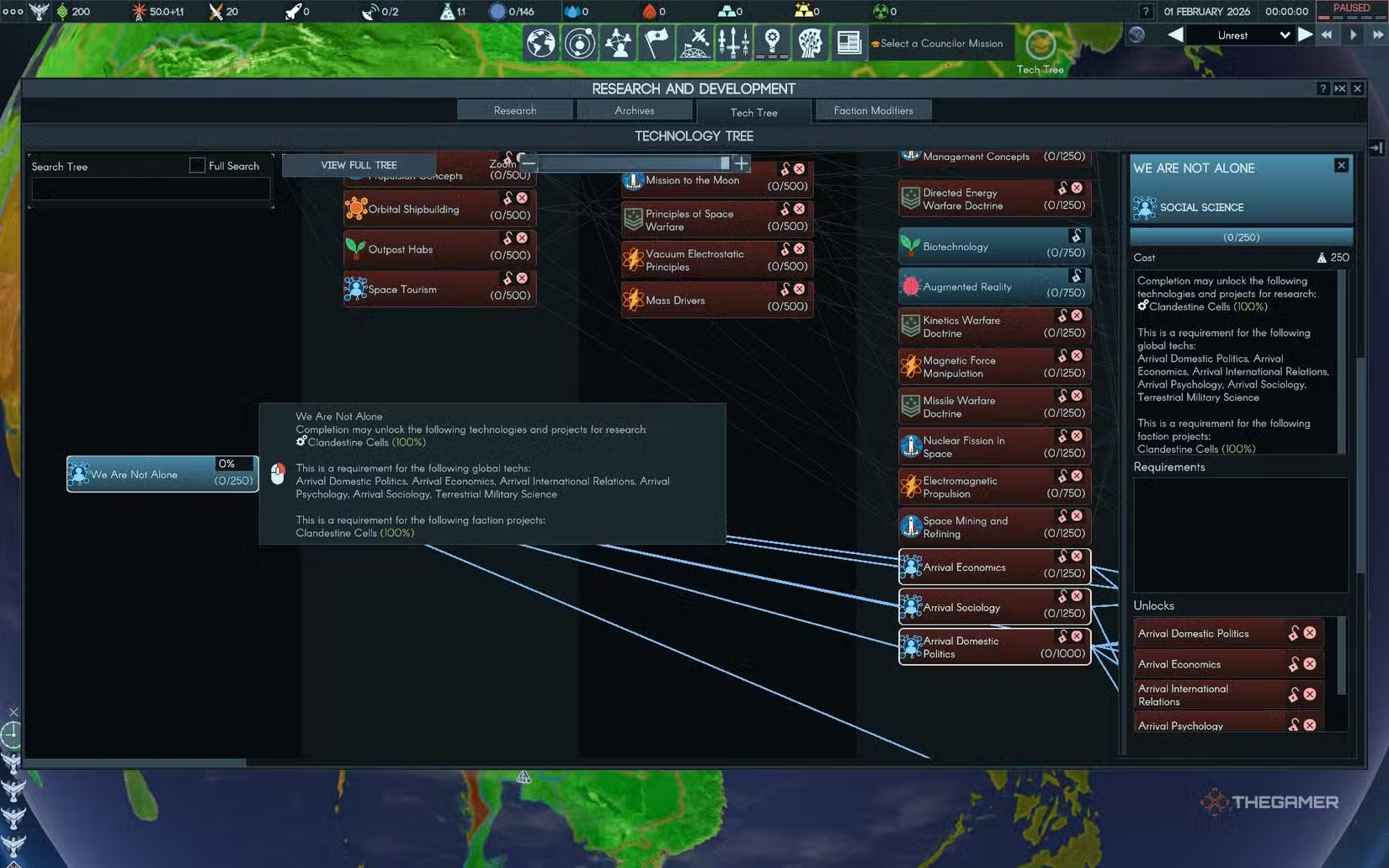
The tutorial campaign is your best friend early on. Even if you’re experienced with grand strategy games, Terra Invicta has many systems you’ll need to understand, especially since it involves space and aliens. The game can be complex, but the tutorial offers a good introduction, so it’s recommended to play an accelerated campaign on the Forgiving difficulty to learn the mechanics. Practice runs can help you get comfortable with the many systems involved.
Even if you’ve played similar games like Civilization or Europa Universalis, Terra Invicta is different—here, the goal isn’t to dominate Earth but to save it from alien threats. Early in the game, you’ll work with your organization to establish control around Earth after an alien craft crashes. As the game progresses, different factions will have different ideas on how to handle the situation. You will lead a group over several years of in-game time, brokering relationships, mining resources, and managing conflicts—all to ultimately protect humanity.
The game progresses slowly but steadily; a full campaign can last well over 100 hours even after you grasp the mechanics. When you start, you’ll be prompted to play the tutorial faction, the Resistance, which gives a deep dive into gameplay. It’s wise to try an early campaign on an easier setting to familiarize yourself with controls and strategies.
To speed up your campaign, you can customize game settings when starting a new game. This includes adjusting the starting year, solar system size, faction count, and more. You can change the professions of your councilors, give yourself immediate control of countries, tweak resource production rates, or adjust how quickly ships and structures are built. For example, choosing councilors with certain skills appropriate to your faction can give you an advantage, and claiming control of a major country early on increases your global influence. Reducing the number of monthly events can also speed up your game.
Keeping the end goal in mind is crucial. You’ll face tough and sometimes uncomfortable geopolitical decisions early on, as you compete with several factions for influence. You must sometimes make sacrifices to help your organization gain an edge, but your ultimate aim remains to prevent the alien invasion rather than to bring peace on Earth. Remember, the aliens are watching from the start, and their arrival is inevitable once the crash occurs. You can’t stop their arrival, only prepare and manage the situation so they don’t catch you unprepared.
Early in the game, it’s strategic to seek dominance in a powerful country, such as the United States, Russia, or key European nations. Larger countries have more influence, making it easier to sway global events. Conquering smaller nations can be a quick way to gain resources and influence—using their spoils to support your campaign in bigger nations or even to fund space efforts.
Throughout your campaign, maintain good relationships with other factions and countries. Espionage allows you to spy on rivals, see their research progress, and uncover their plans. If a rival’s actions threaten your objectives, you may plan covert operations like assassinations. It’s important to stay aware of what other groups are doing, as they are also working toward their own goals with similar urgency.
Getting into space early is critical. Despite everything happening back on Earth, your main goal should be to reach the stars as soon as possible. The Moon is the closest celestial body and should be your first target. It offers valuable resources that speed up your expansion, and from there, you can plan your trip to Mars. The Moon is easier to reach initially, and once you’ve established a foothold there, you can set your sights on the Red Planet.
Funding your space missions involves farming resources and cash on Earth. During the early game, you’ll need to acquire enough raw materials and money to support your space programs, often through controlling smaller nations and exploiting their resources. Using these spoils can fund your larger operations and help you outpace your rivals.
Sending materials into space requires managing your Boost levels—the mechanic that determines how much you can move at once. Sending larger shipments reduces the number of trips needed, saving resources and money. Countries with high Boost capabilities, such as Kazakhstan (which is friendly with Russia), are ideal for expansion—just be prepared to form alliances before attempting a takeover.
In summary, aim for early space dominance, especially reaching the Moon and then Mars, to accelerate your progress. Keep an eye on other factions, spy on their activities, and plan covert actions against rivals. Align your efforts with your ultimate goal—preventing the alien invasion—while managing the complex geopolitical landscape, even if it means making tough choices on Earth.
 ChatGPT
 Perplexity
 Gemini AI
 Grok AI