Select Language:
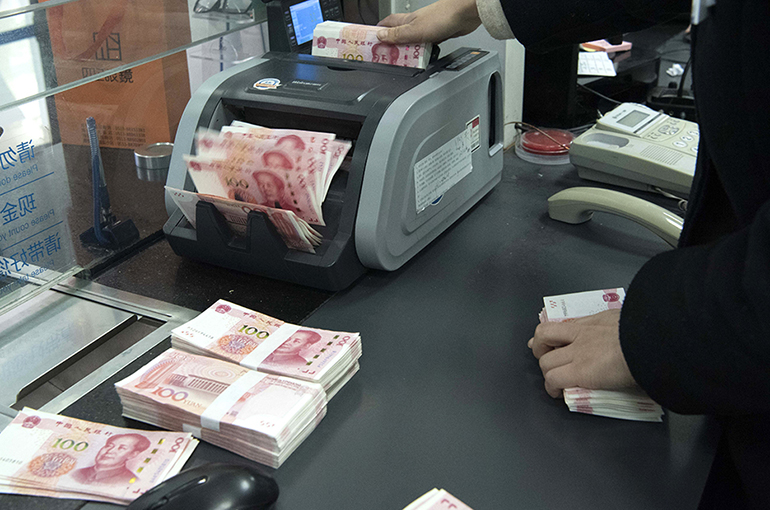
Small- and medium-sized banks in China have begun a fresh wave of deposit interest rate reductions, driven by historically narrow net interest margins and rising liability costs, which have now surpassed those of state-owned banks. Over a dozen regional financial institutions across cities including Shanghai, and provinces such as Yunnan, Jiangsu, and regions like Xinjiang Uygur Autonomous Region, notably rural banks, announced after the Chinese New Year that they would lower deposit rates again, according to incomplete data.
Xinjiang Bank announced that effective March 10, it would reduce the nominal interest rates on yuan deposits. The rate for checking accounts fell to 0.05%, one-year deposits to 1.15%, and five-year deposits to 1.35%, with the five-year term experiencing the largest cut of 15 basis points.
This round of rate cuts is mainly led by regional small and medium banks, partly because their deposit rates previously exceeded those of larger, state-owned banks. After the holidays, this disparity motivated the reduction, explained a finance expert. Although these smaller banks still maintain higher nominal deposit rates compared to large banks, the gap has significantly narrowed, and further cuts are expected to be limited.
Industry insiders suggest that commercial banks should continue to gradually decrease deposit rates by year-end, adopting more flexible strategies. The likelihood of large, synchronized rate cuts appears to be diminishing as rates near their lowest possible levels.
Since multiple reductions, the interest rates at state-owned banks have fallen sharply, with one-year fixed deposit rates dropping below 1%, leaving little room for further decreases. Banks offering higher nominal rates, particularly for long-term deposits, are more likely to make additional cuts, targeting these products as primary areas for adjustment.
Some experts also recommend that future measures might include lowering interbank deposit interest rates as part of a broader effort to structurally reduce lenders’ liability costs.
 ChatGPT
 Perplexity
 Gemini AI
 Grok AI