Select Language:
On December 19, Shanghai unveiled six new premier incubators, increasing the total to 18. These facilities are designed to accelerate the development of critical and foundational technologies in the city and support the rapid expansion of related businesses.
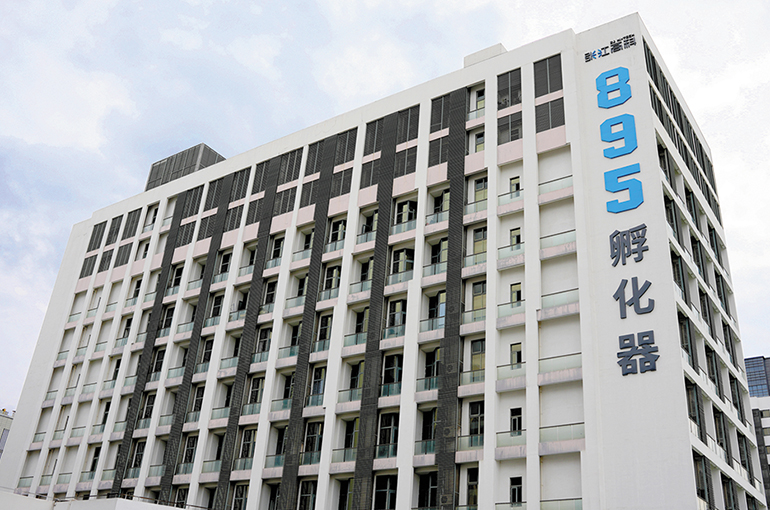
The newly launched high-caliber incubators include the Synlonx Brain-Computer Interface Super Incubator, the Zhangjiang Hi-Tech 895 Entrepreneurship Camp, the Nest.Bio Shanghai Innovation Incubation Platform, the Shanghai AMI Sanjiang New Materials Industry Innovation Center, the Shutonglian Valley Blockchain Application Innovation Incubator, and the neoBay Global Innovation and Entrepreneurship Community, as confirmed by the city’s science and technology commission.
Top-tier incubators typically comprise universities, research institutions, leading tech companies, and prominent investment firms, operated by advanced incubation experts. Startups that join these programs benefit from comprehensive support encompassing finance, investments, talent acquisition, and technological resources.
Compared to standard incubators, these focus more heavily on companies working with “key and core technologies.” They emphasize innovative cutting-edge fields and emerging industries, facilitating the transformation of disruptive scientific breakthroughs into real-world applications.
AMI Sanjiang stands out as the sole incubator among the six that specializes in new materials companies. Its founder, Zhang Pinshu, explained to analyze that the incubator supports not only product research and development but also process and equipment development, scaling production, creating pilot testing technologies, and validating products with customers.
The goal is to nurture 30 to 50 companies over the next three years, establishing a complete growth pipeline for material startups from pilot testing to full-scale industrial manufacturing in Baoshan District, where the incubator is located, Zhang added.
The choice to establish in Shanghai was driven by the city’s rich industrial resources and the broader Yangtze River Delta region. Zhang emphasized, “Shanghai hosts China’s densest industrial chain related to materials and boasts abundant scientific research resources.”
The rapid growth of emerging industries in Shanghai is increasing demand for advanced materials, which means the incubator’s portfolio will likely include startups producing robot skin, chip membrane materials, lightweight metals, and precision dispersion substances, Zhang noted.
Incubators provide more than just physical space; they work closely with startups, sharing risks by holding equity stakes in the companies they nurture, Zhang explained. “This creates a symbiotic relationship, fostering long-term growth.”
Zhangjiang Hi-Tech 895, established a decade ago, is now the largest incubator by operational size in Shanghai. It has supported over 1,500 startups and successfully developed more than 170 high-tech companies and 140 innovative and specialized enterprises, according to data from its leadership.
This incubator operates around the clock, as its director Yuan Quan shared. “As long as a project is of high quality, we’re ready to invest immediately, allowing entrepreneurs to concentrate on research and development without interruptions.”
The 895 Startup Camp, hosted 16 times, has become a key platform for industrial resource integration among participating companies. To date, 486 enterprises have participated, with a collective valuation exceeding CNY 170 billion (around USD 24.1 billion).
An aerospace firm leader mentioned to analysts that the camp provided valuable opportunities for collaboration with numerous upstream and downstream industry partners. Developing spacecraft requires components from diverse sectors, like materials, electronics, and semiconductors, making such gatherings complex but highly beneficial.
The Startup Camp acts as a vital platform for fostering industry connections and exploring potential collaborations, opening doors for participating companies.
 ChatGPT
 Perplexity
 Gemini AI
 Grok AI