Select Language:
A narrow valley situated between the southern extensions of Shenzhen’s Yangtai and Tanglang mountains, home to a cluster of startups specializing in robotics and advanced smart hardware, has become a hotspot for frequent investor visits since the latter half of last year.
“Many investors have even relocated permanently to Shenzhen, with some financial advisors moving their offices close to DJI Technology, the leading drone manufacturer,” says Emma, the head of hardware investments at a tech-focused investment fund in Shanghai. She added that she has been traveling to Shenzhen approximately every two weeks over the past year, sometimes even weekly.
Numerous financial advisors and investment firms are now focusing on founding teams with executive experience at major hardware firms based in Shenzhen as prime investment prospects. This is because many talented professionals who leave these companies have an intense drive for product excellence.
Entrepreneurs starting new ventures after leaving major corporations like Huawei and DJI tend to possess a deeper industry understanding, which greatly enhances their company’s growth prospects and success rates compared to academic entrepreneurs, according to Dai Fuquan, chairman of Banshan Venture Capital. He emphasized his recent interest in companies involved in embodied intelligence supply chains, including components, robotic hands, and robot control systems. He is also preparing to invest in a startup that develops solid-state lidar sensors for robots.
Over the past year, Dai has frequently visited Shenzhen to review projects. “The city and nearby areas host numerous companies along the embodied intelligence supply chain, and they tend to be more resilient than similar firms elsewhere,” he noted.
Emma pointed out that Shenzhen’s Robot Valley hosts many exciting projects. “For top-tier projects, if an investor misses the initial funding round, they often wait for subsequent raises. Some projects have successfully completed four or five funding rounds immediately after inception—when their products were still in conceptual stages—leading to rapid valuation increases, with some hitting over USD 100 million,” she explained.
Popular areas of focus include DIY manufacturing involving CNC and 3D printing, wearable hardware, and AI imaging devices. Emma also observed that since last year, hardware valuation standards have shifted. Startups completing their first and second funding rounds now often reach valuations comparable to those of products only recently completed in R&D stages.
Furthermore, investors now show greater acceptance of new entrepreneurs and innovative business ideas. Dai highlighted that until September of the previous year, most large funds targeting embodied intelligence focused primarily on full machine developers. Post-September, however, more capital has begun flowing into component manufacturers. Several of these component startups have swiftly secured seed, angel, and Series A funding.
During an investment in a dexterous robotic hand project, Dai shared that it required competing against prominent investment banks and state-owned funds. To secure a stake, his team transferred several hundred thousand dollars to the startup as earnest money before the final investment decision, ensuring they would receive shares during the official funding round.
Interest from investors in Shenzhen’s hardware firms has heightened since the second half of last year, according to a co-founder of a local 3D printing equipment company. This surge is partly driven by the impressive post-listing performance of several leading players in the consumer hardware segment.
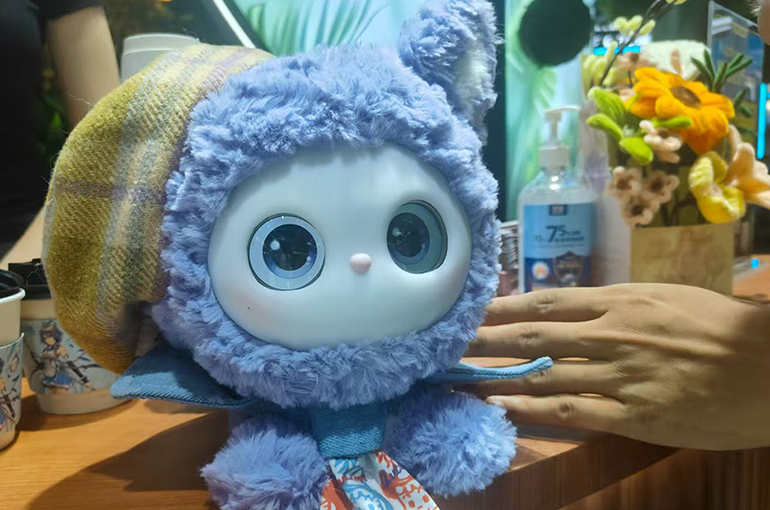
AI-powered toys and pet-related devices are also attracting significant investor attention. Hu Chenhui, CEO of an AI doll manufacturer, shared that within the Guangdong-Hong Kong-Macao Greater Bay Area, there are roughly eight to ten startups producing similar products. “About 90% of the components for AI toys can be sourced locally in Shenzhen, which is a hub for mechanical and electronic circuit manufacturers,” he said.
Yueran Innovation, an early entrant in the AI toy market, secured around USD 28 million in a Series A funding round last August from firms including CICC Capital and Sequoia China. The company’s two product lines have already sold over 300,000 units.
A supply chain manufacturer predicts that more AI toy startups will begin mass production this year. The shipment volumes of AI pets and companion devices from downstream companies could reach hundreds of thousands of units, according to Xiong Gengchao, CEO of tactile sensor startup Saigan Technology, which has started small-batch deliveries to such clients.
Emma emphasized her interest in the convergence of AI with imaging, as well as in consumer hardware like companion gadgets and sports devices. Integrating AI with imaging allows applications such as spectating, birdwatching, and stargazing. Combining AI with sports helps monitor and share exercise data, and can also support AI coaching.
 ChatGPT
 Perplexity
 Gemini AI
 Grok AI