Select Language:
As of March 3, industry insiders report that China’s domestic natural gas reserves are plentiful, and demand has been decreasing. Consequently, the escalating tensions in the Middle East are currently manageable in terms of overall impact.
With March and April signifying a shift from peak to off-peak seasons in China’s natural gas consumption, urban demand is gradually declining. The temporary closure of the Strait of Hormuz is expected to mainly influence the domestic market in the short term, according to a natural gas analyst. However, attention should be given to how long such disruptions might persist.
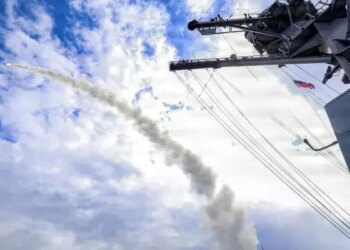
Recent events include the U.S. and Israel launching airstrikes on Iran, which responded with military action and subsequently closed the Strait of Hormuz — one of the world’s most vital oil and gas transit routes between Iran and Oman.
As of yesterday, the Asian liquefied natural gas benchmark (Japan-Korea-Marker) was around USD 13.1 per million British Thermal Units, and Dutch title transfer facility natural gas futures hit EUR 39.30 (about USD 5.70) per megawatt-hour. Both surged over 20 percent during the day, while international oil prices increased by approximately 8 percent.
Another analyst noted that China’s natural gas stocks are sufficient, and potential supply disruptions can be eased by releasing reserves and shifting to alternative energy sources such as coal, renewable energies, and pipeline gas from Central Asia.
Last month, China announced a policy that extended natural gas imports via approved cross-border pipelines and LNG receiving, storage, and transportation projects into the scope of import value-added tax rebates. Experts indicated that this move could help companies manage costs when global gas prices spike sharply.
Given the complex and unpredictable international geopolitical and economic landscape, Chinese companies should develop contingency strategies early and adapt quickly to shifting circumstances, a suggested analyst added.
Drawing from experiences during last June’s Israel-Iran conflict, it is estimated that even if tensions ease temporarily, restoring physical infrastructure such as mines and loading capacity will take more than two weeks, according to a natural gas analyst at a global energy agency.
 ChatGPT
 Perplexity
 Gemini AI
 Grok AI