Select Language:
The Federal Reserve faces a tough choice, caught between rising inflation fueled by surging oil prices amid the ongoing Middle East crisis and weak employment data. According to a senior economist at a major credit rating agency, there’s a possibility of two interest rate reductions this year if the oil price spike proves to be temporary.
If the oil shock doesn’t last long, concerns about the labor market are likely to become the primary focus of the Fed’s discussions, the economist noted in an interview following the central bank’s recent meeting. On that day, the Federal Open Market Committee announced they would keep the target range for the federal funds rate steady at 3.50 to 3.75 percent.
Here are some key points from the interview:
Q: What is the main takeaway from the latest FOMC meeting?
A: Clearly, the Fed will need to observe how the situation develops. Much hinges on how long the oil prices stay elevated, since that largely determines the inflation impact on the U.S. economy. Meanwhile, recent employment figures have been quite weak, which adds another layer of complexity. These two factors are pulling in different directions, so the likelihood is that the Fed will hold steady at the next meeting. However, beyond that, much will depend on how long the oil prices remain high.
Q: The latest economic projections show increased optimism about U.S. growth, with forecasts raised to 2.4% for 2026 and 2.3% for 2027. Does this imply that the Federal Reserve views the Middle East conflict as a short-term event?
A: That’s a reasonable interpretation. If the Fed believed oil prices would stay above $100 for an extended period, they probably would have lowered their growth outlook since high oil prices would negatively impact economic growth by increasing inflation, squeezing household income, and reducing consumer confidence. The fact that they didn’t revise growth forecasts downward suggests they see this as a temporary disruption. The inflation outlook was nudged upward slightly, mainly due to recent data showing slightly higher personal consumption expenditures inflation, but this increase appears to be influenced more by recent figures than by expectations of prolonged high oil prices.
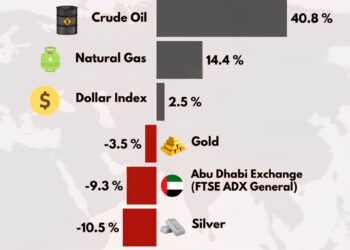
Q: For months, market focus has been on employment reports as the main indicator of the Fed’s next move. Now, attention seems to shift toward geopolitical risks and oil prices, which have pushed Brent crude around $100 a barrel again. How might this affect the U.S. economy?
A: It largely depends on the duration of the disruption. Our latest global economic outlook assumes a relatively brief conflict, meaning oil prices could remain high through March—averaging about $100—but then decline once the Strait of Hormuz reopens, which we expect to happen after roughly a month of closure. Based on this scenario, oil prices could fall back into the mid-$60s by mid-2026, leading to an average Brent price of around $70 for that year. This adjustment, compared to previous forecasts, is significant but not enough to greatly alter the overall economic outlook.
If the situation unfolds as predicted, it shouldn’t drastically change the U.S. economy’s near-term dynamics. The ongoing debate will continue to focus on inflation: while inflation has been gradually decreasing—especially core consumer inflation—personal consumption expenditures inflation remains slightly above desired levels. This would suggest a need to keep interest rates above neutral for a bit longer. Meanwhile, the labor market appears quite weak, with recent payroll data showing low or negative growth, partly affected by strikes.
Provided the oil price shock remains short-lived, labor market concerns are expected to resurface and dominate policy discussions. This could open the door to two potential rate cuts later this year.
 ChatGPT
 Perplexity
 Gemini AI
 Grok AI