Select Language:
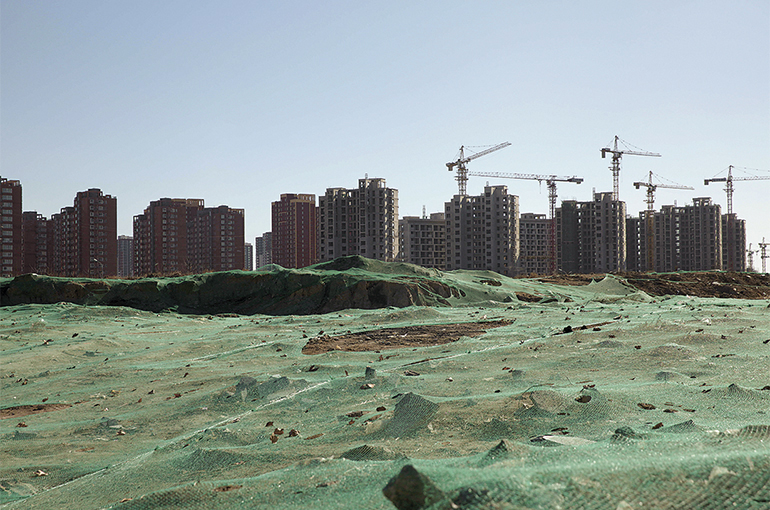
The revenue generated by local governments from land-use rights sales in China decreased by double digits for the fourth consecutive year in 2025, mainly due to ongoing significant adjustments in the real estate market. Last year, their income from land sales plummeted by 14.7%, totaling CNY 4.15 trillion (USD 597 billion), down from the previous year. This decline follows a 16% drop in 2024, a 13.2% decline in 2023, and a 23% decrease in 2022. Since reaching a peak of CNY 8.7 trillion in 2021, earnings from land sales have more than halved.
Experts attribute this persistent decrease to substantial shifts in China’s real estate landscape. Luo Zhiheng, chief economist at Yuekai Securities, explained that the market adjustment reflects a transition from a long-standing shortage of housing to a pattern characterized by structural oversupply and a lack of high-quality residential options. “Sluggish sales have strained developers’ finances, prompting increased caution in land investments,” Luo noted.
Investment in real estate development dipped by 17.2% in 2025, reaching approximately CNY 8.3 trillion, while the area of newly sold commercial properties shrank by 12.6% to around CNY 8.4 trillion, according to the National Bureau of Statistics. This ongoing downward trend in land sale revenues directly affects local governments’ fiscal health, tightening budgets, increasing debt repayment pressures, and limiting their capacity to fund infrastructure projects—potentially hindering future economic growth.
Despite these challenges, the country’s continued supportive policies for the real estate sector suggest a move away from the risk of a severe market downturn. Instead, a new, longer-lasting phase of adjustment is underway—less abrupt and more moderate, though it persists. Luo observed that market stabilization could occur this year as local governments leverage funds from special-purpose bonds to acquire idle land, finance high-quality projects, address debt issues among builders, and foster better financing conditions. While revenue from land sales is expected to continue declining, the pace of this decline may slow.
Achieving stability in land-use rights revenue depends on a rapid “bottoming out” of the real estate market, supported by comprehensive policy measures aimed at rebuilding confidence through decisive actions and clear signals. Luo suggested that establishing a “real estate stabilization fund” would be beneficial—this fund could provide targeted financial support to projects facing financial distress but still holding market value, safeguarding homebuyers’ interests, as well as purchasing vacant land and injecting liquidity into struggling developers.
Furthermore, Luo recommended increasing fiscal aid to local governments to reduce unnecessary land supply and encourage the buyback of idle land, counteracting oversupply conditions. He also advised that first-tier cities like Shanghai, Shenzhen, Beijing, and Guangzhou could further ease home purchase restrictions to stimulate genuine demand, serving as benchmarks for nationwide confidence in the market.
Encouraging major developers to merge, acquire, or restructure projects facing liquidity or operational issues was another suggestion, alongside lowering interest rates to reduce mortgage costs and adjusting tax policies to lessen financial burdens on homebuyers. These steps aim to stabilize the market and foster healthier growth in the housing sector.
 ChatGPT
 Perplexity
 Gemini AI
 Grok AI