
Select Language:
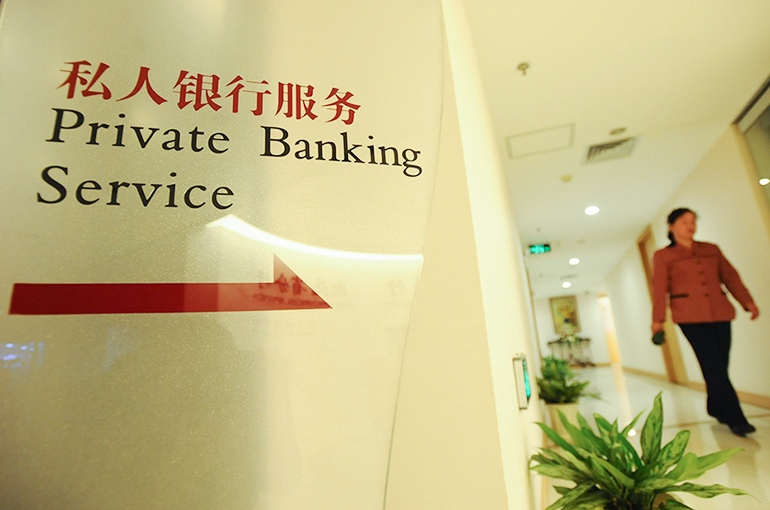
Many financial institutions in China have reported that their private banking divisions experienced double-digit growth in client numbers during the first nine months of this year.
China Merchants Bank’s private banking clientele—defined as retail customers with average monthly assets of 10 million yuan (approximately $1.4 million) or more—surpassed 190,000 as of September 30, representing a 13% increase from the previous year, according to its third-quarter earnings report.
Similarly, China Minsheng Bank saw an 18% rise in private banking clients during the first three quarters, reaching 73,000. Industrial Bank’s client base grew by 11%, while Bank of Beijing’s private banking clients increased by 18%, totaling 20,000 since the beginning of the year, based on their financial disclosures.
Experts attribute this growth to a steady rise in high-net-worth individuals and structural upgrades in residents’ wealth management needs. Industry insiders note that seven banks had over 100,000 private banking clients at the end of September, with Ping An Bank being the only new institution to cross that threshold since December 31.
The number of high-net-worth individuals (those with net assets exceeding $10 million) in mainland China reached approximately 470,000 last year, accounting for 20% of the global total and placing China second behind the U.S., according to the latest Wealth Report from real estate consultancy Knight Frank.
A significant new source of private banking clients has emerged among the younger, tech-savvy demographic, pointed out a private banking expert from a commercial bank. They observe that due to the increasing prevalence of equity incentives and the repatriation of wealth, entrepreneurs and senior executives across sectors such as technology, manufacturing, and pharmaceuticals are rapidly joining the ranks of high-net-worth individuals.
These clients’ demands are shifting towards comprehensive wealth management, tax planning, and cross-border asset allocation.
Despite rapid industry growth, the average assets under management per high-net-worth client remain under pressure, according to Nie Junfeng, chairman of Heritage Family Office. He emphasized that private banks have yet to fully capitalize on the added value they could bring to the asset allocation process.
Nie also pointed out that wealth management services supported by securities firms and fund companies are attracting clients away from traditional lender-backed private banking, with some Chinese banks lacking long-term client engagement mechanisms. Consequently, many clients maintain conservative asset allocations, heavily favoring low-risk assets such as large-denomination certificates of deposit and structured deposits.
 ChatGPT
 Perplexity
 Gemini AI
 Grok AI