Select Language:
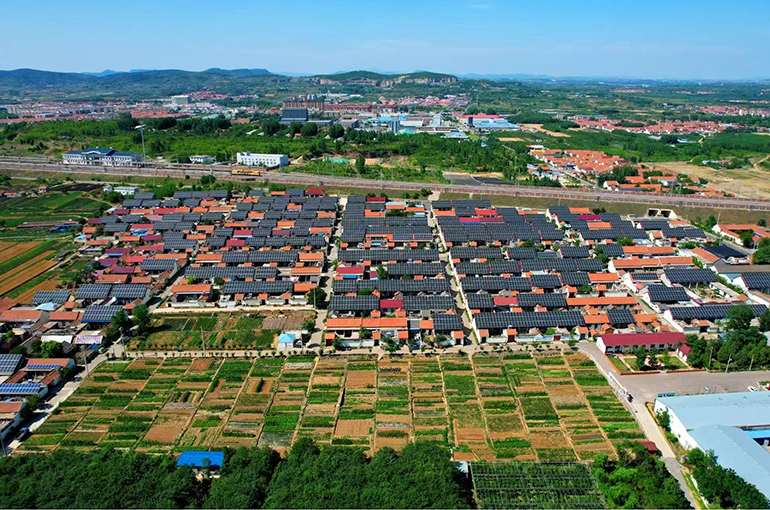
Asset-backed securities tied to household distributed solar power systems began trading on the Shanghai Stock Exchange yesterday, marking the first issuance of its kind in the country as asset securitization in China’s renewable energy sector accelerates. The new security was issued by Trinapower, a subsidiary of the leading solar company, with a total value of 1.2 billion yuan (approximately $176.7 million). Pacific Asset Management served as the plan manager and primary investor. The backing assets include over 28,000 residential solar systems spread across 10 provinces, with a combined installed and grid-connected capacity of nearly 990 megawatts.
Trinapower specializes in developing distributed photovoltaic (PV) systems, which are rooftop solar installations on homes and businesses that generate electricity locally. Based in Changzhou, the company has provided solar solutions and services to close to 1.5 million households as of the end of last year.
Renewable energy projects, especially power stations, demand large initial investments and typically have long periods before they turn a profit. After years of rapid growth, the solar industry has faced declining profitability since 2024, putting financial pressure on investors. Increasing debt levels and difficulties in securing external funding have become common issues.
In response, many companies are turning to asset securitization as a solution. By transforming operational power stations that produce steady cash flow into tradable financial products, firms can reduce their debt burden and access new sources of funding. This approach also promotes the use of digital tools to improve power generation efficiency and enhance transparency in asset management.
Following the issuance, the company’s leadership highlighted ongoing efforts to fuse green energy assets with innovative financial solutions, aiming to maximize green finance utilization, diversify funding options, and develop models that could be adopted industry-wide.
This trend of securitizing renewable energy assets has gained momentum over the past year. For instance, another major player issued China’s first clean-energy asset-backed security last August, backed by a wind farm in Hebei province, valued at 285 million yuan (around $41.4 million). In November 2025, Sichuan Energy Development Group issued the country’s first hydropower station ABS worth 2.5 billion yuan (about $363.5 million), supported by five cascade hydropower stations.
 ChatGPT
 Perplexity
 Gemini AI
 Grok AI