
Select Language:
The People’s Bank of China announced it will reduce relending and rediscount interest rates by 0.25 percentage points starting January 19. This move indicates potential for additional cuts in policy interest rates and reserve requirements for commercial banks throughout the year.
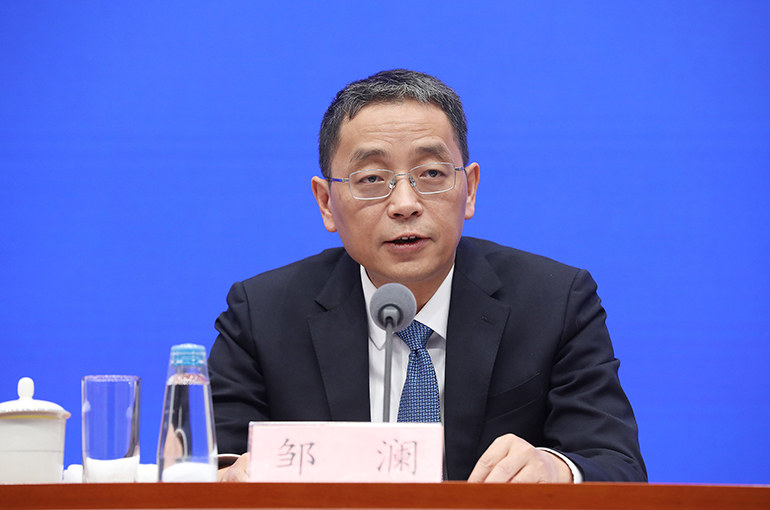
The purpose of this adjustment is to encourage financial institutions to boost support for major national initiatives, key industries, and economically vulnerable sectors. The announcement was made during the bank’s first press conference of the year.
Officials indicated that maintaining stable economic growth and a reasonable inflation recovery will be crucial in shaping monetary policy. The central bank plans to continue a moderately accommodative monetary stance and utilize a combination of existing and future measures to foster a supportive environment for price stabilization.
While the yuan remains relatively steady, the U.S. dollar has entered a cycle of rate cuts, suggesting that interest rate reductions are unlikely to significantly impact the yuan’s value, according to officials. Additionally, the net interest margin for domestic commercial banks has remained at 1.42 percent for two consecutive quarters. With many long-term deposits maturing this year, funding costs are expected to decrease, which could help stabilize margins and leave room for further benchmark interest rate adjustments.
There is also room for reserve requirement ratio (RRR) reductions. The current average statutory RRR for financial institutions stands at 6.3 percent, leaving space for further adjustments this year. Experts note that there is at least 130 basis points of room for RRR cuts, especially when combined with other monetary policy tools, creating ample space for easing measures.
The central bank also introduced various supportive policies, such as lowering the minimum down payment for commercial property loans from 50 to 30 percent to help reduce real estate inventory. They also established a special relending facility of 1 trillion yuan (approximately USD 143.5 billion) for private companies, increased relending quotas for technological innovation and transformation by up to 1.2 trillion yuan, and raised relending quotas for agriculture, small and micro-enterprise support by 500 billion yuan (around USD 71.7 billion).
Furthermore, the central bank will continue flexible treasury bond operations alongside other liquidity tools to ensure sufficient market liquidity and facilitate government bond issuance at more favorable costs. Last year, China’s finance ministry issued 16 trillion yuan (about USD 2.3 trillion) in government bonds, with the total expected to reach around 40 trillion yuan (roughly USD 5.75 trillion) by year’s end. Major holders include banks with 27 trillion yuan, non-bank financial institutions with 5 trillion yuan, and foreign entities with 2 trillion yuan.
The central bank has not yet disclosed the total of bonds it directly held at the end of last year, but as of September, that figure was 2.22 trillion yuan. Officials reaffirmed China’s commitment to allowing the market to determine the exchange rate and to keeping the yuan generally stable at a reasonable and balanced level. They stressed that the country has no plans to devalue the currency to gain a competitive advantage in global trade.
 ChatGPT
 Perplexity
 Gemini AI
 Grok AI