Select Language:
China has implemented stringent regulations on virtual currencies, establishing comprehensive, end-to-end oversight. The government has prohibited all organizations and individuals from issuing stablecoins pegged to the yuan abroad. Additionally, tight restrictions have been placed on domestic entities attempting to issue virtual currencies or real-world assets internationally. This move effectively blocks the operation of so-called ‘shadow yuan’ instruments that function outside the country’s official monetary system.
According to new directives issued by China’s central bank and several government agencies on February 6, no one is permitted to issue stablecoins linked to the yuan internationally. Domestic companies and their offshore subsidiaries are also forbidden from issuing virtual currencies overseas without government approval.
Interest in stablecoins has surged since the beginning of 2025, despite increasing concerns over risk management and regulatory limits. With the enactment of Hong Kong’s Stablecoins Ordinance, licensing procedures for stablecoin issuers have attracted significant market attention. During this licensing rush, some large Chinese tech firms were viewed as potential frontrunners for early licensing approvals.
However, in November last year, the central bank held a meeting focused on mitigating risks associated with speculative trading in virtual currencies. For the first time, stablecoins were discussed explicitly and classified alongside traditional cryptocurrencies as high-risk assets, signaling a tougher regulatory approach.
This renewed focus on strict regulation suggests that leading tech companies in mainland China are unlikely to pursue stablecoin licenses in the near future, according to Xiao Sa, a senior partner at a Beijing-based law firm.
Currently, a number of yuan-pegged stablecoins are being issued offshore. Nonetheless, some of these lack proper licensing, exhibit opaque reserve management, and could pose risks back into the mainland through offshore markets. These stablecoins might also be exploited for illegal cross-border fund transfers, threatening China’s monetary policies and forex controls.
The new rules aim to shut down illegal issuance by domestic institutions, preventing these stablecoins from circulating and trading back in mainland markets, explained Wang Pengbo, a senior analyst at Broadcom Consulting.
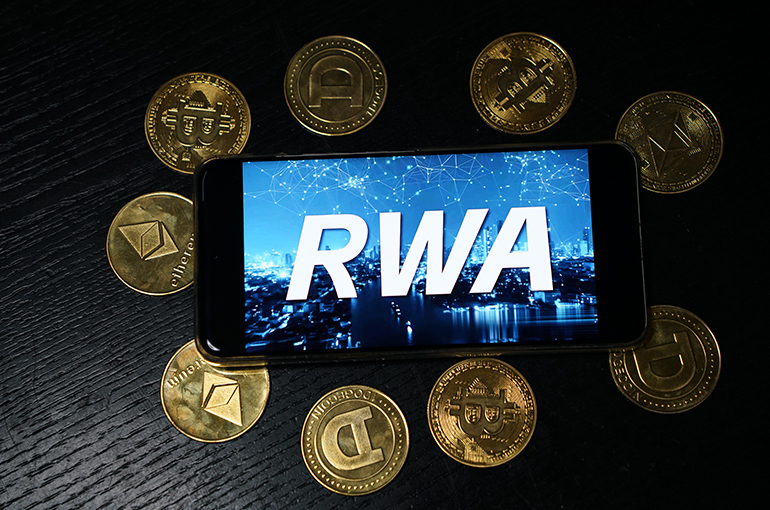
On the same day, the China Securities Regulatory Commission introduced regulatory guidelines that establish a clear framework for offshore issuance of real-world assets (RWA) backed by domestic assets. These guidelines emphasize that while onshore issuance is strictly prohibited, offshore activities will be carefully regulated.
For the first time, regulators have clearly defined RWA tokenization, which involves using cryptography, distributed ledger technology, or similar methods to convert ownership rights, income streams, and other asset interests into tokens or similar financial instruments.
The securities regulator will oversee offshore RWA token issuance backed by domestic assets in accordance with existing laws and regulations. Domestic entities controlling the underlying assets must register their activities with authorities before launching such projects.
According to a report by Guosen Securities, these guidelines mark a significant milestone for China’s emerging RWA sector. In the short term, firms with inadequate compliance or qualifications may be forced to exit, possibly reducing market activity. However, the regulations also provide opportunities for compliant models to develop, offering clear guidelines for institutions capable of operating within the regulatory landscape.
 ChatGPT
 Perplexity
 Gemini AI
 Grok AI