
Select Language:
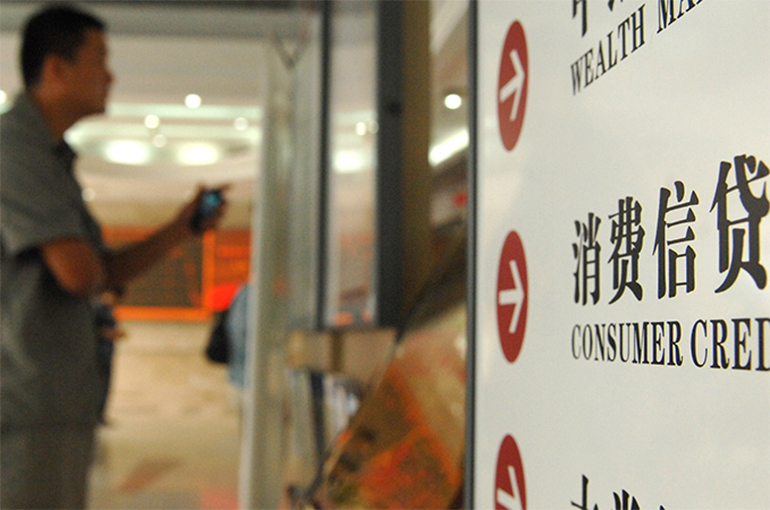
On December 15th, the central government’s consumer loan interest subsidy initiative in China reached its 100th day, prompting commercial banks to accelerate the issuance of personal consumer loans. However, the effects are yet to be reflected in the latest overall lending figures reported by the People’s Bank of China.
Launched on September 1st and set to run for one year, this policy aims to stimulate consumer spending and stabilize domestic demand by providing eligible borrowers with a 1 percent government subsidy on personal loans issued by commercial banks. If the contract interest rate is 2 percent or less, the subsidy is limited to half of the contract rate. The program allows loans to be used for daily expenses, as well as for purchasing automobiles, medical services, elderly care, education, travel, electronics, and household goods.
Several bankers shared that since the policy’s implementation, their institutions have enhanced efforts to promote personal consumer loan products. The focus has been especially on big-ticket items like cars, appliances, and home renovations, resulting in increased monthly new loan approvals compared to previous months.
Recent financial reports from publicly listed banks indicate a rise in consumer lending and related spending. For example, the Bank of Communications reported that their consumer loan disbursements in September grew by over 20 percent from August, and their total outstanding personal consumer loans at the end of September were nearly 30 percent higher than the previous year. By the end of October, nearly a million customers benefited from interest subsidies, with over 1.8 million approved qualifying spending transactions.
Despite these positive signs, industry insiders suggest that the overall consumption boost remains limited, largely due to strict borrower screening practices that banks continue to enforce, even with the added incentive of interest subsidies. This cautious approach is partly why broader economic indicators haven’t shown more pronounced improvement.
In November, household loans decreased by a net 206 billion yuan (around 28.4 billion USD), according to central bank data, marking a year-on-year decline of 476 billion yuan. Both short-term and medium- to long-term loan growth underperformed compared to the previous year. Over the first 11 months, total yuan-denominated loans increased by 15.36 trillion yuan (approximately 2.12 trillion USD), but household loans only grew by 533.3 billion yuan. Short-term household loans shrank by 732.8 billion yuan, which continues to weigh down overall loan growth.
In addition to central government subsidies, several local authorities—including Sichuan, Guizhou, and Chongqing—have introduced their own fiscal interest subsidy programs for personal loans, indicating a shift from reliance solely on national-level support to more regional aid.
Xue Hongyan, a specialized researcher at a regional bank, explained that because local subsidies are primarily financed through local budgets, these governments often require that subsidized loans be used for local consumption, with lending and management handled by local commercial banks or rural financial institutions.
Yu Xiaoming, a senior investment adviser at a consulting firm, noted that local interest subsidies are a practical way to leverage limited fiscal resources and encourage bank lending and household consumption under current financial constraints. He anticipates that more regional banks will participate in such local subsidy initiatives in the future.
 ChatGPT
 Perplexity
 Gemini AI
 Grok AI