
Select Language:
Eleven automakers in China have announced their sales targets for 2026 since the beginning of the year, with an electric vehicle startup aiming for the most aggressive growth rate of 68%, despite industry analysts predicting more moderate overall market growth.
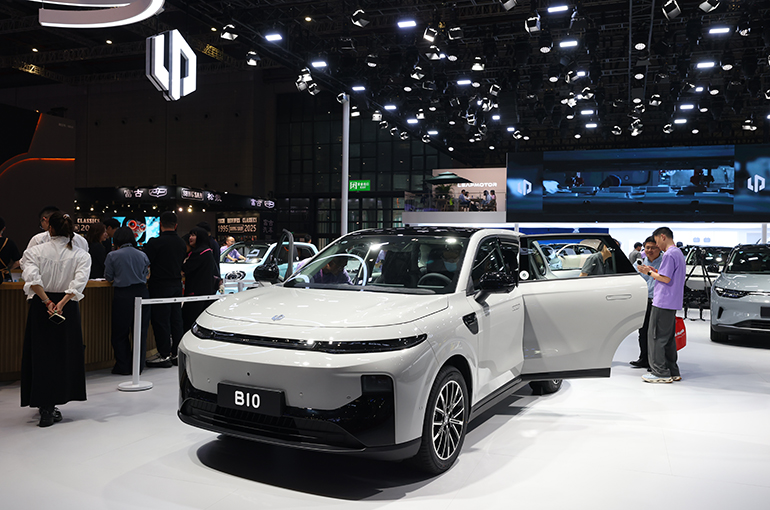
The company based in Hangzhou plans to sell one million vehicles this year, according to its founder and chairman. Last year, the startup experienced a year-over-year sales increase of 103%, delivering nearly 597,000 vehicles and surpassing its annual goal of 500,000 units.
Among other EV startups, a company aims to sell between 550,000 and 600,000 cars in 2023, which represents a growth of 28% to 40% over last year’s sales of approximately 429,450 vehicles. Another company has set a sales growth target of 40% to 50%, having delivered nearly 326,000 vehicles last year.
A tech giant in the industry, now in its third year, plans to sell 550,000 vehicles in 2023. Its auto division saw a threefold increase last year, with sales reaching nearly 412,000 units—marking its debut in the top 10 new energy vehicle manufacturers in China by volume.
A partnership between a group and a technology firm aims to sell 500,000 premium electric vehicles this year, representing a modest growth of about 6% from the previous year.
In the traditional automaker segment, one major manufacturer has set the most ambitious goal, increasing sales by 36% to 1.8 million vehicles. Additionally, two other large firms, both having recently received permits for L3 autonomous driving, are targeting sales growth of 13% and 26%, respectively, to reach 3.3 million and 2.2 million units.
Another large group expects to boost sales by 31% to 3.3 million units, while a different manufacturer aims for 14% growth, reaching 3.2 million. Two other major automakers, a brand under Geely and another national group, anticipate growth of 8% and 7%, respectively, each reaching around 3.5 million units.
Despite these ambitious sales plans, industry associations and research organizations remain cautious. The government recently ended a 12-year tax exemption on new energy vehicle purchases, introducing a 5% tax, and subsidy programs for vehicle trade-ins have been reduced for this year.
The national automotive industry association forecasts a slight 1% increase in total vehicle sales, climbing to 34.8 million units—this being the slowest growth since 2017. Industry analysts expect wholesale sales to decline slightly in the low single digits and retail sales to see a mid single-digit decrease, although sales of new energy vehicles are projected to grow by around 8% despite the broader market downturn.
 ChatGPT
 Perplexity
 Gemini AI
 Grok AI