Select Language:
Digital Phablet – The Arab world commemorates Mazen Lotfi, a pioneer who shaped radio drama.
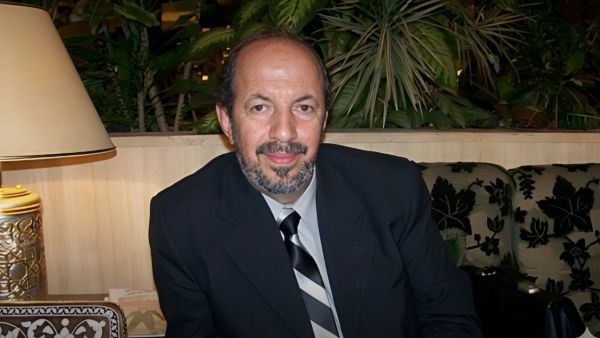
Syrian radio actor and director Mazen Lotfi passed away early Friday morning at the age of 85, leaving behind more than fifty years of work in radio and television drama. His extensive body of work has become a fundamental part of the collective memory for audiences in Syria and across the Arab region.
The Syrian Artists Syndicate announced his passing on its official Facebook page, mourning the “esteemed artist Mazen Lotfi” and offering heartfelt condolences to his family, colleagues, and fans.
According to the Syrian Arab News Agency (SANA), Lotfi was a prominent figure in the field of radio drama within the country. The archives of Syrian Radio contain roughly 16,000 hours of his dramatic productions, setting a record in Arab radio directing history.
Born in Damascus in 1941, Lotfi initially pursued a career in theater, participating in minor roles in private folk theater before joining the drama department of Syrian Radio in 1972. After completing training in Syria and abroad, he transitioned into radio directing, developing his own unique style that left a lasting mark.
He directed and produced numerous radio dramas and was involved in over 50 television series. Throughout his career, Lotfi earned several Arab accolades, including the Gold Award at the Tunis Festival for his series “Sanabel Al-Adab” (Ears of Literature) and the Golden Creativity Award at the Cairo Arab Media Festival for works such as “Muftaraq Al-Matar” (The Crossroads of Rain), “Dhawahir Mudhisha” (Amazing Phenomena), and “Sawt Fi Al-Dhakira” (A Voice in Memory).
Joining the Artists Syndicate in 1973, Lotfi built strong relationships with many notable figures in Syrian and Arab arts. Testimonies from colleagues highlight his dedication to documenting the stories of pioneering artists, not only through collaborative efforts but also with original works that preserve their legacies.
Among these efforts was a radio drama series in which artist Abdel Latif Fathi narrated Lotfi’s life and artistic journey using his voice. Additionally, he authored and directed the program “A Voice in Memory,” which aimed to revive the legacy of the deceased artists—serving as a renewed homage to icons who should never be forgotten.
While known for his behind-the-scenes work, Lotfi also appeared on screen. He acted in several privately produced films like “Ghazlan,” “Abu Antar Bond,” and “Habibi Majnoun Jiddan” before gradually becoming a familiar face in Syrian and Arab television dramas over the years.
His notable TV appearances include “The Deceased’s Will,” “Warm Roots,” “Tarabish,” “Abu Antar’s Diaries,” parts of the series “Mirrors,” “Dunya,” “The Madhouse,” “The Lady’s Husband,” “Bab Al-Hara,” “Gibran Khalil Gibran,” “Qamar Bani Hashim,” “Naji Attallah’s Squad,” and “A Moment of Silence.”
His final role was in the series “Struggle of the Hills,” which finished filming but has not yet aired, marking the end of a career that spanned over five decades between the microphone and the camera.
With his passing, Syrian drama loses one of its understated pillars—a dedicated worker who tirelessly contributed to radio and television, leaving behind a legacy imbued with thousands of hours of programming and countless iconic characters that resonated with audiences.
The repercussions of his influence are evident in the archives, where thousands of hours of his radio work remain preserved, offering valuable insight into the evolution of radio drama in Syria and beyond over fifty years.
As condolences pour in via social media from peers and students alike, the Syrian arts community bids farewell to a director and actor whose quiet yet profound contributions engraved an auditory and aesthetic memory in the minds of many, particularly symbolizing the childhood dreams of generations past and present.
 ChatGPT
 Perplexity
 Gemini AI
 Grok AI