
Select Language:
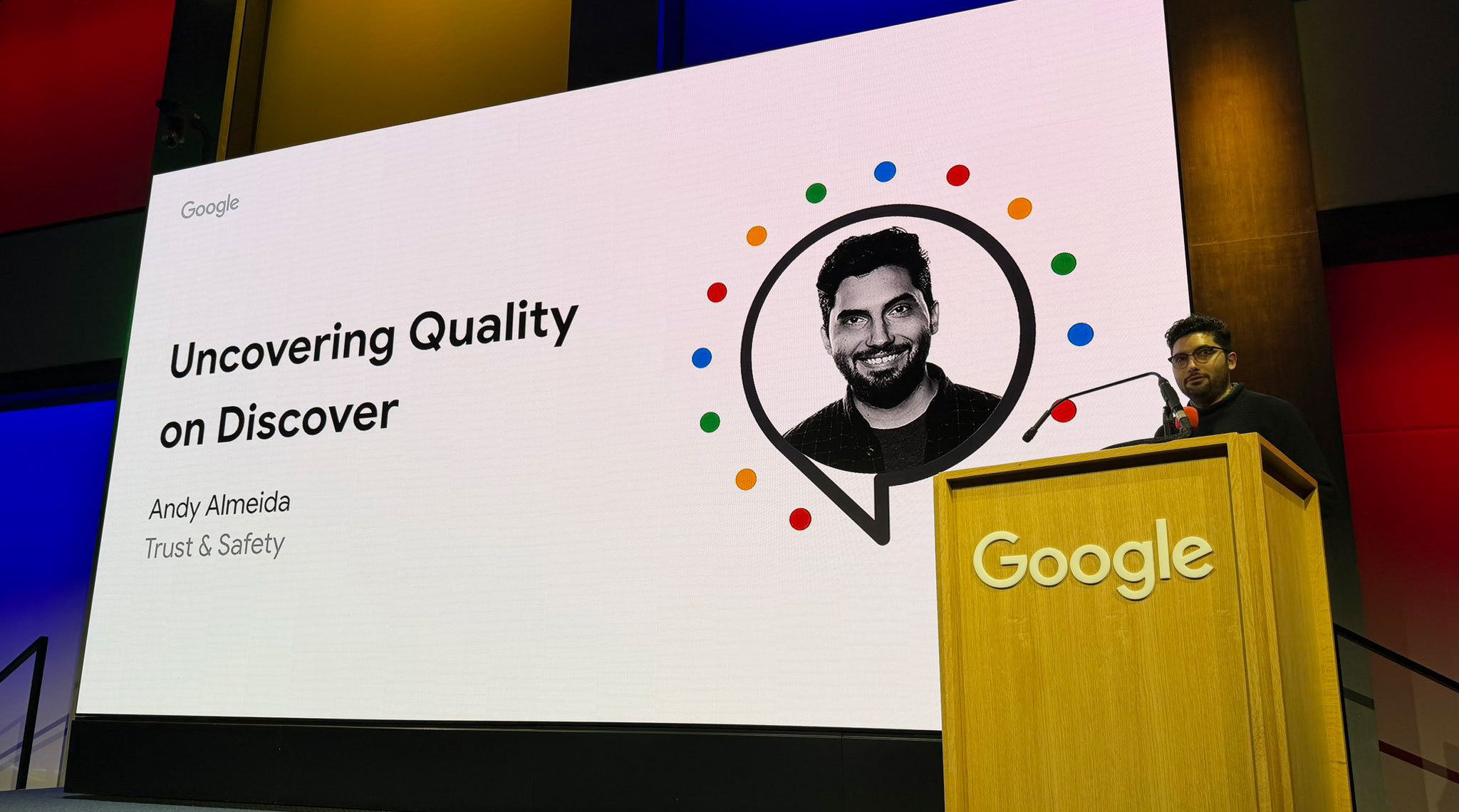
Google indicated that core updates can influence visibility within Google Discover, but that may no longer be entirely accurate. Andy Almeida from the Google Trust and Safety team discussed Google Discover during the Google Search Central Live event in Zurich. One of his presentation slides pointed out that there is “minimal alignment to Search ranking,” suggesting that Google Discover’s content promotion isn’t tightly tied to traditional search ranking signals.
At the event, Almeida explained that the Discover team aims to highlight and promote content from smaller publishers—sites that don’t rank highly in Google Search. He mentioned that Google Discover doesn’t rely solely on Google’s quality signals, which primarily favor authoritative sites. Instead, even sites that aren’t top-ranked in search can still appear in Discover, allowing lesser-known publishers to get visibility without having to rank well in search results.
Almeida noted that, at present, it’s possible for a site to show up in Discover even if it doesn’t rank for most of its queries. This approach seems partly responsible for the current spam issues within Google Discover, as it’s comparatively easier to get a new or less-established domain to appear in Discover than in traditional search.
When asked if this strategy is a nuanced effort to balance trust signals, prevent spam, and promote emerging publishers, Almeida nodded in agreement. Based on follow-up questions, it appears that Google is deliberately maintaining a flexible approach to content promotion in Discover, which may sometimes favor new or smaller sites over established authoritative sources. This flexibility, while beneficial for new publishers, also opens the door to spam, making the content quality moderation more challenging.
 ChatGPT
 Perplexity
 Gemini AI
 Grok AI