
Select Language:
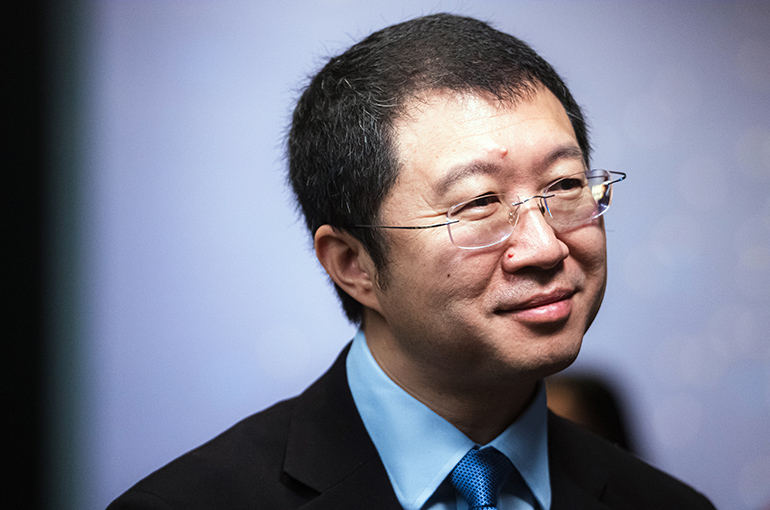
Even with an influx of more driverless taxi providers entering the market since late last year, the founder of WeRide remains confident in the company’s dominant position. He stated that truly entering the robotaxi industry and competing effectively requires a fleet of at least 100 fully autonomous taxis that have operated safely for a minimum of six months. Only after meeting this threshold are companies considered qualified to compete.
Several automakers have stepped into the robotaxi space since the latter half of 2025. Tesla, for instance, accelerated the development of its Cybercab prototype, and Xpeng established a dedicated robotaxi division. However, the company’s leader expressed little concern about these new entrants, even if they do possess some cost advantages due to their car manufacturing capabilities. He emphasized that vehicle cost is less of a barrier since most Chinese automakers already know how to produce vehicles that meet the safety and redundancy standards of robotaxis.
He explained that it’s difficult for traditional car companies to create their own robotaxi operations while maintaining a distinct cost advantage. This challenge arises because collaborations between autonomous technology firms and their automotive partners have become so integrated that they have achieved large-scale, early-stage production. Furthermore, vehicles purchased from these partners are typically sold at prices just above cost.
The jump from Level 2 to Level 4 autonomous driving technology is substantial, and the company in question has dedicated nine years to this effort, overcoming multiple technological hurdles along the way. This progress contrasts sharply with the setbacks faced by traditional automakers developing driverless systems independently. For example, GM’s self-driving unit recently shut down its robotaxi operations, and Argo AI, supported by Ford and Volkswagen, was dissolved.
With major manufacturers retreating from the driverless taxi market, there’s little evidence suggesting new entrants will have technological advantages that enable independent operations. The sector requires more than just increased investment and manpower; strategic alliances between carmakers and autonomous tech developers are more likely to offer a competitive edge.
Internationally, robotaxi services typically command higher prices, leading to increased profits, which encourages Chinese firms like WeRide to expand overseas. Last month, they launched a project in Slovakia and began commercial driverless taxi operations in Dubai. This month, they introduced a public robotaxi service in Singapore. The company now provides services in over 40 cities across 12 countries.
The expansion plan for Europe involves a city-by-city approach to navigate varying regulations and strict data storage requirements for automotive data, according to company leadership. Despite regional conflicts like the Middle East crisis, operations in the region continue smoothly, with leadership viewing it as a profitable market that requires ongoing staffing and expansion.
The overseas robotaxi market is still mainly focused on acquiring users, with increasing order volumes being the primary goal. Maintaining last year’s gross profit margin of about 30 percent remains a challenge. Currently, international revenue accounts for roughly a quarter to a third of the company’s total income. Notably, robotaxi operations in the Middle East achieved operational profitability last year.
 ChatGPT
 Perplexity
 Gemini AI
 Grok AI