
Select Language:
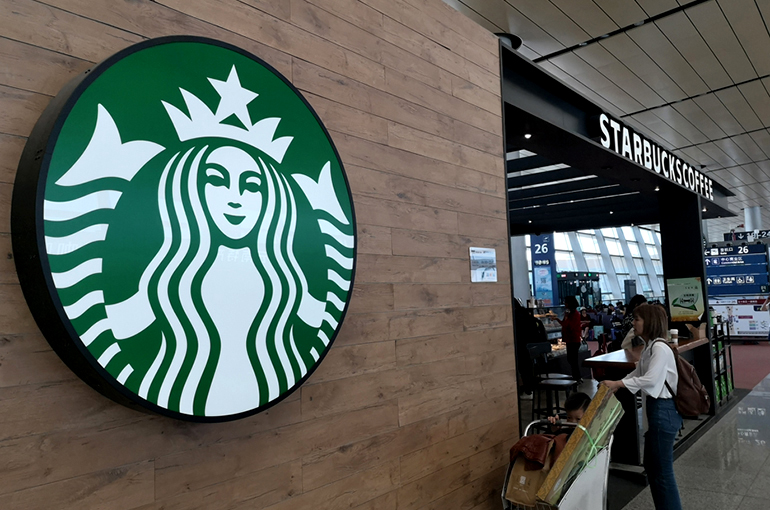
The plans by major global chains like Starbucks and Burger King to sell controlling stakes in their China operations highlight a broader shift towards localized strategies and increased competition within the market, according to industry experts.
Huang Feng, president of the Shanghai Foreign Investment Association, explained that these brands aren’t pulling out of China. Instead, they are restructuring their operations by delegating management and expansion authority to local teams. They are also adopting asset-light approaches that cut down cross-border management costs. This move aims for complete localization across capital investment, operational processes, and talent recruitment—a trend expected to accelerate among multinational companies.
Recently, both Starbucks and Burger King announced intentions to sell majority shares in their Chinese businesses, prompting discussions about whether foreign consumer companies are retreating from China.
“These brands haven’t been performing as well in recent years, with many experiencing stalled growth or declining profits,” said Zhan Yubo, director at a research institute affiliated with the Shanghai Academy of Social Sciences. The main challenge, he noted, is intensified competition that many companies have struggled to keep pace with. However, he pointed out that not all foreign brands are facing these difficulties.
For example, retailers like Aldi and Walmart’s Sam’s Club continue to expand rapidly in China. Ultimately, success depends on whether foreign companies can adapt to the changing consumer preferences and competitive environment in China.
Zhan emphasized that rising competition is a structural issue that impacts all players, not just foreign brands. In the past, foreign companies attracted large audiences by offering unique products and experiences unavailable locally. Today, consumers benefit from a much wider array of options, making full-chain localization a practical strategy for foreign firms trying to stay competitive.
The performance of Starbucks and Burger King illustrates this trend. Burger King’s expansion has significantly slowed, with a sharp decline from opening 257 new stores in 2023 to only 26 so far this year. Last year, each Burger King in China averaged about $400,000 in annual sales, compared to over $1 million in nine other countries. Meanwhile, Starbucks faces fierce competition from rapidly growing Chinese coffee brands like Luckin Coffee and Cotti Coffee.
Other brands rumored to be considering sales of their Chinese operations, such as Häagen-Dazs and IKEA, have also faced challenges. IKEA’s China revenue last year reached CNY 11.2 billion, falling almost 30 percent below its 2019 peak of CNY 15.8 billion.
Despite these stories of retreat, an insider familiar with the restaurant industry told sources that China’s enormous consumer market remains highly attractive for investment. Many investors consider the food and beverage sector to be a core asset class, valued for its standardization, predictable growth, and profitability. For example, the Starbucks project was highly coveted by investors.
Parties involved typically seek to combine localized resources and operational expertise on one side with strong assets and confidence in China’s long-term dining market growth on the other. When the needs align and valuations are fair, deals tend to happen naturally.
 ChatGPT
 Perplexity
 Gemini AI
 Grok AI