
Select Language:
Founded less than six months ago by the son of the chairman of a major Chinese automotive conglomerate, One Star Robotics is set to shut down despite securing hundreds of millions of yuan—equivalent to tens of millions of dollars—in funding.
An insider recently revealed that the company is in the process of disbanding. “All personnel associated with the parent company have essentially left,” they said.
The company has not provided an official statement regarding the closure.
Market speculation suggests that internal disagreements within the founding team and conflicting business strategies with a subsidiary that filed for an IPO in Hong Kong on October 16 might be driving forces behind the potential shutdown.
The company’s WeChat account has been deleted, and the profile of co-founder and chief technology officer Ding Yan on the social platform Xiaohongshu (Rednote outside China) indicates he was with the company only through this month.
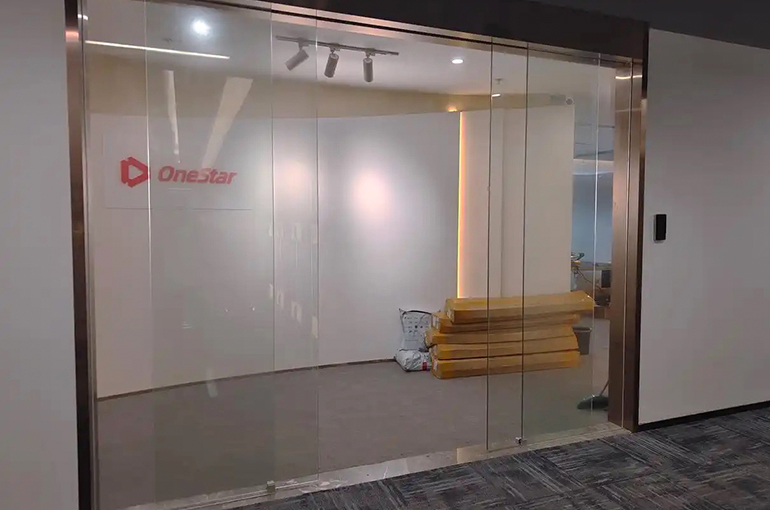
A visit to One Star Robotics’ Hangzhou office by a major financial publication showed items stacked at the entrance that remained unopened. Company logos and names have been removed, and only a few employees are still on-site.
In its most recent funding round last month, the startup raised several hundred million yuan from investors including Baidu Venture and Cowin Capital. Additionally, it received investments earlier in August from Geely-backed CaoCao Mobility and Zhejiang Geener Microelectronics.
“One Star Robotics isn’t laying off employees,” a former tech department employee stated, citing that the company will be deregistered early next month. Despite many ongoing orders last month, investors who participated in the August funding round appreciated the company’s prospects and wanted to increase their stakes.
The company was launched by Li Xingxing in May, who owns nearly 66 percent of the firm. Its legal head, Pan Yunbin, previously served as president of Geely’s satellite division. The R&D team includes professors from Fudan University and Tsinghua University, along with members from the globally recognized FastUMI data collection team.
The swift rise and fall of One Star Robotics highlights the struggles facing the embodied intelligence industry, several insiders noted. While a report from the Guangdong Artificial Intelligence Industry Association projects China’s embodied intelligence market could surpass 1.25 trillion yuan (approximately $175.6 billion) by 2027, the sector still faces hurdles such as high investment costs, intensive R&D requirements, and low profit margins.
Scaling production of robots and advancing commercialization are critical challenges that all companies in this field must address, industry insiders emphasized.
 ChatGPT
 Perplexity
 Gemini AI
 Grok AI