
Select Language:
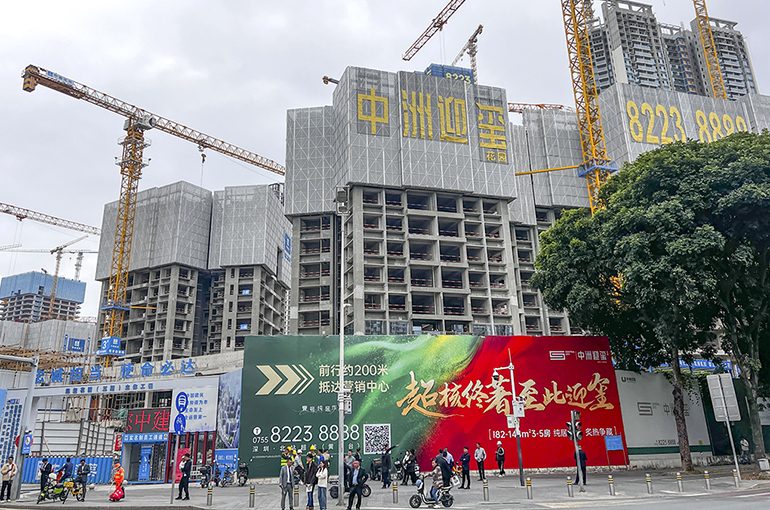
On September 8, Shenzhen experienced a significant increase in visitors at many new housing developments following the lifting of home-buying restrictions in its non-core districts. This change marked the last of China’s top four cities to ease such policies.
Effective September 6, residents of Shenzhen can now purchase an unlimited number of homes throughout most of the city, except in Futian and Nanshan districts and the Xinan sub-district of Bao’an district. Additionally, non-local residents are now permitted to buy up to two homes.
Real estate agents in Shenzhen reported that the number of visitors to new housing projects surged by more than 10% on the first day the new policy took effect, compared to usual levels. Some buyers, who had just gained eligibility to purchase, made their moves immediately, they added.
“Those who were previously hesitant took the opportunity to come out and view properties over the weekend,” an official working on a project in Guangming district said. Nearby developments also introduced new units, drawing even higher visitor turnout than normal, he noted.
Despite ongoing restrictions in Futian district, the market showed signs of revival, according to a sales director at a local real estate firm. “Our project typically attracts 150 to 180 visitors weekly, and on September 6, we saw this number increase by around 10 to 20 percent,” he said, though the day hadn’t concluded at the time of the report.
The homes available in that project are valued above 100,000 yuan (approximately $14,010) per square meter. Buyers tend to be financially solid, and their decision to purchase mostly depends on their outlook for the overall market, the sales director explained. “There’s a noticeable boost in customer confidence.”
Market expectations exceeded forecasts due to the fact that Shenzhen’s real estate market has not yet recovered from a lengthy downturn, noted Li Yujia, deputy director of the Guangdong Provincial Housing Policy Research Center. Second-hand property prices have been falling for over four years, and the land market remains sluggish, Li stated.
Zou Shaowei, a senior researcher at the Shenzhen Central Plains Research Center, mentioned that developers and prospective buyers had been awaiting a relaxation of market policies for months. The latest adjustments are expected to strengthen market confidence, encourage developers to accelerate new projects, increase buyer enthusiasm, and help restore market sentiment and sales.
Although some home-buying restrictions remain in Shenzhen’s core areas to prevent speculation, removing limits in non-core districts aims to attract non-local buyers, boost demand, and speed up inventory reduction while stabilizing prices, Zou explained.
As the peak home sales season approaches, especially in the coming months, Li predicted that de-stocking efforts in Shenzhen’s outskirts will progress substantially, likely leading to a market recovery.
Experts forecast a potential 50% increase in new home sales this month compared to the previous month, with Xiao Xiaoping, dean of the Shenzhen Shell Research Institute, highlighting the positive outlook.
Other Chinese cities, including Guangzhou, Beijing, and Shanghai, are also expected to follow the lead of Shenzhen in easing property policies, according to Chen Wenjing from the China Index Academy.
During the peak speculation period, China’s top four cities implemented restrictions on home purchases, limiting the number of properties residents could buy. Guangzhou was the first to relax restrictions at the end of September last year, marking the beginning of a gradual easing in other cities later that year.
Most recently, Beijing and Shanghai eased restrictions in their non-core districts in August.
 ChatGPT
 Perplexity
 Gemini AI
 Grok AI