Select Language:
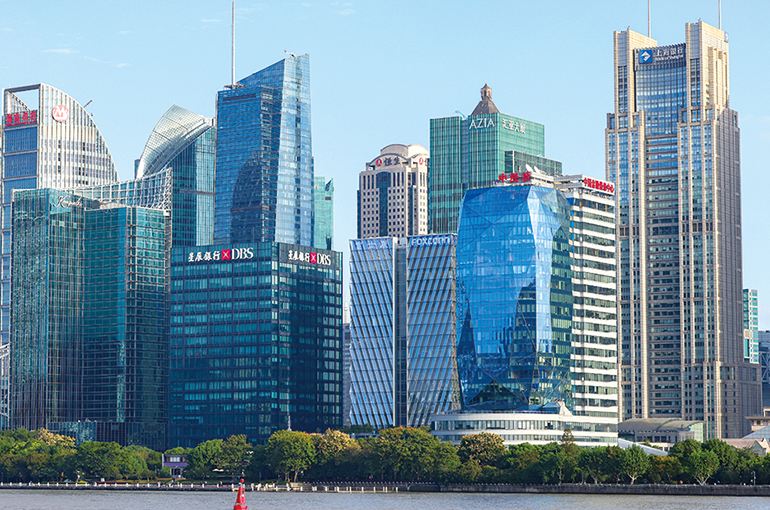
The bulk property sales market in Shanghai experienced notable structural changes last year, characterized by a general decline in prices and shifts in both the types of properties exchanged and the profiles of buyers. Analysts expect this trend to persist into the current year.
With ongoing easing of local fiscal and monetary policies, small- and medium-sized real estate assets valued under 300 million CNY (approximately $42 million) are expected to dominate bulk transaction activity. This preference stems from their clear property rights and flexible decision-making processes, according to a senior executive at a leading real estate firm in East China.
Properties located in prime districts within major cities like Shanghai will continue to draw investor interest. The strategic focus among investors is gradually shifting from solely seeking financial returns to emphasizing asset management, capitalization, and resource-based deep operations aimed at value enhancement.
As real estate investment trusts (REITs) expand and urban renewal initiatives advance, clearer exit strategies for investments are emerging. This development is expected to bring more high-quality opportunities into the bulk sale segment, noted a senior analyst at a global real estate services firm.
Data indicates that in the past year, 75 bulk property transactions were completed, with a total value surpassing 42 billion CNY (around $5.9 billion). Notably, over half of these deals—38 transactions—were valued below 300 million CNY. Similarly, figures from a major real estate advisory company show a total of 89 bulk property sales in 2025, amounting to approximately 48.7 billion CNY ($6.8 billion), representing a 15% decrease from the previous year. The majority of these deals—about 63%—were under 500 million CNY.
Industry insiders reveal that buyers now favor projects of moderate size that offer controllable risks and quicker decision cycles, marking a shift from the larger transactions of over a billion or even ten billion CNY that were common in earlier years. Additionally, the buyer pool is diversifying beyond traditional institutional and foreign investors; non-institutional and corporate entities are increasingly active in this space.
In Shanghai’s office markets, private companies—primarily smaller firms from other provinces—are showing interest in buying office buildings, prompted by recent price adjustments. For instance, a Lanzhou-based enterprise recently acquired an office building downtown Shanghai through a judicial auction for 456 million CNY (around $63.8 million), aiming to support its expansion in the city.
Most bulk property purchases in Shanghai are now made by domestic entities. Data shows foreign investments accounted for only three bulk acquisitions last year, representing a mere 3% of total transaction volume. Among domestic buyers, around 26% of bulk assets were acquired for self-use—such as office spaces or residential units for employees.
Foreign companies made 15 bulk property acquisitions last year, totaling about 12.9 billion CNY (approximately $1.8 billion), accounting for roughly one-third of the market’s overall transaction value. This activity is seen as part of a broader structural shift, with some foreign investors preparing yuan-denominated funds and shifting towards more localized, long-term strategic approaches, leaving open the possibility of future market re-engagement and vitality injection.
 ChatGPT
 Perplexity
 Gemini AI
 Grok AI