
Select Language:
Shanghai unveils a new strategic plan to position itself as a leading hub for advanced self-driving vehicle technology by encouraging the mass production and widespread use of fully autonomous cars.
The city aims to begin mass manufacturing vehicles with Level 4 autonomous capabilities as early as next year. Meanwhile, over 90% of new cars will feature Level 2 driver assistance or Level 3 conditional autonomy, according to the plan released jointly by the Municipal Economic and Information Commission, the Transportation Department, and the Public Security Bureau on January 14.
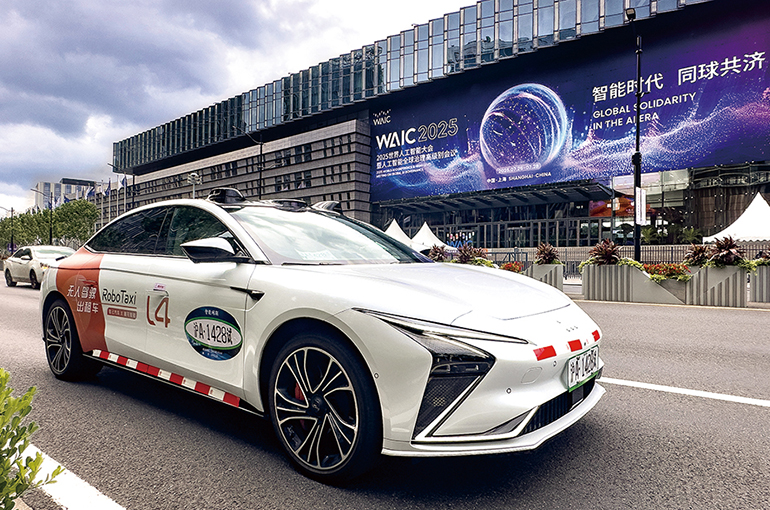
Large-scale deployment of Level 4 autonomous technology will be implemented in public transit and freight logistics. This includes the deployment of robo-buses and robotaxis to serve more than six million passengers, along with unmanned heavy trucks to transport over 800,000 twenty-foot equivalent units.
Furthermore, Shanghai plans to gradually expand its autonomous driving zones to cover 2,000 square kilometers, totaling over 5,000 kilometers of interconnected routes. These routes will link major points including Hongqiao Transportation Hub, Pudong International Airport, and Disney Resort.
The city has been a pioneer in autonomous vehicle testing since 2016, being the first in China to initiate closed-road trials. As of the end of last year, Shanghai had opened 3,173 roads totaling over 5,200 kilometers for self-driving tests, encompassing roughly one-third of the urban area.
At the national level, China is also actively supporting the deployment of high-level autonomous driving technology. The Ministry of Industry and Information Technology recently issued the country’s first permits for open-road testing, allowing models like Changan’s Deepal SL03 and BAIC BluePark’s Arcfox Alpha S to operate Level 3 autonomous functions in traffic conditions on highways and urban expressways in Beijing and Chongqing without lane changes.
 ChatGPT
 Perplexity
 Gemini AI
 Grok AI