
Select Language:
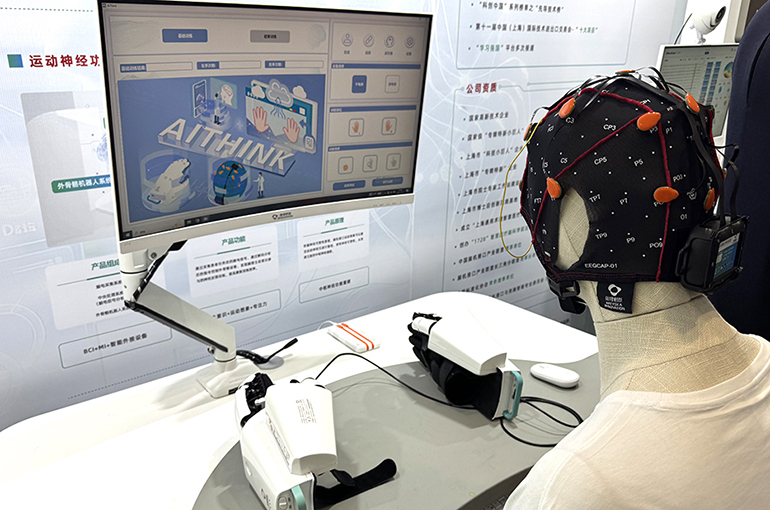
Shanghai is setting its sights on the widespread use of invasive brain-computer interfaces (BCI) in medical settings by 2030, according to recent official guidance for the industry. The city plans to complete testing on more than five invasive or semi-invasive BCI devices by 2027 and aims to foster the development or acquisition of over five independent companies with core BCI technologies and product development capabilities. Additionally, more than ten key supply chain companies are targeted for cultivation within this timeframe.
By 2027, Shanghai expects to have laid the groundwork for a local innovation ecosystem dedicated to BCI, speeding up product commercialization, creating collaborative R&D platforms, supporting clinical trials, and establishing testing standards and systems. The goal is to nurture a vibrant, innovative industrial ecosystem that advances both research and practical applications.
Looking ahead to 2030, the city aims to fully incorporate invasive BCI products into clinical practice, positioning itself as a worldwide leader in BCI innovation. The initiative includes plans for key segments of the supply chain to achieve greater autonomy and control, enhancing overall industry resilience.
To meet these ambitions, Shanghai will promote the approval process for BCI devices through specialized review channels for innovative medical tools, develop standards for neural signal data collection adapted to various use scenarios, and compile a comprehensive database of brain data from no less than 1,000 cases. This database will support the development of advanced neural signal processing algorithms and facilitate neuroscience research.
Recent advancements highlight Shanghai’s progress in this sector. Last month, a leading research center announced China’s second successful invasive BCI implantation in a patient, enabling control of smart devices like a wheelchair within a three-dimensional environment.
Shanghai’s Brain Intelligence World industry cluster, located in Minhang district, is recognized as China’s first dedicated BCI industrial hub. It has attracted nearly 20 top-tier teams and companies both domestically and internationally. The development spans roughly 100,000 square meters, with surrounding infrastructure designed to create a synergistic environment for BCI research, clinical applications, and industrial development.
Supporting policies include substantial financial incentives for BCI companies within Minhang. Leading firms can receive grants of up to CNY 20 million (approximately USD 2.9 million), with R&D subsidies capped at CNY 2 million (USD 286,710) annually for three years. Successful project competitions can garner awards of up to CNY 2 million, while platform development initiatives may be subsidized up to CNY 50 million.
 ChatGPT
 Perplexity
 Gemini AI
 Grok AI