Select Language:
The competition within some African countries’ photovoltaic power sector has intensified since the start of the year, as an increasing number of Chinese firms are investing in the continent to capitalize on its significant electricity shortfall.
Both small and large Chinese companies have entered the African solar market following policy changes in various countries designed to encourage investment. For instance, South Africa has streamlined the approval process for solar projects, while Morocco offers land and tax incentives to promote renewable energy developments.
“African consumers tend to prioritize affordability and practicality over brand reputation and quality, which results in fierce competition based on low prices,” remarked Huang Yan, who oversees Kenyan operations for a Chinese manufacturer specializing in solar and energy storage inverters.
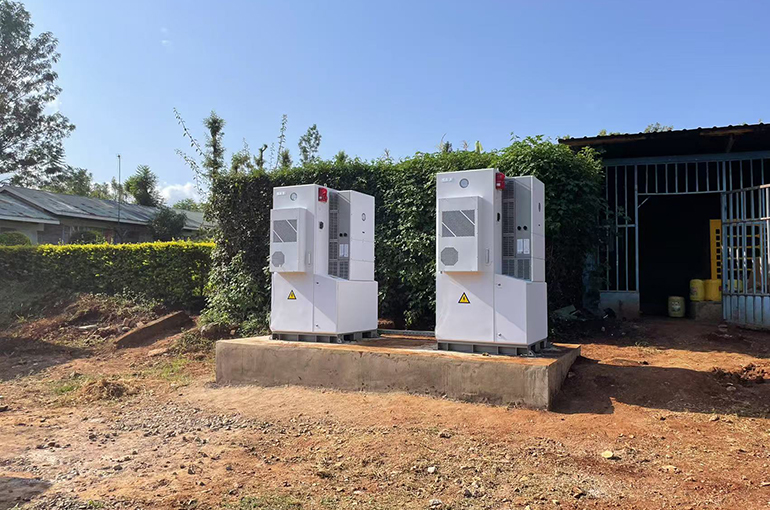
Chen Xiaohui, head of the local branch of Sanjing Electric, shared that the cost of a 5 kWh energy storage battery has fallen from over $1,100 earlier this year to about $400.
The potential for growth in Africa’s power generation sector remains vast, and experts suggest Chinese solar companies should deepen their involvement on the continent. They need to tailor their product offerings to meet specific market demands while balancing competition with potential risks such as lengthy payback periods for industrial and commercial projects.
For example, a 500-kilowatt solar setup for a supermarket may require an investment between CNY 300,000 and CNY 400,000 (roughly $41,610 to $55,480), with an estimated annual income of approximately CNY 96,000 ($13,315). This results in a payback period exceeding three years, according to Chen.
Additionally, most projects funded by African governments are paid in installments due to fiscal limitations, prompting caution among Chinese companies. They need solid financial backing to accept such projects, typically requiring an initial capital infusion of at least CNY 50 million ($6.9 million) and a working capital exceeding CNY 300 million ($41.6 million). It’s also critical to thoroughly evaluate local policies, market conditions, and costs before proceeding.
The electricity crisis in Africa is among the most severe worldwide. Data from the World Bank indicates that more than 80% of the global population without electrical access resides in Africa. Approximately 600 million people in sub-Saharan Africa rely on firewood and costly generators to fulfill basic energy needs.
Even more economically advanced countries in the region face frequent power outages. For example, industrial and commercial electricity rates in South Africa are around CNY 1.6 (about 22 US cents) per kilowatt-hour, which is more than double the rates in China, Chen pointed out.
“Limited grid infrastructure necessitates off-grid solutions in remote areas like mining zones,” said Jia Yongyan, a Chinese businessman operating in Africa. “The high costs and logistical challenges of building grid connections tend to discourage investors.”
International organizations, including the World Bank and the African Development Bank, have committed at least USD 50 billion to electrify 300 million Africans by 2030. However, despite these efforts, over 400 million people in sub-Saharan Africa are expected to remain without electricity by that time.
 ChatGPT
 Perplexity
 Gemini AI
 Grok AI