Select Language:
Artificial intelligence glasses are poised to experience a breakthrough akin to the “iPhone moment” within the next year or two. As the industry advances swiftly and products become increasingly sophisticated, experts believe this pivotal event will radically transform the market landscape.
The term “iPhone moment” signifies a groundbreaking event or technological innovation that fundamentally reshapes an industry and establishes a new industry standard, similar to the launch of Apple’s first iPhone in 2007.
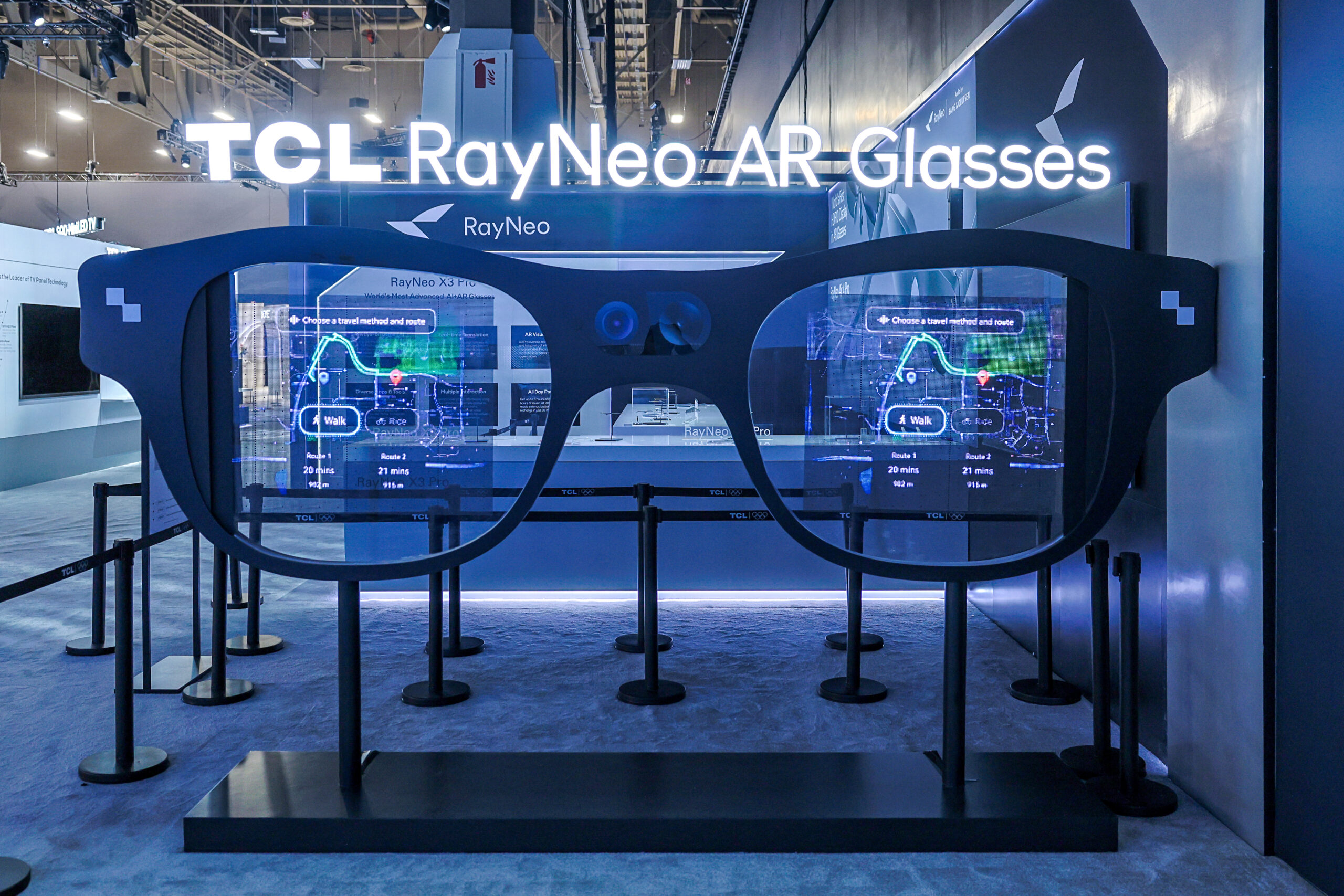
A prominent Chinese company specializing in augmented reality glasses is developing what’s being called “the next-generation iPhone,” with a focus on enabling its devices to operate independently of smartphones. The company’s CEO emphasized in an interview at the Consumer Electronics Show in Las Vegas that their goal is to make the glasses truly standalone.
During the three-day CES event, the company unveiled the world’s first consumer AR glasses equipped with eSIM technology and the latest advancement in cellular connectivity. Just before the show, the Shenzhen-based firm secured a significant investment of 1 billion Chinese yuan (approximately 143 million USD) from major telecom providers, marking their first joint investment in this sector by two of the country’s leading telecom giants.
Shipment data from last year’s third quarter shows that the global market for AR smart glasses hit record highs, with this company ranking first by capturing 24 percent of the market share. Since its founding in 2021, its sales roughly quadrupled last year.
In an interview excerpt, the CEO discussed why telecom giants invested and how the industry will evolve:
They recognized that the company is focused on future-oriented products. The goal is to develop AR glasses that operate independently through eSIM technology, freeing them from smartphone reliance. The company is also among the few working on color MicroLED waveguide products, which are essential for building an ecosystem, setting their offerings apart from competitors like Meta. Their success is demonstrated by rapid sales growth and technological advancements.
The integration of eSIM technology fundamentally changes how AR glasses function. Previously, reliance on smartphones limited their usability—imagine buying an electric vehicle and having to spend time pairing it with your phone instead of enjoying music or videos freely. The new eSIM-enabled models mark a shift from simple accessory to an independent device, elevating their role in daily life.
While many in the industry opt for minimalist designs to extend battery life, the company insists on full-color MicroLED displays. They argue that only full-color displays can foster an ecosystem because monochrome green screens cannot display emojis or full media content. Developing color MicroLED technology has been challenging and resource-intensive, but their dedicated efforts led to innovative solutions like the Firefly Optical Engine and the X3 Pro model. Manufacturing the optical modules required building specialized production lines from scratch, reflecting their commitment to self-reliance and quality control.
The company’s in-house manufacturing at their Jiaxing facility not only supports their own product development but also supplies partners, which enhances overall factory efficiency. This vertically integrated approach aims to mitigate risks, control costs, and accelerate innovation, positioning the company well for future growth as AR becomes a central computing platform.
Despite stiff competition from global technology giants and specialized players, the company’s advantages lie in its clear vision, strategic decision-making, and a highly skilled team. Their industry-leading optical display, spatial computing, and AI capabilities enable them to stand out. They highlight that investing resources into critical areas like color displays sets them apart, especially when others are waiting for supply chain maturity.
Data indicates that the company has consistently ranked number one globally for AR glasses shipments over recent years, with sales quadrupling from 2024 to 2026. Their sustained growth underscores a focus on delivering products that surpass user expectations in key usage scenarios. The industry is increasingly consolidating around leading innovators, making product excellence vital for advancing the market.
Looking ahead, the company sees the current period as not about competing directly with global giants like Meta and Apple, but about creating truly exceptional products. They stress that many existing devices fall short of mass-market usability and that the priority is to develop products that redefine user experience by 2026.
Their expansion into overseas markets will follow their established plans, with expected rapid growth in North America and Europe next year. They estimate that the “iPhone moment” for AI glasses will occur around 2027 or 2028, driven by rapid product maturation and technological breakthroughs.
The development of the industry is segmented into three stages: first, creating a product comparable to the iPhone; second, transitioning from that breakthrough to mass-market adoption; and third, intense competition among all players to secure dominance. Success hinges on talent, resources, and the ability to produce innovative, user-centric devices that surpass expectations.
In summary, the pathway to industry leadership involves building revolutionary products, focusing investments strategically, and continuously pushing technological boundaries to deliver a seamless, high-quality user experience.
 ChatGPT
 Perplexity
 Gemini AI
 Grok AI