
Select Language:
Sales of the German luxury automaker in China have fallen steadily for four years, with last year’s numbers dropping 60% from their peak in 2021. In 2025, the company’s sales in China declined 26%, reaching approximately 42,000 units compared to the previous year. Globally, sales decreased by 10% to around 279,000 units, marking the most significant decline since 2009.
Earlier, the Chinese CEO of the brand confirmed plans to cut the number of authorized retail outlets in the country from 150 in 2024 to 120 by year’s end, and further down to about 80 by the end of 2024. The brand failed to meet its 2024 delivery targets after experiencing years of record growth, primarily due to supply shortages of the 718 model and the fuel version of the Macan, according to Matthias Becker, a member of the executive board responsible for sales and marketing. He also noted that the company’s strategy of prioritizing profit per vehicle over volume had some impact.
The rapidly evolving Chinese new energy vehicle sector has shifted the local auto market landscape, with some domestic high-end brands capturing portions of the traditional luxury market. Additionally, luxury brands have been slow to transition to electric vehicles.
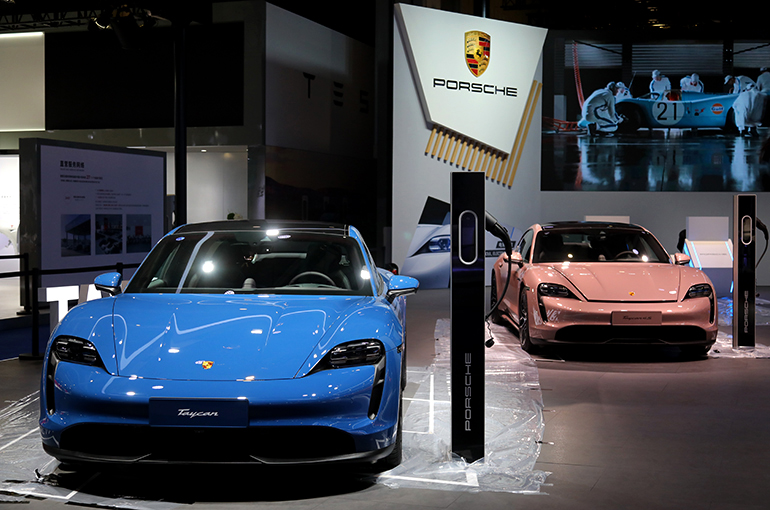
The company was the first ultra-luxury brand to introduce a fully electric vehicle, launching the electric version of the Taycan in 2019. However, it has not developed exclusive electric models specifically for the Chinese market. Last September, the company announced a slowdown in its electrification plans, delaying the introduction of certain battery electric models and instead focusing on more fuel-powered cars and plug-in hybrids.
While the company currently sells the Taycan and Macan electric vehicles in China, their sales performance has not met expectations. Planning to expand electric offerings, the brand intends to launch electric versions of the Cayenne and 718 models in China this year.
From March 1, the company will begin gradually shutting down approximately 200 self-operated premium charging stations nationwide, discontinuing related services and removing these stations from the charging maps in the app and WeChat mini-program. This move appears to reflect a strategic shift away from its previous electrification approach.
 ChatGPT
 Perplexity
 Gemini AI
 Grok AI