Select Language:
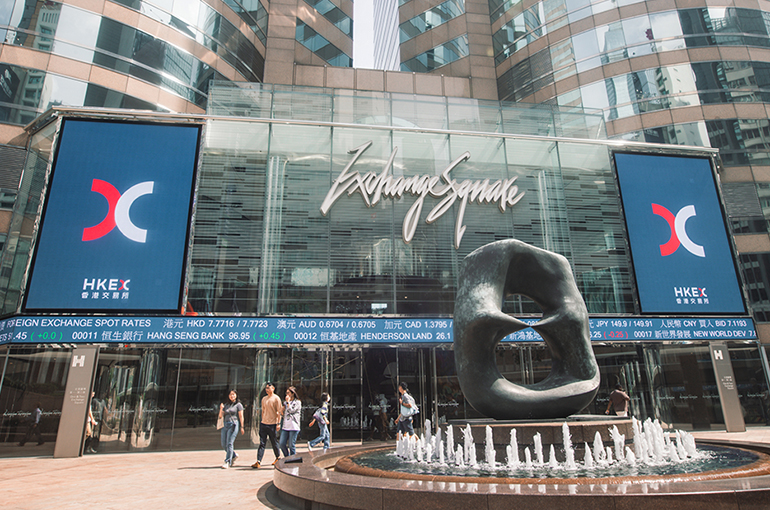
Over 40 Chinese pharmaceutical companies have filed to go public on the Hong Kong Stock Exchange so far this year, with eight of those submitting their applications just this month.
An employee at a mainland pharmaceutical firm planning to list in Hong Kong mentioned, “We are currently holding initial public offering roadshows there, but with so many companies applying, cornerstone and anchor investors are incredibly busy.”
Pharmaceutical stocks have experienced significant gains in the secondary market this year. As a result, buying shares directly during a listing often offers more potential for future appreciation. This has made investors more inclined to favor pharmaceutical firms for new share allocations. Additionally, pre-IPO companies aim to attract reputable cornerstone investors to endorse their offerings.
The employee explained, “This has led securities firms to organize numerous roadshows for mainland biotech companies. Some major investors in Hong Kong receive five to six presentations in a single day, keeping them extremely busy.”
They also noted, “Our roadshow had to be scheduled based on investors’ availability. With the approach of the Christmas holiday, the schedule for roadshows is tightening.”
A key factor driving this trend is that several innovative Chinese drugmakers have entered into overseas licensing agreements for their experimental drugs with international partners, resulting in sharp increases in their stock prices. The Hang Seng Shanghai-Shenzhen-Hong Kong Innovative Drug Select 50 Index rose 69 percent in the first nine months of the year.
Furthermore, reforms implemented in August to the Hong Kong Stock Exchange’s IPO offering and pricing system have increased enthusiasm among cornerstone investors for pharmaceutical listings. Data shows that 23 drug companies have successfully gone public so far this year, with 16 having cornerstone investors as subscribers.
Six of the companies that listed include industry leaders like Hengrui Pharmaceuticals, which attracted five or more cornerstone investors such as prominent institutions GIC Private, UBS Asset Management, Hillhouse Capital, Lilly Asia Ventures, Boyu Capital, and Clear Lake Capital.
However, as the number of listings accelerates and the momentum of pharmaceutical stocks slows down, cornerstone investors are becoming more selective. A pharmaceutical industry investor explained, “Investor enthusiasm for pharmaceutical IPOs has shifted, but some segments are still highly popular. For example, small interfering RNA drugs, antibody-drug conjugates, and artificial intelligence projects continue to draw strong interest.”
Several firms are also expected to list on the Hong Kong exchange in the first quarter of next year, according to an employee at a mainland pharmaceutical company that has applied for an IPO. They added that their company plans to go public during that period as well.
A Hong Kong IPO sponsor commented, “The pharmaceutical sector remains highly attractive. With numerous companies applying to list, capital influx into the industry persists.”
They added, “We expect that top-tier or high-quality investment targets will continue to be in demand.”
Finally, to maximize benefits for issuers, the final offering price must leave some room for future growth, which helps to attract more attention during the roadshow phase, the sponsor concluded.
 ChatGPT
 Perplexity
 Gemini AI
 Grok AI