
Select Language:
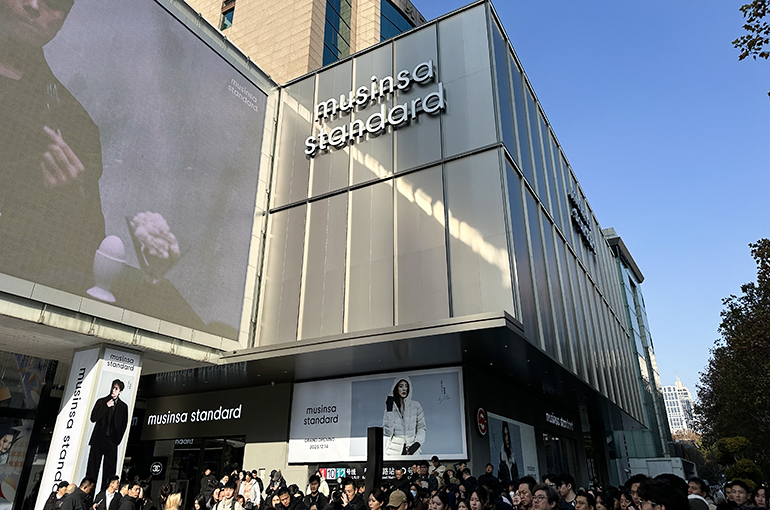
Dec. 15 — A prominent South Korean fashion retailer has launched its first overseas flagship store in Shanghai, with plans to expand across multiple Chinese cities within the next five years.
This new flagship, located on the bustling Huaihai Road, spans two floors and covers approximately 1,421 square meters. According to the company, it ranks as the fifth-largest store of its kind worldwide.
Originally starting as a sneaker community in 2001, the brand gradually evolved into an online magazine before branching out into e-commerce and eventually creating an integrated online and offline fashion platform. In the first half of this year, sales to Chinese customers at its South Korean stores soared, with the majority of buyers aged between 10 and 29, sources revealed.
The retailer aims to open 100 stores in China by 2030, focusing primarily on Shanghai but also considering other cities, a company representative shared.
The company plans to further tailor its offerings to the Chinese market by enhancing logistics, distribution, and store operations. It intends to develop product lines that reflect Chinese fashion trends and consumer preferences based on sales data analysis. Additionally, the company will establish online channels on platforms like TikTok’s sister app Douyin, Xiaohongshu, and Taobao.
Back in 2019, it received investment from a major Chinese investment firm, which also launched its strategic development in China earlier this year. In August, the brand formed a joint venture with a leading sportswear company to spearhead its growth in the Chinese market.
The retailer also launched a flagship store on a popular e-commerce platform owned by a major Chinese tech conglomerate in September.
Industry analysts have pointed out that physical retail stores face mounting challenges due to high rent, labor costs, and the rise of online shopping. The retailer’s aggressive expansion in China is partly driven by its financial strategies, including the recent investment and strategic partnership.
Although physical stores entail significant expenses, the brand’s strong e-commerce presence suggests a promising future for using brick-and-mortar outlets as showrooms that complement their online sales. Success largely depends on offering products that deliver good value, appeal to young consumers, and maintain an effective balance between costs and revenue.
 ChatGPT
 Perplexity
 Gemini AI
 Grok AI