
Select Language:
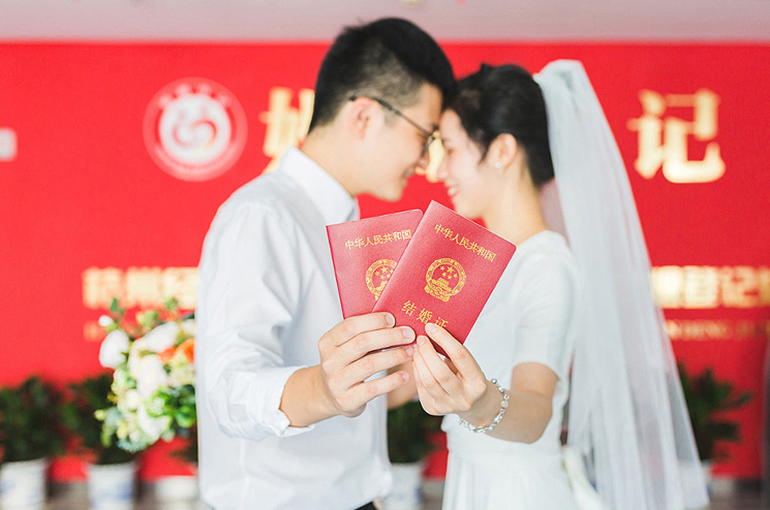
Many regions across China experienced a significant uptick in marriage registrations last year, reflecting the positive impact of policies aimed at encouraging marriage and childbirth.
In Shanghai, the number of couples registering for marriage increased by 38.7% in 2025 compared to the previous year, reaching a total of 125,102 new marriages, according to local authorities.
Fujian province saw a 12% rise, with a total of 169,756 marriages registered, while in the provincial capital, Fuzhou, marriages surged by 20.3% to 37,887.
Recent years have seen China actively promoting marriage and childbirth at ideal ages, coupled with efforts to enhance family support systems. Last year, regional restrictions were eased, making it more straightforward to register a marriage. The updated Marriage Registration Regulations, which took effect on May 10, 2025, now permit couples to register their marriage at any registration office nationwide, regardless of their permanent residence, eliminating the need to show household registration documents.
Cities in eastern Jiangsu province also reported notable increases. Nanjing recorded 63,400 marriage registrations, up 18.2% from the previous year. Suzhou processed 65,000 marriages, a jump of 33.5%. Wuxi had 32,122 marriages registered, an increase of 32.3%, while Changzhou reported 23,082 new marriages, up 28.5%.
In eastern Jiangxi province, there were a total of 186,528 marriage registrations last year, reflecting a 3.4% growth year-over-year, according to provincial civil affairs officials. Meanwhile, in southern Guangdong, Shenzhen saw a 28.5% rise in marriage registrations, totaling 118,900 couples, based on municipal data.
Some local governments have begun offering financial incentives to newlyweds. Starting January 1, 2025, couples in Lvliang, northern Shanxi, registering their first marriage where the bride is 35 or younger receive a reward of 1,500 CNY (approximately 215 USD).
Similar initiatives have been launched in other areas, including Longgui Nanling village in Guangzhou’s Baiyun district and Xinsi Huangtang village in Dongguan’s Hengli town. Additionally, cities like Hangzhou and Ningbo in southeastern Zhejiang province have issued consumption vouchers to newlyweds to promote marriage rates.
 ChatGPT
 Perplexity
 Gemini AI
 Grok AI