Select Language:
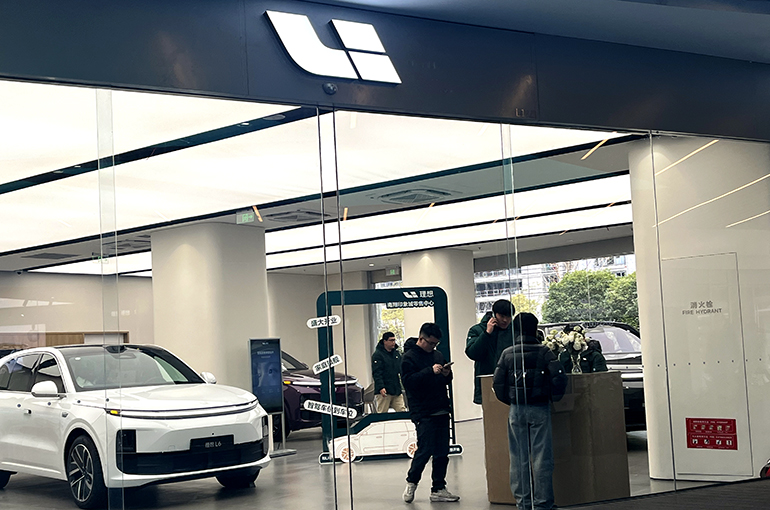
Li Auto, a leading Chinese new energy vehicle manufacturer, reported its first quarterly loss in 11 periods during the third quarter of this year. The loss was primarily driven by supply chain disruptions and costs associated with the large-scale recall of their Li Mega models.
The company’s net loss reached CNY624.4 million (approximately USD87.7 million) for the three months ending September 30, a sharp contrast to the CNY2.8 billion profit recorded in the same period last year. Gross profit margins also declined from 21.5% to 16.3%.
Revenue in the third quarter dropped 36% year-over-year to CNY27.4 billion (around USD3.8 billion). Vehicle sales declined 37% to CNY25.9 billion, and vehicle deliveries totaled 93,211 units, marking a 39% decrease during the quarter.
The margin contraction was mainly due to the costs associated with recalling the Li Mega and increased manufacturing expenses per vehicle amid reduced production volume. The CFO explained that, excluding recall-related expenses, gross margin would have been around 20.4%.
Earlier this month, regulators announced a recall of 11,411 Li Mega vehicles—almost half of all units delivered—due to inadequate coolant corrosion protection. The recall followed a dangerous incident where a Li Mega caught fire while moving slowly, engulfing the vehicle in flames within seconds.
Describing the quarterly results as “mixed,” the company’s CEO highlighted a strategic pivot for the next decade. He emphasized that the traditional management style suited to mature firms like Apple or BMW might not be effective in an era driven by artificial intelligence. The company plans to shift back to a more entrepreneurial approach, taking inspiration from Tesla and Nvidia.
He also criticized the industry’s focus on vehicle range and size, calling it inefficient in terms of cost. Instead, the company aims to focus on embodied AI technology, transforming cars into intelligent robots. The CEO stated that the firm’s new M100 chip and AI system, set for mass production next year, will play a key role in this transformation.
The company is also transitioning from a lineup of extended-range electric vehicles to fully battery-powered models. The president acknowledged supply constraints affecting upcoming BEV models, such as the Li i6 and Li i8. Starting this month, the i6 will utilize a dual-supplier battery strategy, with plans to produce around 20,000 units monthly by early next year.
To address the imminent expiration of China’s vehicle purchase tax incentives, the company anticipates a surge in sales late this year, followed by a slowdown in the first quarter of next year. To mitigate this, Li Auto will launch a new purchase program that covers tax differences for orders placed before the year ends.
In the final quarter, the company expects to deliver between 100,000 and 110,000 vehicles, with revenues ranging from CNY26.5 billion to CNY29.2 billion.
Despite the quarterly loss, the firm maintains a robust cash reserve of CNY98.9 billion, which will support significant investments in embodied AI and autonomous driving technologies.
 ChatGPT
 Perplexity
 Gemini AI
 Grok AI