Select Language:
As the world’s largest personal computer manufacturer, Lenovo is advancing its research and development efforts in hybrid AI for both personal and business use. This approach is considered one of the most effective ways to achieve inclusive artificial intelligence, according to the company’s CEO.
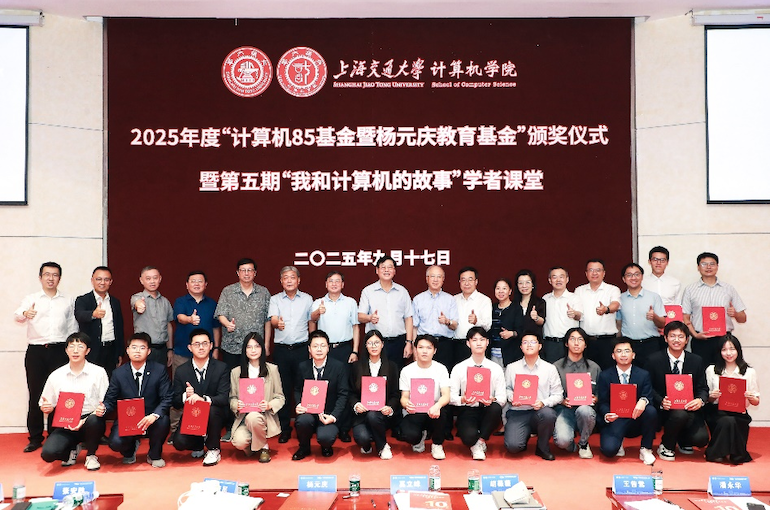
During an award ceremony marking the 10th anniversary of a notable education fund at Shanghai Jiao Tong University, Yang Yuanqing, who also serves as chairman, shared insights on AI development. He emphasized that progress in this field is focused on two main fronts: one is pushing AI models toward general intelligence through increased computing power and ample resources; the other aims to expand AI technology applications across various industries to make them more accessible and beneficial to society.
Hybrid AI integrates individual AI systems with enterprise AI, striving to balance broad applicability with personalized needs while safeguarding user data privacy.
Yang highlighted China’s significant potential in AI applications, fueled by its vast market and comprehensive manufacturing supply chain. He sees “grounded AI” as a vital opportunity for the country’s manufacturing sector to ascend the global value chain’s higher tiers. In this landscape, hybrid AI is viewed as a crucial tool to capitalize on this opportunity.
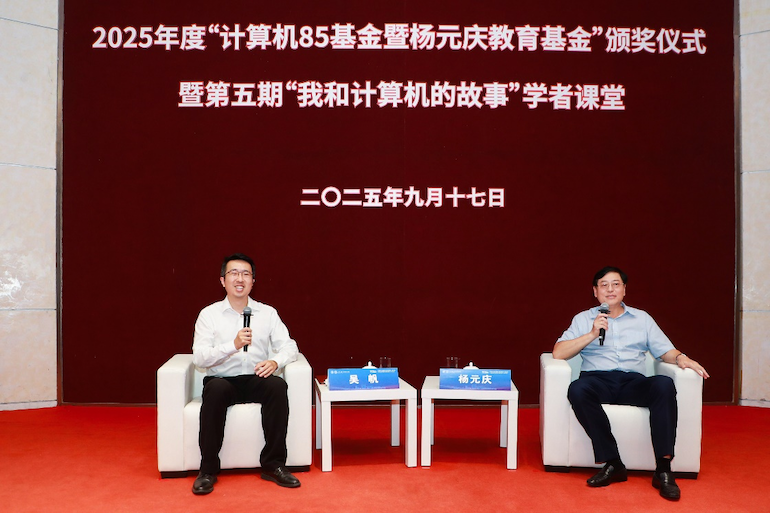
Lenovo plans to deepen collaboration with Shanghai Jiao Tong University through joint industry-university-research initiatives, including the establishment of laboratories dedicated to intelligent devices and AI, which have already yielded notable results, Yang explained.
According to Wu Fan, executive vice dean at Shanghai Jiao Tong University’s School of Computer Science, this period marks a golden age for AI innovation. To develop general AI, breakthroughs at the transformer level are essential, and partnerships between academia and industry can accelerate this process.
In 2015, Yang donated 10 million CNY (approximately 2.3 million USD) to establish the 1985 Computer Science Graduates Education & Development Fund and the Yang Yuanqing Education Fund. These initiatives were among the first crowdfunding efforts for education in Chinese universities and have since provided around 6.3 million CNY (roughly 886,875 USD) in grants to 136 students and 11 faculty members.
 ChatGPT
 Perplexity
 Gemini AI
 Grok AI