
Select Language:
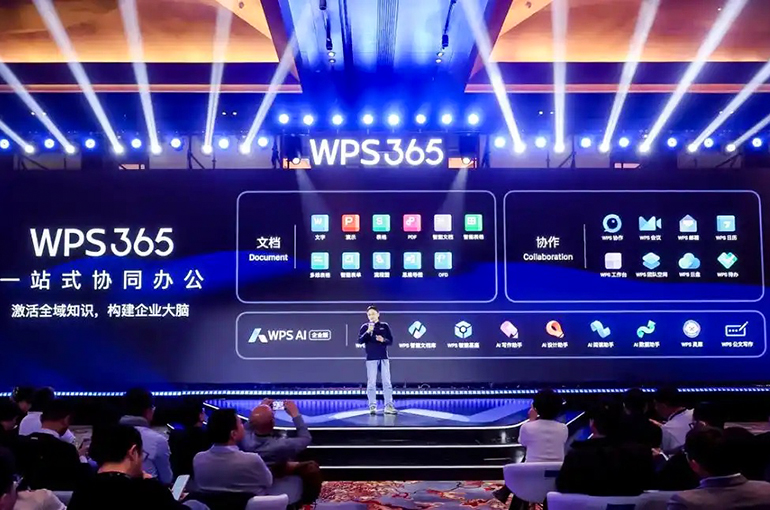
A major software provider introduced a comprehensive suite of AI-powered workplace tools yesterday, aiming to reshape the collaborative office software industry amid the rapid global embrace of artificial intelligence.
This new suite features an intelligent document library, Digital Employee 2.0, a private cloud deployment solution, and an end-to-end AI integration plan that spans data collection, task management, and security protocols.
With ongoing technological advancements, more businesses are emphasizing the concept of an “enterprise brain.” While a universally accepted definition hasn’t been established, industry leaders describe an enterprise brain as an AI system driven by advanced language models, equipped with robust execution capabilities, and built upon a private, domain-specific knowledge base.
Despite the push for AI integration, many company case studies still lean heavily on traditional office tools. The industry has entered a phase where every project seems to require AI, yet client needs remain diverse based on their current development stages, according to a vice president at the company.
Implementation of AI is typically a gradual process, with success dependent on identifying small, high-value starting points. Continuous improvement is driven by genuine customer needs.
In the United States, a major tech company predominantly serves international clients who depend on email communication, giving it an advantage in the office software ecosystem. Conversely, Chinese clients generally utilize a variety of workplace chat tools to assign tasks, which influences the company’s approach.
Their office suite, WPS 365, is designed to efficiently organize chat content and meeting documents, distinguishing it from the strategies used by American tech giants, which often focus on integrated AI features across their platforms.
In China, platforms such as DingTalk, Feishu, and WeChat Work are also enhancing their AI collaboration functionalities, resulting in fierce competition within the multi-dimensional spreadsheet market. The local workplace software market mainly divides into two segments: document processing tools and daily communication tools. The company’s personal suite addresses the first, while WPS 365 offers an integrated experience combining documents and data for comprehensive AI support.
Revenue from the company’s office suite saw an 11.1% increase in the third quarter compared to the previous year, representing 59.1% of total revenue. Meanwhile, income from the WPS 365 segment soared by 71.6%, accounting for 13.2% of overall revenue.
 ChatGPT
 Perplexity
 Gemini AI
 Grok AI