
Select Language:
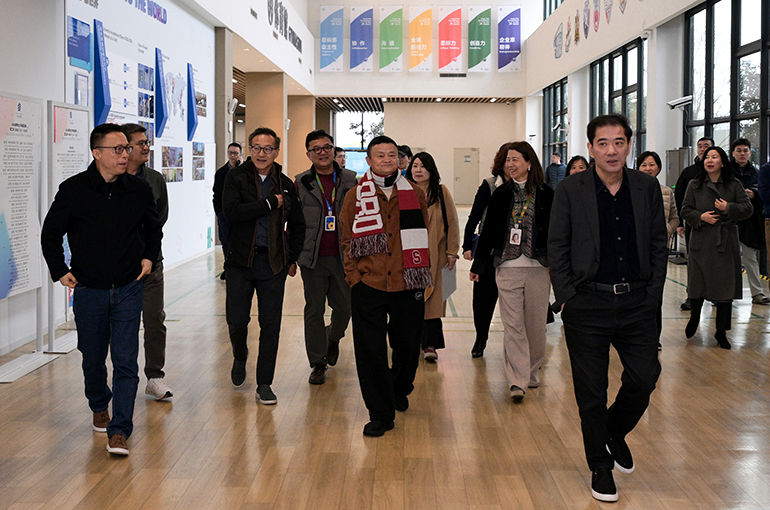
On March 4, the founder of a leading Chinese tech conglomerate convened with top executives from the company’s internet and financial technology branches in Hangzhou. The discussion centered around the challenges and opportunities brought about by artificial intelligence in education.
During the meeting at a school he established—an institution offering a 15-year educational journey from kindergarten to high school—he emphasized that the core qualities education should nurture in children in the AI era include curiosity, imagination, creativity, good judgment, and aesthetic sensibility.
He highlighted the rapid arrival of the AI era, noting its societal impact has far exceeded expectations. While many feel unprepared, he expressed optimism that teenagers hold the greatest potential to drive meaningful change.
“The goal isn’t for children to compete with AI in calculation or memorization,” he said. “Instead, we should focus on keeping their curiosity alive and teaching empathy and responsibility.”
Participants discussed how AI technology is evolving weekly, revolutionizing productivity and promising to drastically reduce working hours while significantly increasing social wealth. However, they also recognized that many jobs may disappear due to automation.
He pointed out that this swift change calls for urgent action: “We need to help children learn to coexist with AI and adapt to this monumental shift starting now.”
The importance of critical thinking was underscored by an Alibaba executive, who insisted that asking the right questions is more crucial than ever. As machines assume more tasks, the ability to communicate effectively with both humans and AI will become an essential skill.
Another leader noted that humans are distinguished by qualities like curiosity, empathy, and physical ability. Curiosity drives initiative, empathy fosters understanding, and physical strength will play a vital role as AI handles more mental tasks.
He also suggested that AI should handle repetitive, mundane work, freeing humans to cultivate their aesthetic and creative talents. Still, caution was advised against over-dependence on technology, emphasizing the need to maintain independent thinking.
He reiterated that education in the AI age should shift focus from rote memorization and exam drills toward fostering creativity and imagination. This approach allows children more opportunities to pursue music, art, and sports.
Finally, he emphasized that the success of educational institutions in this new era isn’t measured by their number of AI servers but by whether their teachers can become true “engineers of the soul,” guiding students beyond mere knowledge transmission.
 ChatGPT
 Perplexity
 Gemini AI
 Grok AI